I’ve been on the road a LOT this month, traveling to North Dakota and Maine and, later this week, Virginia. It’s been a full schedule and I’ve missed catching up with my blog post each week. Here’s an attempt to begin filling in the holes.
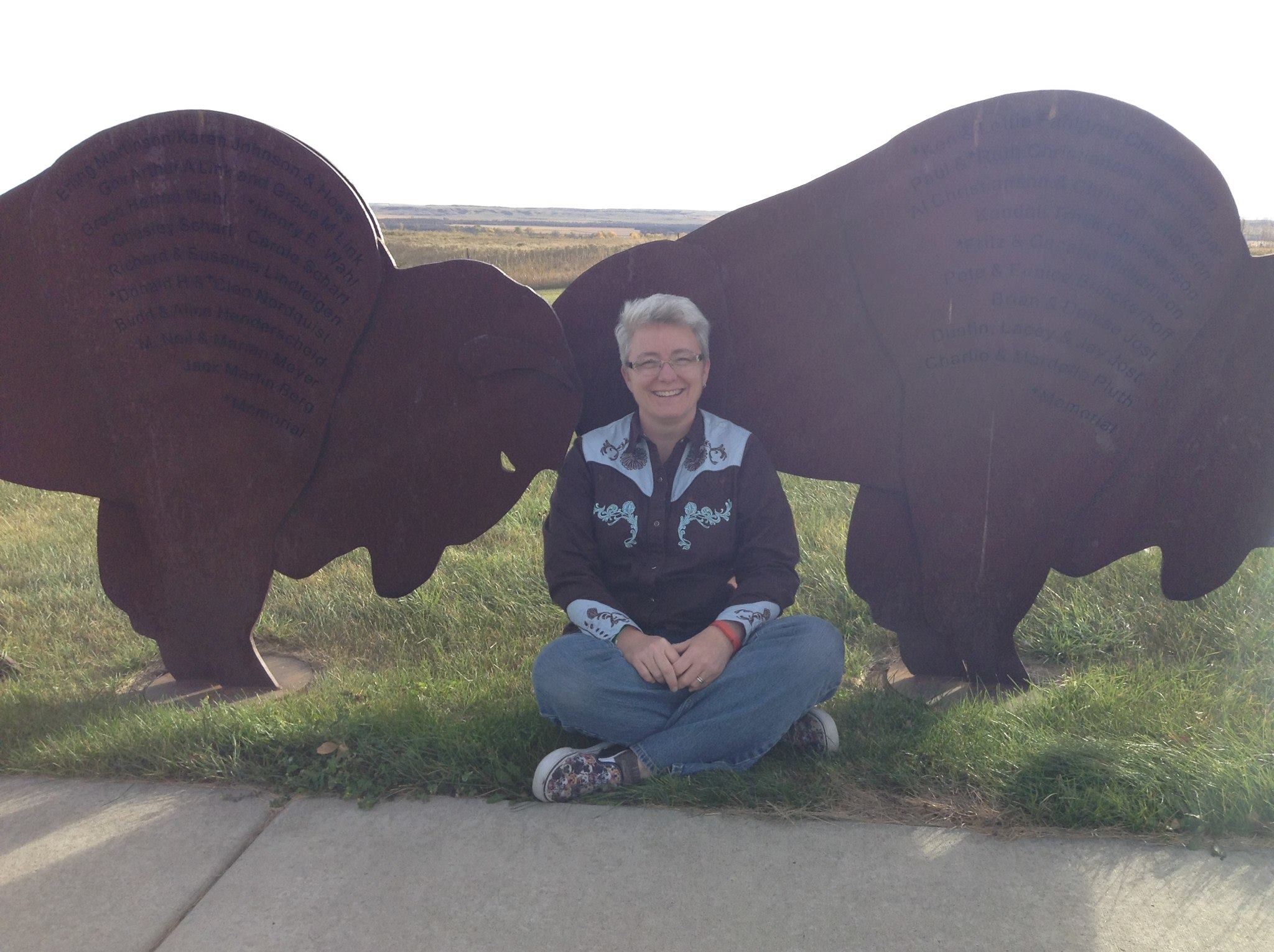
Roamin’ with the buffalo in North Dakota.
Last year, I was invited by members of the Program Planning Committee of the Midwest Chapter of the Medical Library Association to present a keynote lecture at their Annual Conference. As the meeting was to take place in Bismarck, ND and North Dakota was the only state of the 48 states in the Continental United States that I’d never visited, I jumped at the chance! I was flattered to be asked to talk about my work, too.
I shared the first morning’s sessions with Betsy Humphreys, the Deputy Director of the U.S. National Library of Medicine. When we realized that we would be speaking back-to-back at the conference, Betsy and I arranged a quick phone call to talk about what we thought we were each going to say. It proved to be a really beneficial chat, as our keynotes ended up complementing one another very well.
Betsy’s talk, entitled “Points of Departure,” offers a survey of the current landscape in which medical libraries and medical librarians find themselves, and sheds light on the MANY places that professionals can insert themselves and their skills. From electronic health records to patient advocacy to health literacy to informatics, the opportunities abound for those individuals and libraries who are willing to step out (or step up) to the challenges, rather than saying the future holds no place for us. “Set out from any point,” we were reminded. They all lead to opportunity. (You can see my sketchnotes of Betsy’s talk here.)
I titled my own keynote, “Making the Case: Health Sciences Librarians Staking their Claim in a ‘New World.'” You can download the slides here, but I’ll provide an annotated version of the talk in this post.
I confess that in those times when I’m facing many deadlines, feeling stressed, feeling bored, or feeling tired, I have a particular vice that I indulge in. Fortunately for me (though not necessarily for my practices in discipline of any sort), my vice is pretty easy to partake in, as it involves a certain television show that one is hard pressed to not be able to find airing at any hour of any given day. As the deadline for this talk loomed larger, I found myself giving in to my vice so often that eventually, I figured I’d use it as a framework for my talk. Here goes…
A disclaimer.

Imagine the infamous “duhn duhn” sound. (It played during the talk.)
 Our episode starts at a dinner party in Louisville, Kentucky, some time in the late 1980s. Everyone had finished eating and gathered in the living room, sitting in a circle and chatting, when someone said, “I know. Let’s go around the room and everyone share a dream.”
The usual suspects were offered up; “I hope for a family.” “I want to have children.” “I want to travel around the world.”
When it came my turn, I shared what has, for as long as I can remember, been my life’s dream,” I want to win the Oscar for Best Original Screenplay.”
“GET SERIOUS!” shouted this woman who, by the way, I’d never met in my life. “Tell us something that you might ACTUALLY do!”
Sigh… My dream. Busted.
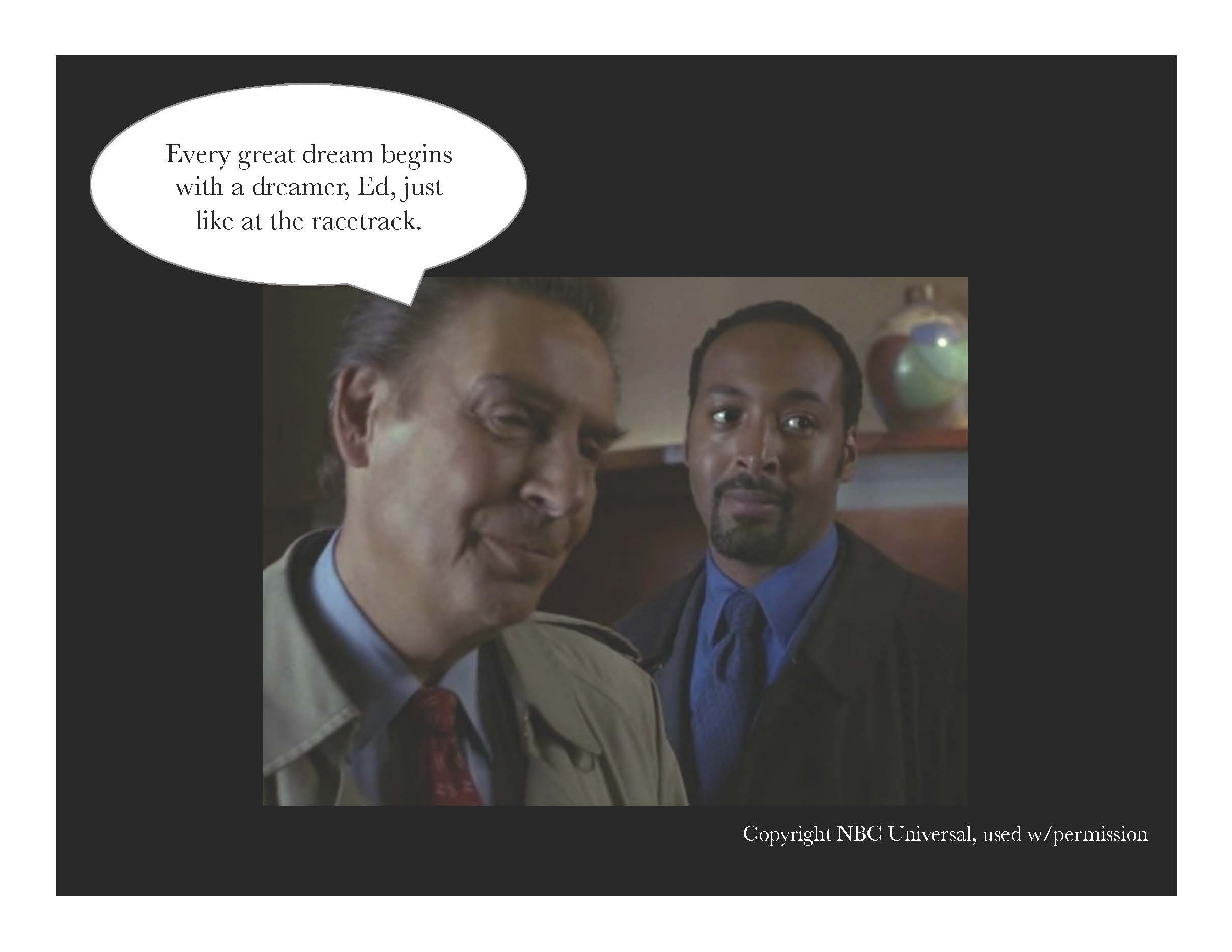
Thank you, Lenny.
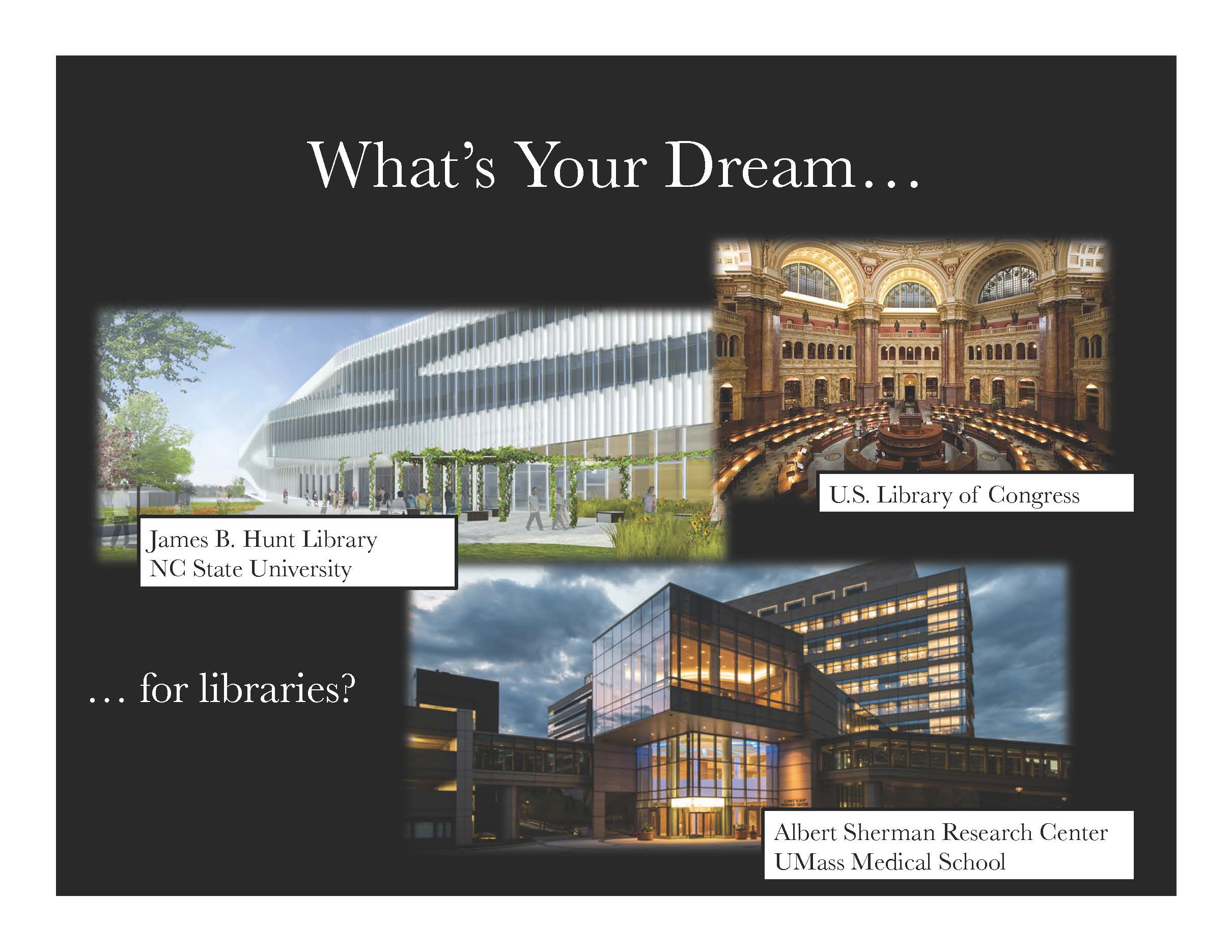 So, what’s your dream for libraries? When you think of what a library is and/or can be, what do you dream? Do you imagine the “Library of the Future,” complete with no books and lots of modular furniture, spaces for gaming and tools to help students and faculty and researchers fuel their innovative spirits? Do you dream of tranquility and order and the beauty of our National treasures, like the Library of Congress? Or do you see the library as not a place at all, but people embedded in research centers, bringing the services of libraries directly to the patrons?
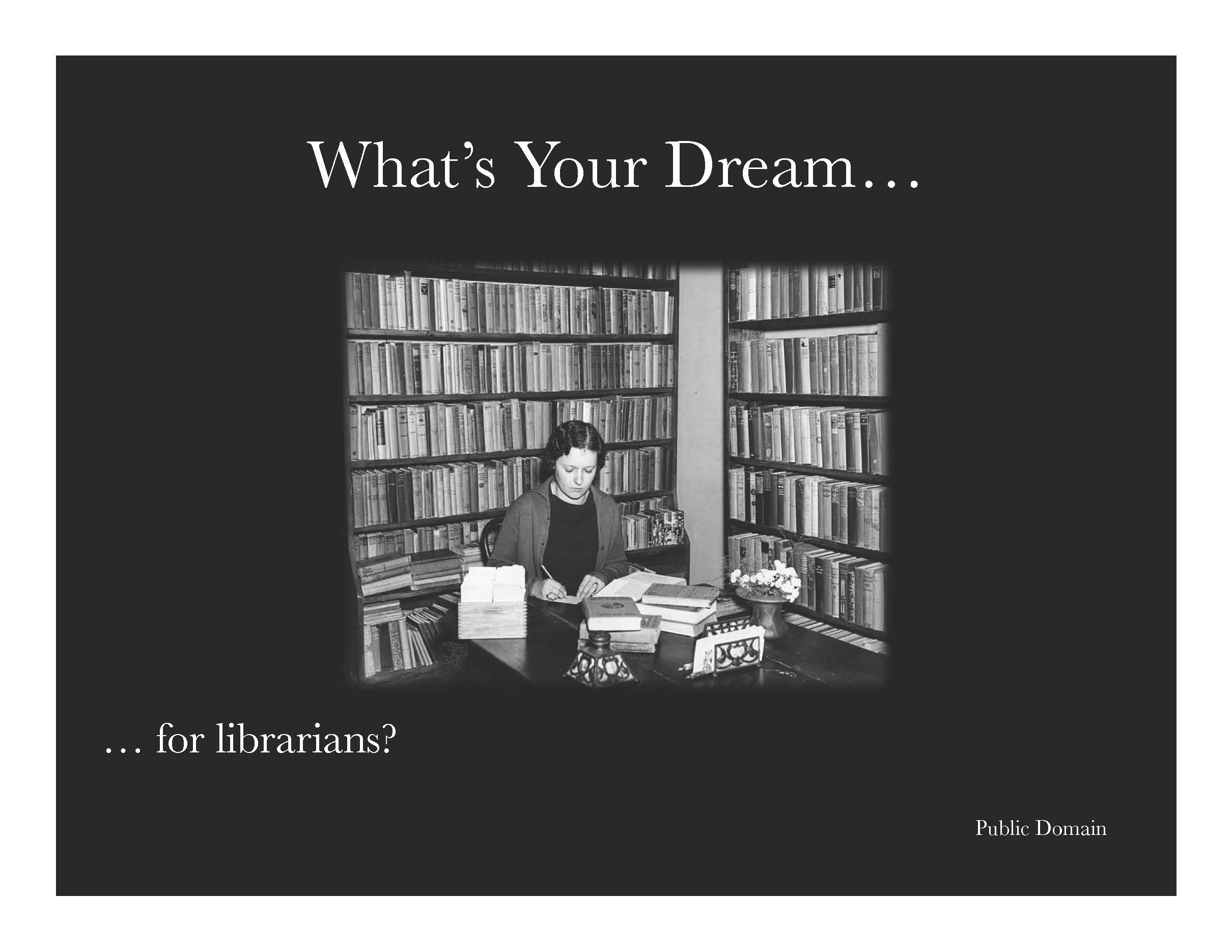
And what do you dream for librarians? Do you miss the “good old days” when we held the keys to the information kingdom; when we were the gatekeepers that everyone had to pass through and by in order to access what they needed? Do you miss the heady power of those days? Or do you dream of times when librarians are no longer associated with libraries; when we’re not even called librarians anymore? What do you dream?

And for all of those dreams, do you have any kind of plan in mind for how to get there?
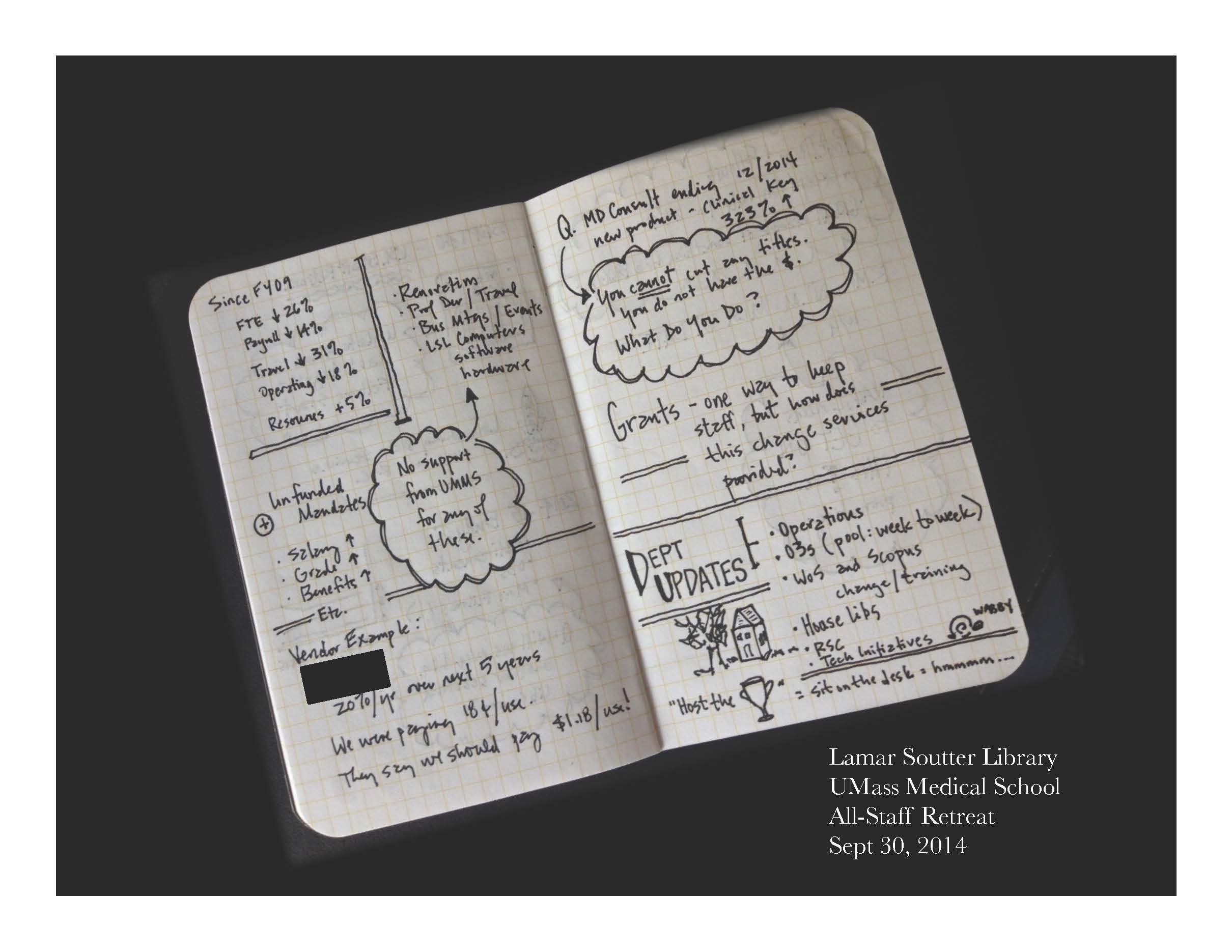 My own library recently had our annual all-staff retreat in which our Director, Elaine Martin, delivered her “State of the Library” address. She covered where we’ve been the past year, where we are now, and where we’re likely headed over the next months. One of these future places involves the development of a new strategic plan. Looking ahead five years, where do we think we’ll be? That’s the question Elaine posed to her staff.
When I think back on all of the change that’s happened here in the past 10 years (the amount of time that I’ve worked at UMass Med), I find it pretty hard to even imagine that I ever could have imagined the things I’ve seen come and go, the transformations we’ve endured, and the many different roles we’ve taken on as a library (and as librarians). The thought of imagining the next five years seems daunting, if not downright impossible for me, and it got me to thinking about how I do go about planning my work, my roles, and my future as a health sciences librarian.
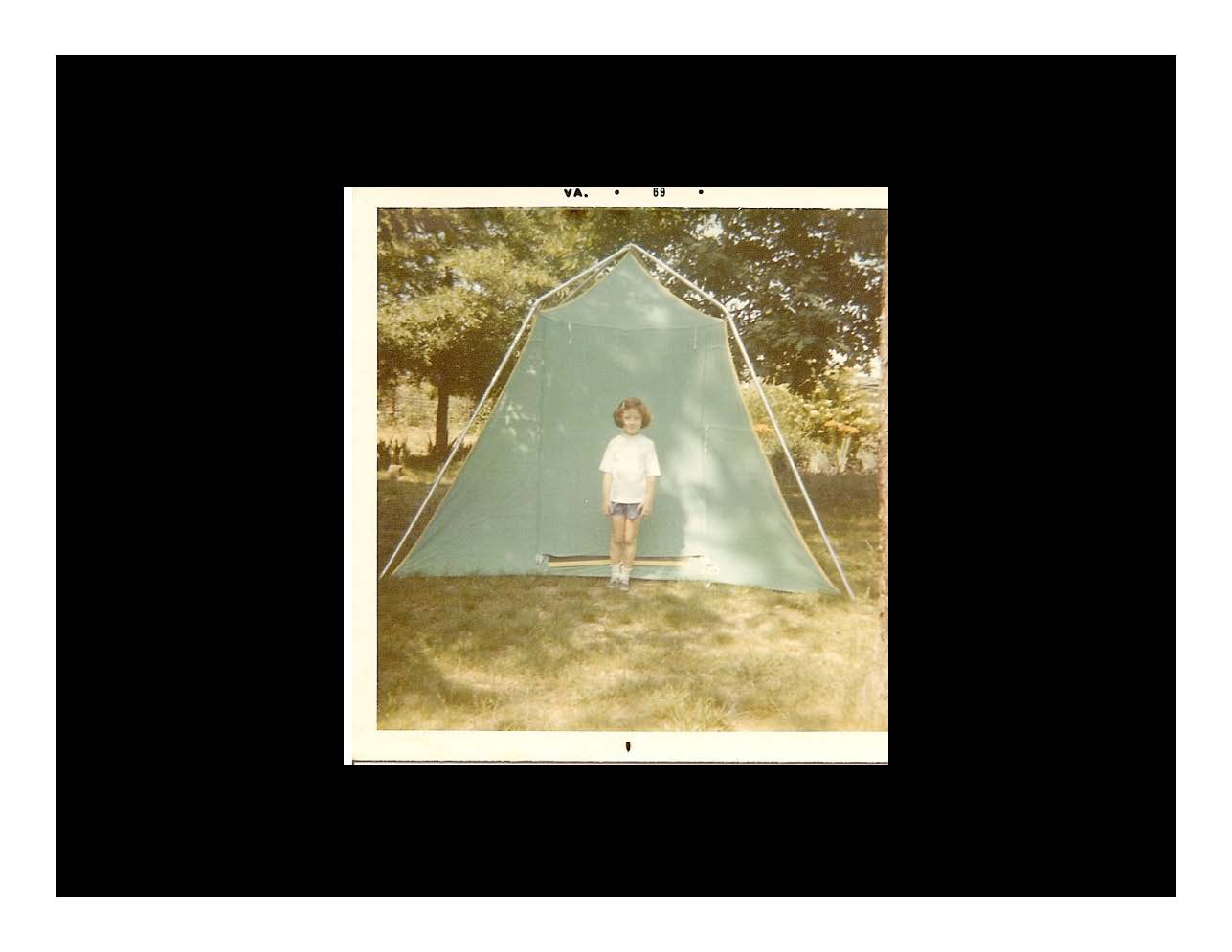
Backyard camping!
I grew up in a camping family. We camped weekends and summer vacations. We camped in the mountains, occasionally at the beach, and often in New England and Canada. My father was also a backpacker and he took my brother and I on week-long backpacking adventures, alternating years between us, during spring breaks. The first time I went on one of these trips, I was probably about 10 years old. My dad, being a good bit taller than me, often hiked ahead on the trail. He’d make his way up the path, me following behind, always being sure that he never got too far ahead that I couldn’t see his pack. (It was always a bright color – red or orange – so that I could easily see it.)
As I thought about how I strategically plan my work, I came to realize that I do so very much like I strategically made it through the Appalachian Trail in Virginia. I call my strategy…
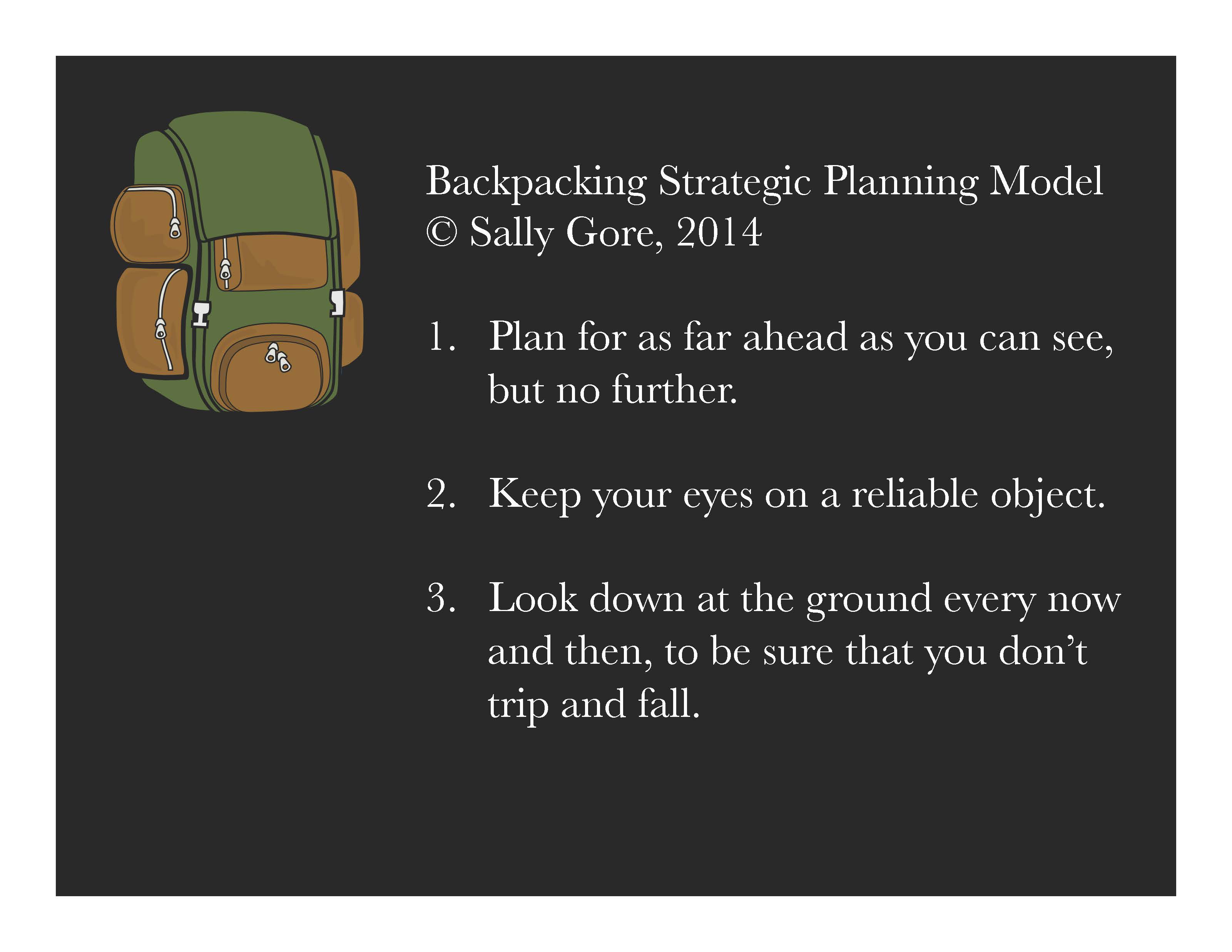
It works. Not just for hiking along unknown trails, but also for making one’s way down the mysterious, always developing and ever evolving paths of medical librarianship.
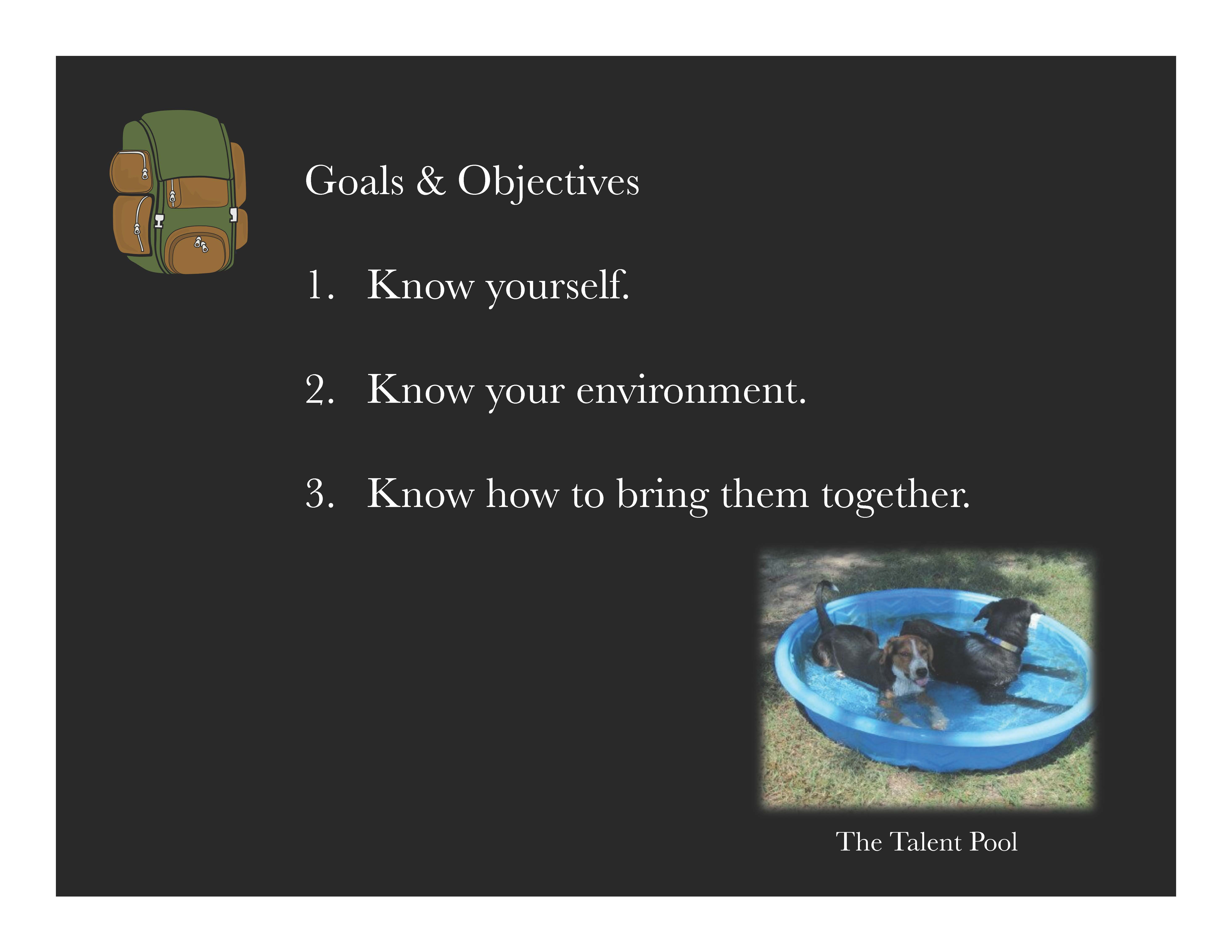 And as every strategic plan needs goals and objectives, these are the ones that I propose for my Backpacking model:
- Know yourself – what you do well, what you don’t do well, what you like to do, what you don’t like to do, etc.
- Know your environment – the people, places, and things that surround you and make up your workplace.
- Know how to bring these two things together – YOU and your environment.
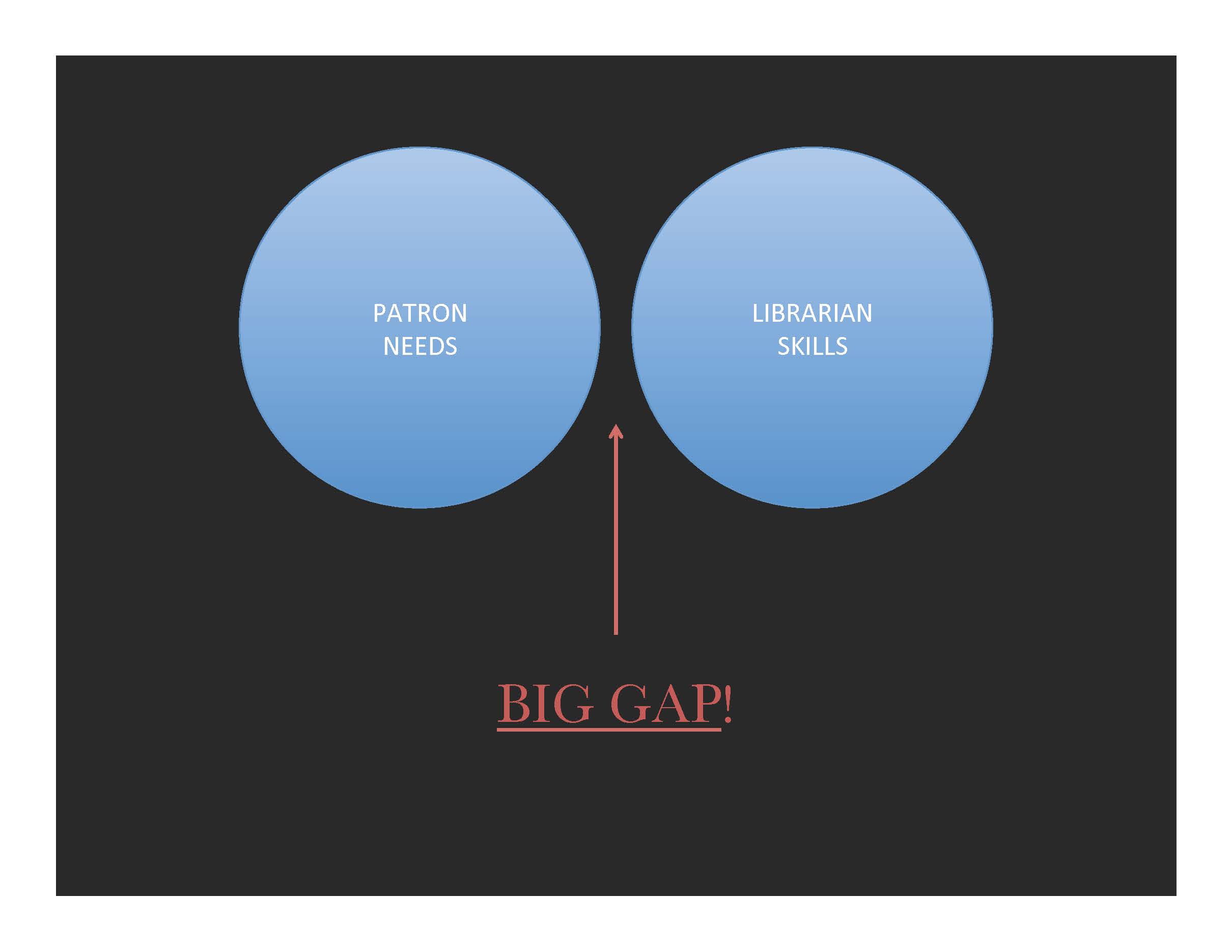 We talk a lot in our profession about the gap between what students, faculty, staff, and researchers want from health sciences libraries and what health sciences librarians know how to do. We’re very focused upon identifying the skills that we need to develop to close this gap and become, again, a vital and relevant resource to our patrons. The gap produces a great deal of anxiety for many of us; we don’t know how we’ll ever keep up, ever gain the skills we need, and/or ever meet our patrons’ needs again.
So I propose an exercise…
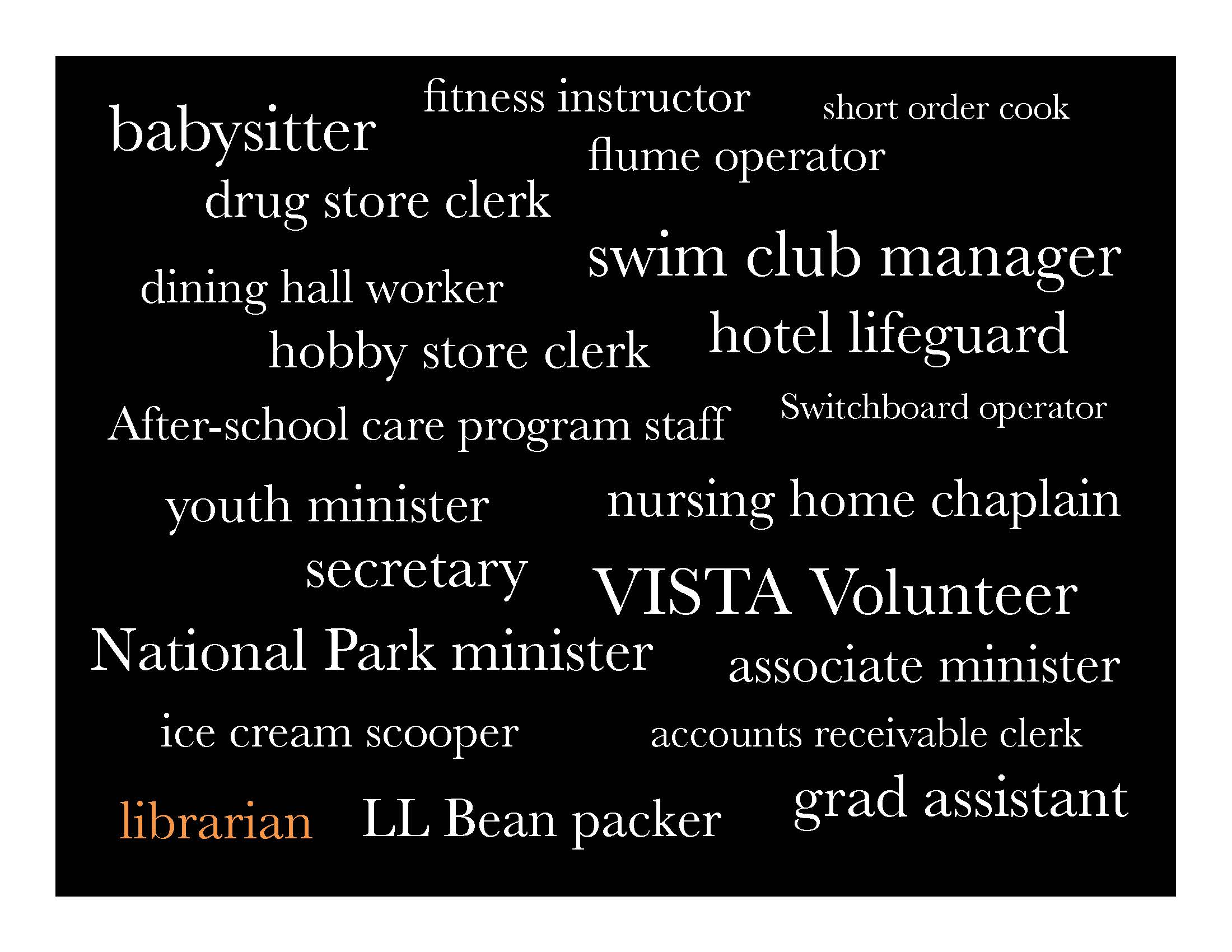
I’ve had LOTS of jobs.
Take some time to think about every single job that you’ve ever had in your life. Write them down. Every job, everything you’ve ever volunteered for, every class that you’ve ever taken in formal education or not. List them all.

And then, take that list and from it create another list of all of the many, many, many things that you know how to do. Yes, you’re a librarian and you have a whole host of skills that come with that, but think of others. Think of how all of the other things that you’ve done in your life have helped you gain expertise in information management or communication or team building or organization. And once you have that list, look around you at all of the many, many, many needs your current environment offers. Can you now, with all of these lists in hand, find one or two or a dozen matches, opportunities where you can put yourself, the librarian, to good use to meet these needs? As Betsy Humphreys noted in her talk, these opportunities are our POINTS OF DEPARTURE. They are our keys to relevancy and the future of our profession.
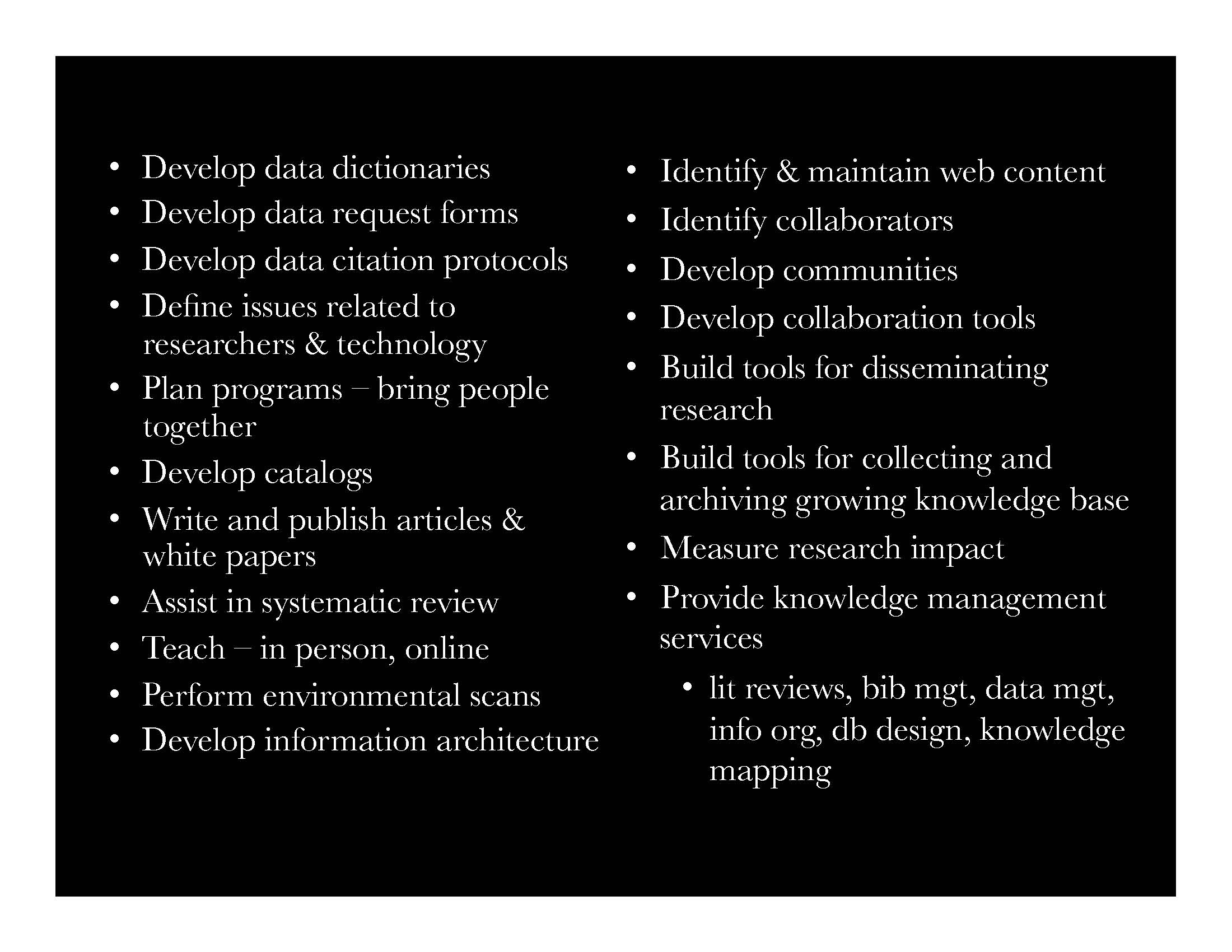
My list looks like this.
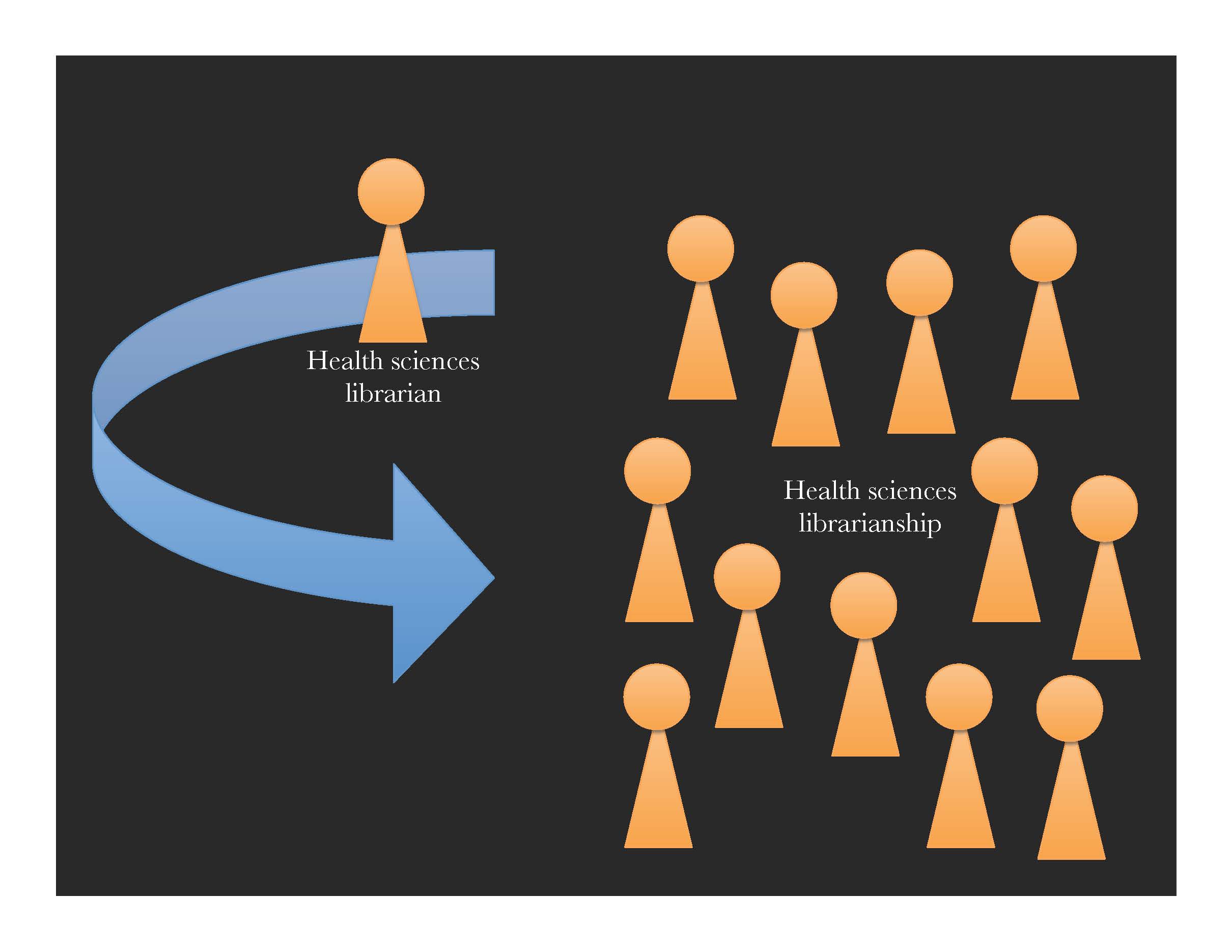
And it defines me, the health sciences librarian, as a person who does all of those things. As we each redefine ourselves and our roles, we will, ultimately, redefine our profession. 
And our value will no longer be such a mystery.
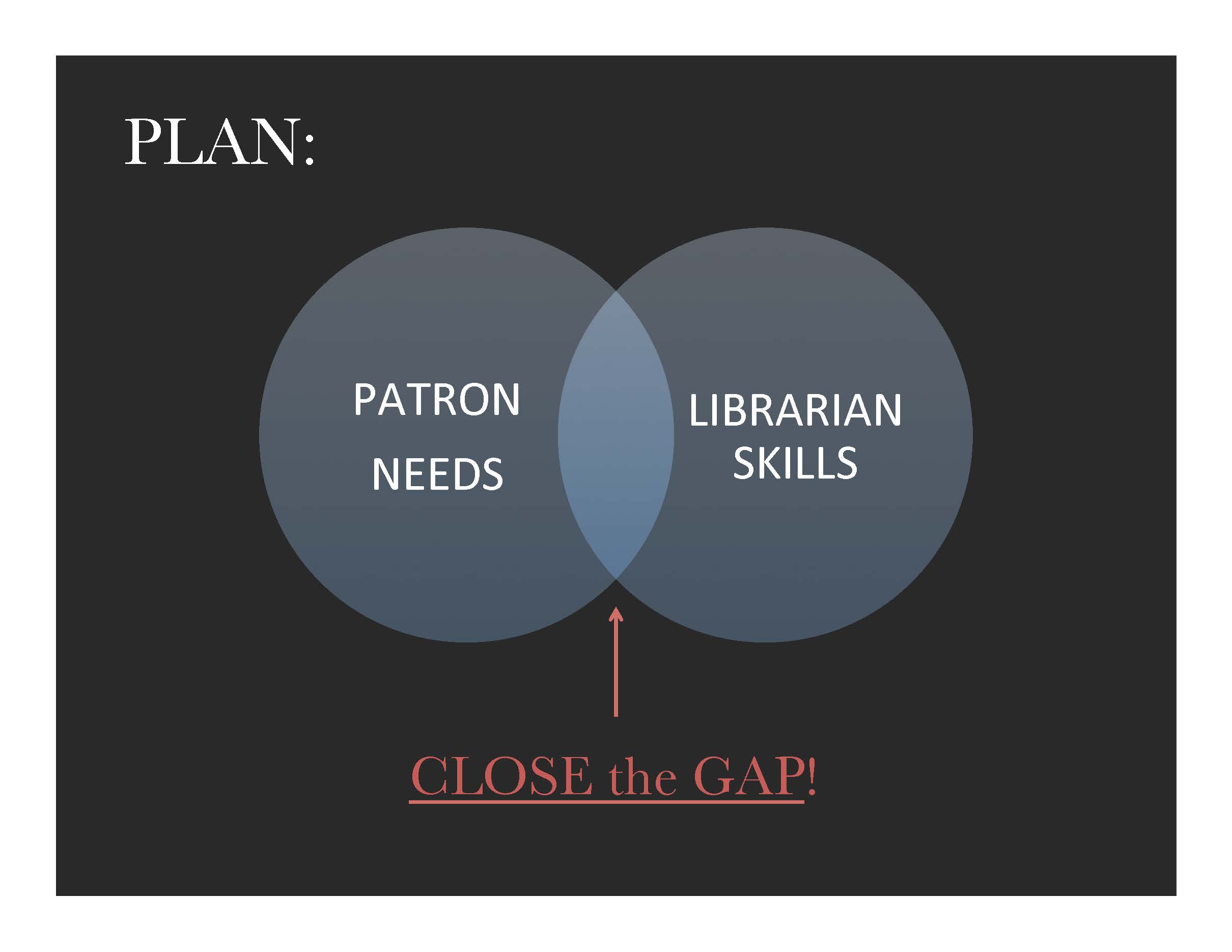
This plan, I think, pretty much closes that gap that worries us so.
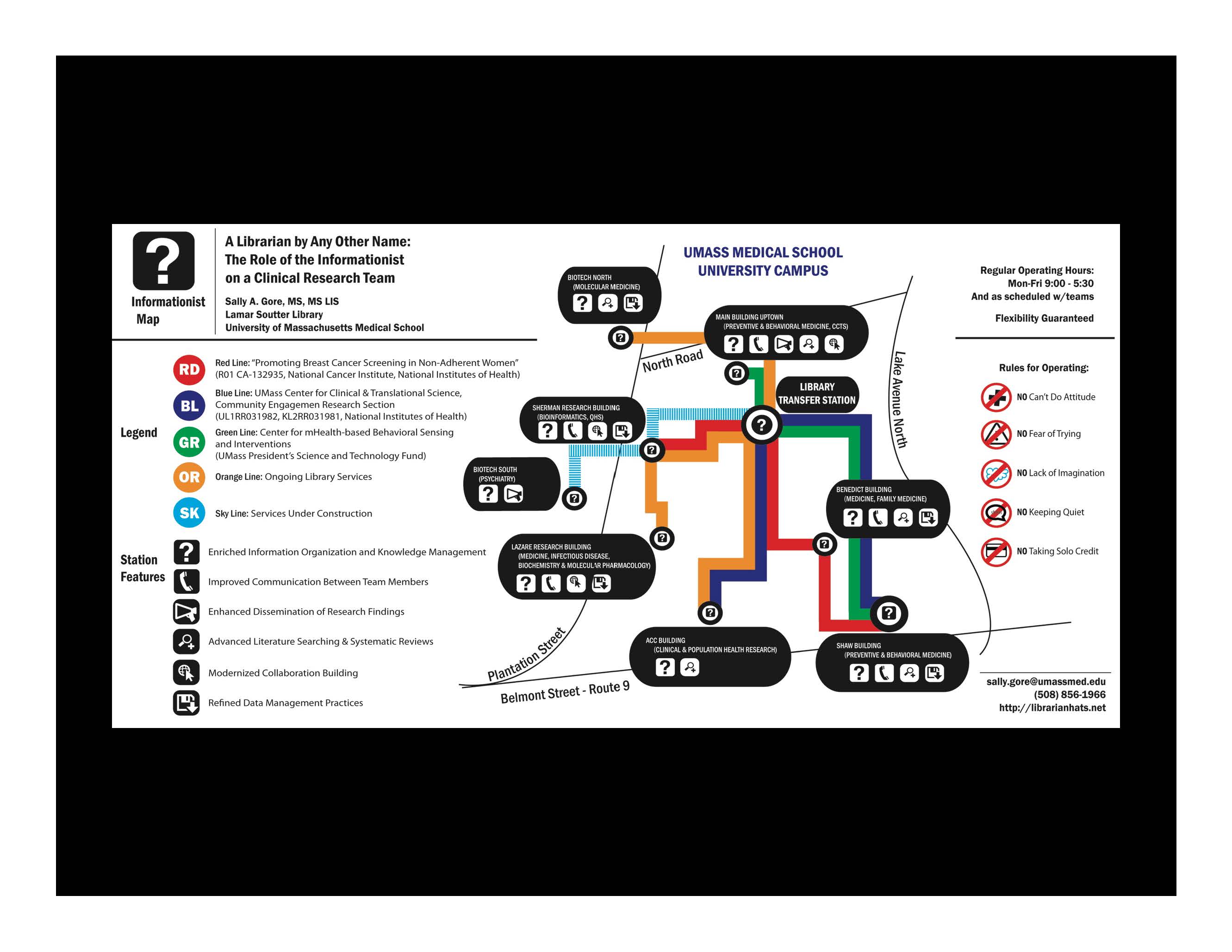
Next, I provide a bunch of examples from my own work. For each, I offer the project that came to be and the skills used to meet the needs of each.

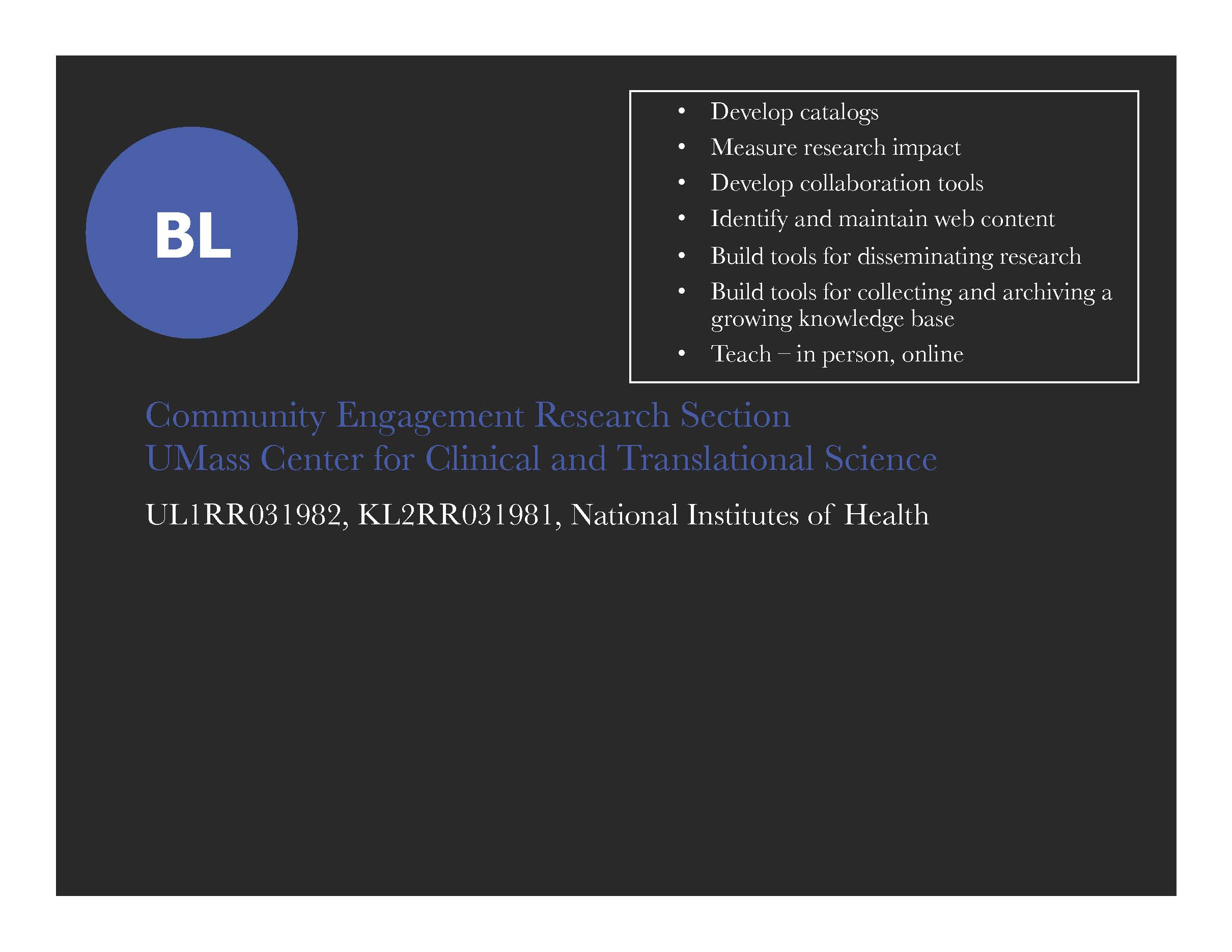
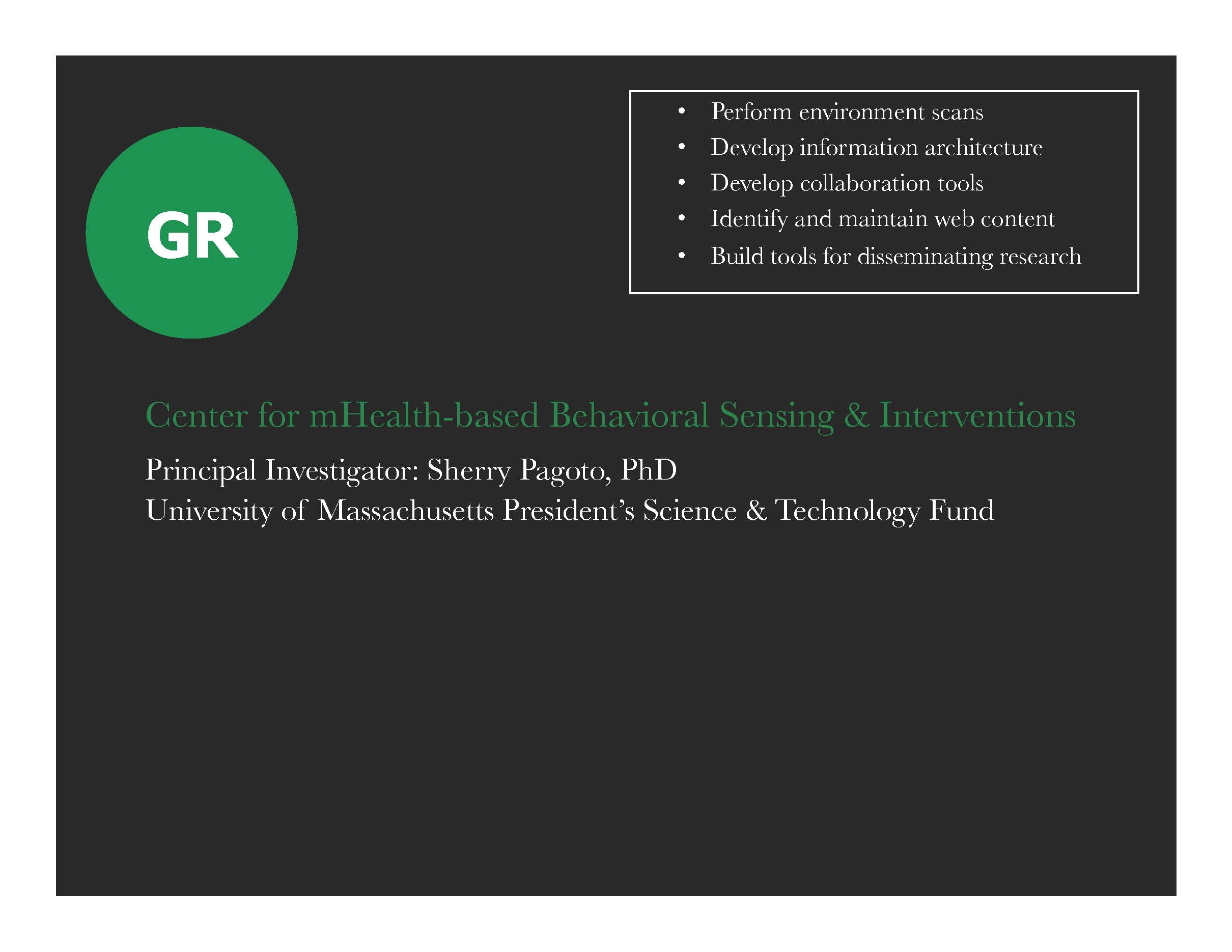

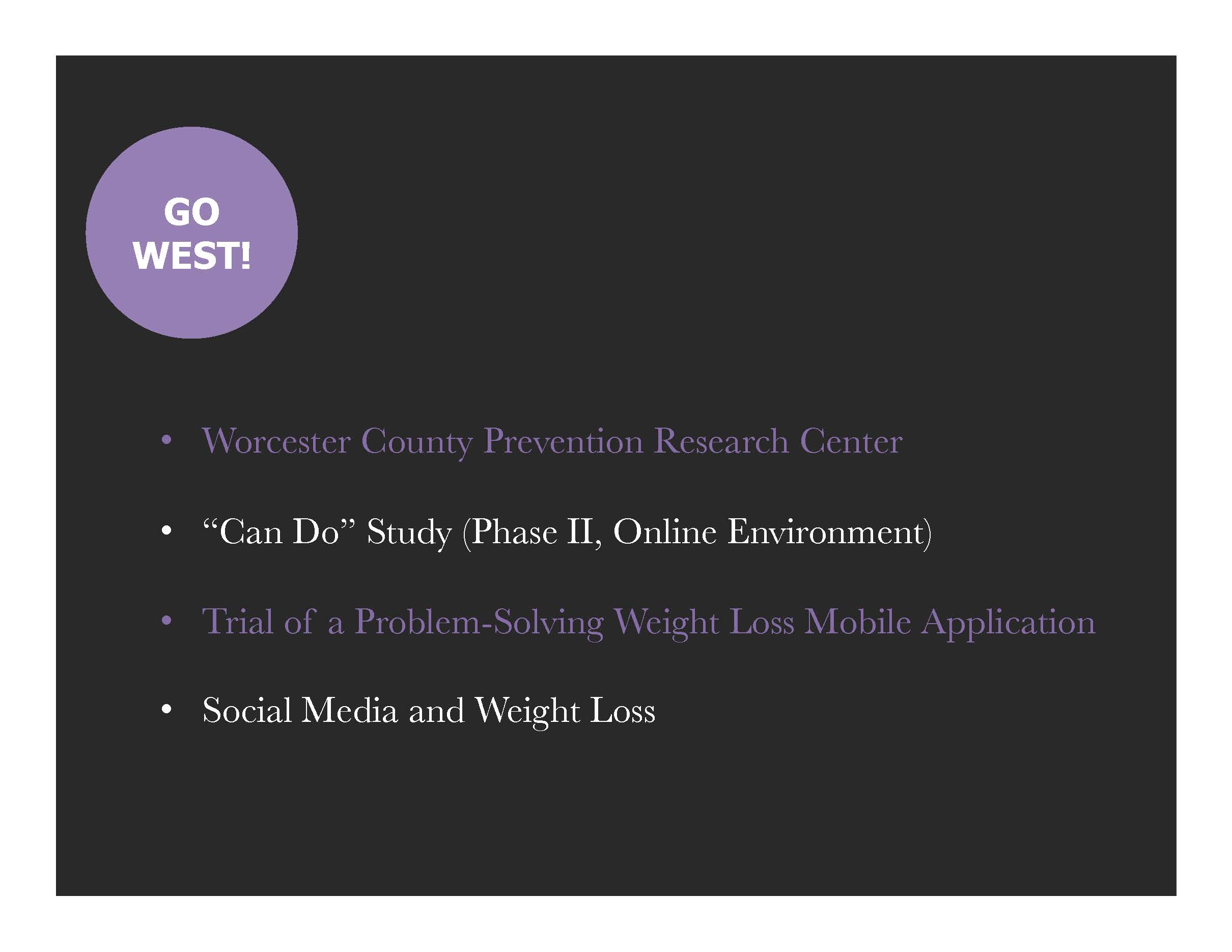
I can imagine some new projects and dream up some new places to perhaps find myself working.
I can dream of really BIG things on the horizon, areas that could offer countless opportunities for a librarian.
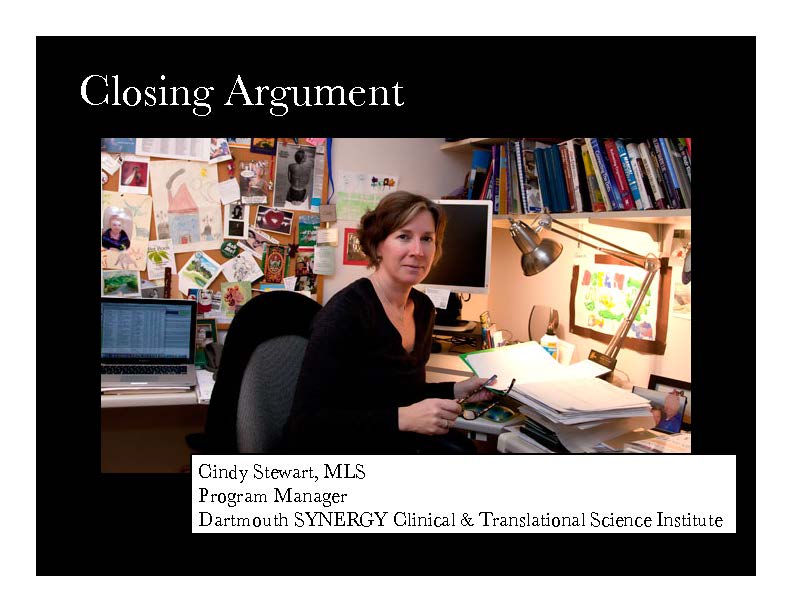
For my closing argument, I offer up my good friend, Cindy Stewart. If you’re a medical librarian, you may well know Cindy, for up until just a few weeks ago, she was an Associate Director for the health sciences library at Dartmouth’s medical school. Today, though, she’s the new Program Manager for Dartmouth’s Clinical and Translational Science Award. Do you think she stopped being a librarian, simply because she assumed this new position? NO. Do you think that she got this position in large part because of all of the skills she honed over the years as a medical librarian. YES. Cindy was able to sell herself as the person for this job because of all of the things that she knows how to do, from being a librarian, that fit all of the information needs (and more) that the researchers at Dartmouth and their CTSA program have and/or are going to have over the next few years. She closed that gap, but good.
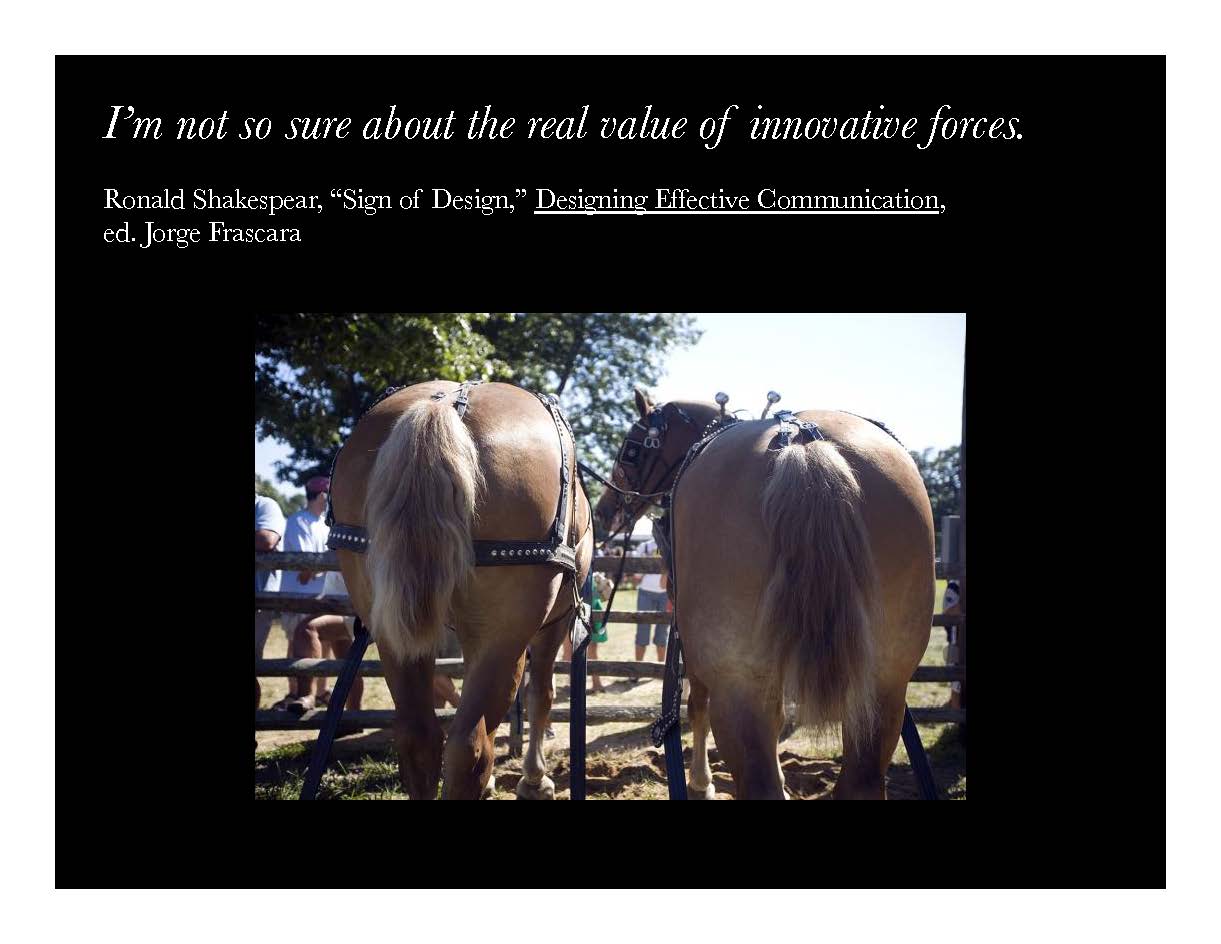
Next I read a great passage from this book, but I’m not going to post it here. Suffice it to say, it summed up how we do a lot of things in life, develop a lot of habits and patterns and trains of thought, based upon not much more than a couple of horse’s asses. (The story is about why railroad tracks are the width that they are.)
 Did I make my case?
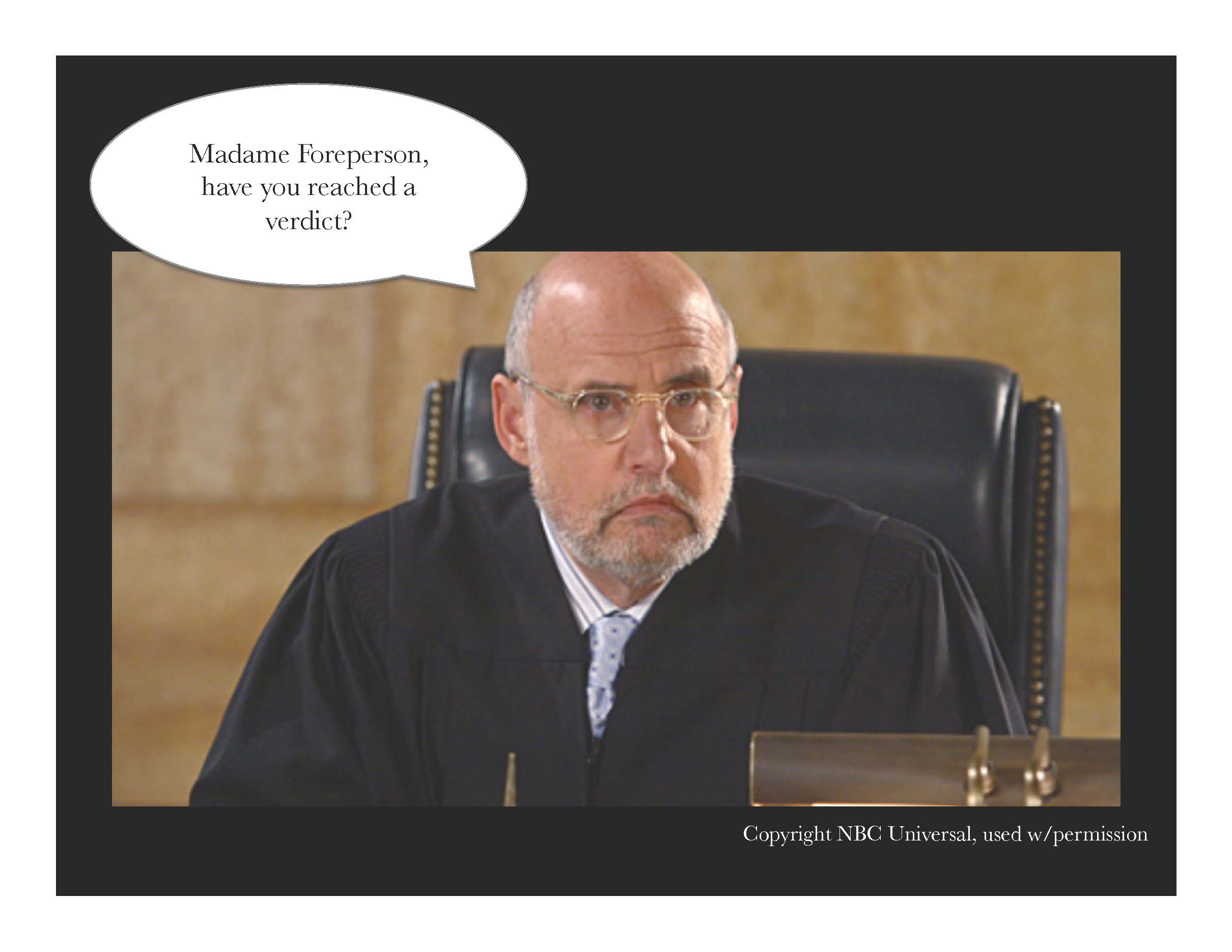
You decide.
*********************************************************
There were other tremendously great talks at the conference. I won’t recap them all here, but I’ve posted my sketchnotes for each:


 A Librarian by Any Other Name