Tag Archives: Twitter

A Lamentation for a Bird

21 Apr

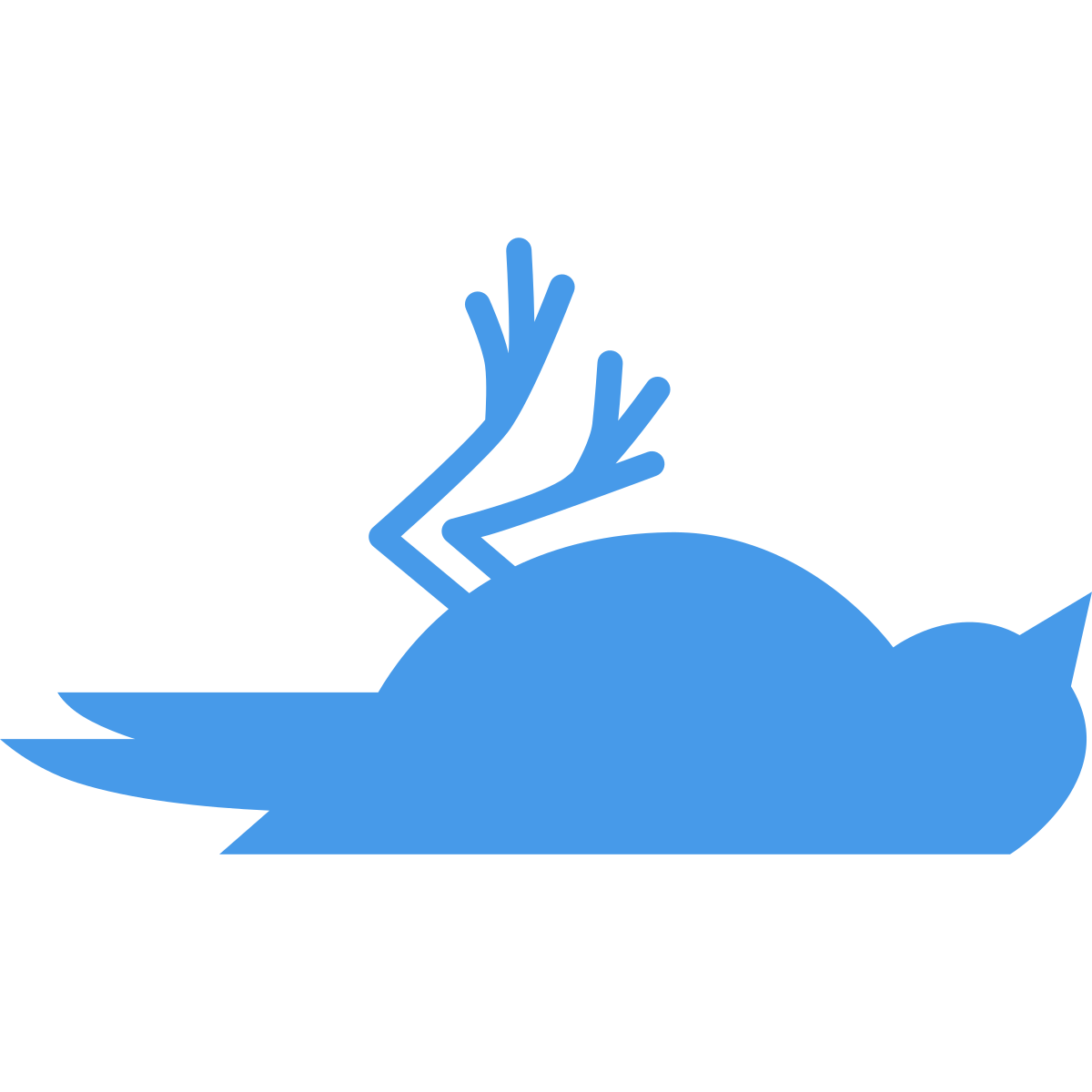
NPR recently announced it would no longer post new content to Twitter. WBUR, on of my local NPR affiliates recently followed the same path. I understand, in part. Without climbing on a soapbox and ranting on with the particulars of the demise of my favorite social media platform, I’ll simply say that since its sale to Elon Musk, it is a (dark) shadow of its former self. And it makes me very sad.

My Twitter profile tells me that I joined the platform in 2009. That was back when people scoffed at it, claiming it was nothing more than a place where people shared pictures of kittens. I vividly remember a researcher at my institution say, in response to a presentation that I’d given on the role of social media and science, that Twitter represented nothing more than a bunch of people with too much time on their hands, posting pictures of baby animals and stupid cat memes. It was no place for anything substantive, certainly not science.

He was wrong then and wrong now – well, the now of just a few months ago. Twitter was a vital source for legitimate news, a way for people to discuss and connect. Through #medlibs (an interest group of medical and health sciences librarians on Twitter), I met colleagues, made friends, learned about new resources, had great discussions about issues in our field. The monthly get-togethers unknowingly prepared us for virtual happy hours and Zoom meetings that would become the norm of 2020 and beyond. It was novel – and fun – to connect virtually then.

What made me most sad about the announcement from NPR is that Twitter was the one social media platform that gave one the chance to actually reach a reporter, the host of a show, without any walls. If Scott Simon caught something I tweeted to him about a story he covered, he could tweet back. Ari Shapiro tweeted back to me when I swooned over Stevie Nicks saying to him at the end of their interview, “Bye, bye, honey.” He was swooning, too.

Twitter was a way to let writers know that you appreciated their work, it gave you a means to ask them questions directly, it made it possible to reach people you’d never been able to connect with so easily before. It allowed users to follow musicians, artists, actors as they shared real aspects of their lives – picking up kids from school, making lunches, binge-watching Netflix. For me, Twitter made the people that I admired from afar, real. Not really real, of course. Following someone on Twitter isn’t the same as knowing someone, but it offered a better sense of understanding of those folks.

I met Matt Shipman (@shiplives) on Twitter. Matt’s a science writer and media person for NC State University. Over Twitter, we discovered that we’d grown up in the same small-ish town of Petersburg, VA, spending many hours at the same branch library in the same neighborhood.

I met Tom Garrett (@TheAxisOfEgo) on Twitter. Tom and I are on different sides of many things politically, but we had some good discussions – civil discussions – arguments that weren’t heated, but ones that allowed us to share our differing opinions. We didn’t yell or swear or call one another names. We didn’t have to agree (though we DID almost always agree on the doom and gloom of the Washington Football Team).

I met countless others like Matt and Tom, people who shared funny stories, raised serious issues, opened themselves up for debate. People organized over Twitter, shared conference proceedings over Twitter, practically overthrew governments on Twitter (I speak of Arab Spring, NOT January 6).

One night back in 2011, I was watching “Jeopardy!” and following along with something on Twitter. Rosanne Cash posted something funny and I simply tweeted back a reply as if I was sitting in the room with her. And she answered me. Then I answered. Then she answered. And for a couple minutes, we had a brief little chat. Me and Rosanne Cash! Then Roseanne, an early Twitter celebrity, started following me. And we tweet-chatted every now and then. And since that night, I’ve met Rosanne, backstage and on-stage and walking down the streets of Brattleboro, VT together. She recorded a blurb for my radio show that makes me smile every single time that I play it. Twitter made that happen.

And I met Amy Dickinson on Twitter. Amy and I became friends, thanks to Twitter. Amy’s given me advice, as a friend, not via her syndicated column. We met in person at the small public library in Lenox, MA one summer when she was giving a book talk and she introduced me as her first friend of Twitter. Amy invited me to sit with some of her family at a taping of “Wait, Wait … Don’t Tell Me” in Providence, RI. She sends me Christmas cards. I write letters to her home address. Amy Dickinson agreed to be a keynote speaker at an annual meeting of NAHSL one year. She made me shine as the program chair that time, for sure. I’ll never forget it. Twitter made that happen.

When Jack Dorsey led the fledgling Twitter, I remember his claim that it was a simple way to bring people together. It did that. For a while. I’ve not left it yet (these blog posts still get shared there), but I also don’t keep it open daily as I once did. The things trending are of little to no interest, the tone has changed, and now legitimate news sources are leaving. I do subscribe to The NY Times and the Washington Post, and I listen to NPR almost daily. But I trusted their posts on Twitter to keep me up-to-speed during the day. When I couldn’t read the paper or listen to the radio, I could pop over to my Twitter feed and catch a quick glimpse of what was happening in the world. With those sources gone, I fear the void left behind and the frightening vacuum that will fill it.

A man bought Twitter for a joke. And he’s turned it into just that.

Makes me sad.

The Good, The Bad, and The Ugly of Social Media

23 May

goodbaduglyThe following first appeared as an article for the Social Media column (edited by Lara Killian, AHIP) in MLA News, the monthly membership magazine of the Medical Library Association. Originally, I planned to simply repost it here without any additional thoughts or comments, but in the past 24 hours, a couple of things have occurred that make me wish to add just a quick note. First, I read the New York Times article, The Internet is Broken: @ev Is Trying to Salvage It. It’s an interesting piece about Evan Williams, a co-creator of Blogger, one of the founders of Twitter, and the founder of Medium. Much of the article focuses on the the struggles of the latter as a successful business model, but the underlying theme is about the Internet and what social media has fostered, negatively, in our society.

The second thing that happened was last night, someone who I’ve never encountered in my entire life but who clearly disagreed with something that I posted on Twitter, called me a paid troll, an idiot, and a waste of oxygen. I’m grateful that they stayed away from any comments about my body and my dead mother, but … I blocked the individual before he could think of that. I’ve used Twitter for years. I know that it has an earned reputation as a platform for bullying, for hateful comments, and for even inciting violence, but until last night, I’d been immune from any of that. Twitter is a way for me to aggregate news sources, share interesting and helpful information with friends and colleagues, see pictures of puppies, and even form a few new friendships. I’ll not shy away from it due to this incident, but I imagine that I’m not alone when I observe the horrid behavior of too many people today, virtual and otherwise, and shout, “STOP IT!” 

But enough with the commentary. Here’s the piece that I wrote about why I’m a blogger. It’s been one of the best professional and personal decisions that I’ve made. It’s the Good, to the Bad and the Ugly.

*********************

Way back in September of 2012, I started writing a blog, “A Librarian by Any Other Name.” I chose this name because my official job title had recently changed from “research and scholarly communications librarian” to “informationist.” I didn’t particularly care for the latter term, but it came with an administrative supplement grant from the National Library of Medicine, which was my impetus for starting to blog in the first place. I also chose what I thought was a fun name for my uniform resource locator (URL)—librarianhats.net—to capture the fact that librarians have many job titles, in part because we wear so many different “hats.”

I began my blog to track my experience and progress for the grant. I’m not very good with note taking in any traditional sense, but I do like to write a narrative and I enjoy the world of social media, so blogging seemed a good choice. It became a way for me to share not only with other members of my research team, but also with other librarians and/or interested readers. When the project ended, I realized that I’d developed an audience and that I really enjoyed writing for my followers, so I continued.

Since that first post, I’ve written 192 more and had 62,224 visitors from 156 different countries. Reviewing these statistics makes me feel both proud and humbled. I’ve received many kind words of appreciation, engaged in interesting discussions about blog post topics, and discovered lots of colleagues with similar ideas and in similar situations. As a direct result of contacts made through my blog, I’ve accepted at least 1 invitation each year to speak at librarian conferences, allowing me to travel to fun places and meet many wonderful people. All of this happened because I started writing about what I do and what I think about as a librarian, an informationist, and, most recently, an evaluator for the UMass Center for Clinical & Translational Science. I believe it’s one of the best professional decisions I ever made.

Want to start your own blog? Here are some lessons I’ve learned:

Be yourself

My blog is a mix of the professional and personal me. I found early on that it was difficult for me to write completely objectively, as I might do for a professional publication. Besides, this wasn’t the point of Librarian by Any Other Name. I wanted to share my personal experiences and thoughts, but in a professional manner. As such, I adopted a style that allows me to be myself: fairly informal, folksy, and hopefully funny at times, but also on point in regard to sharing content that my audience will find interesting and relevant. Finding your voice may come easily or not, but with time and practice, it develops.

Be consistent

In her piece, “Making Time to Stay Social,” Lara Killian, AHIP, notes the importance of making a schedule and sticking to it. This is important both for the writer and the audience. People follow a blog when it stays current. In the same way, they stop visiting when a site sits dormant for long periods of time. When I first started A Librarian by Any Other Name, I wrote and posted a new piece each week. When I finished the initial project and especially when I changed jobs a couple of years ago, I found it harder to maintain this schedule due to both time and material. Once or twice a month is now my norm. The key is to maintain engagement.

Be brave (if you want to)

Early on, I made the decision to announce every new entry to A Librarian by Any Other Name on multiple platforms. I wanted people to find it. I wanted to develop an audience. My primary audience—in other words, medical librarians—prefers receiving information via different means. Some subscribe; some follow on Twitter, Facebook, LinkedIn, or Google; and still others click from the link that I send in an email to several email discussion lists. Some may feel this is overkill, but the reality of social media platforms and information flow is that if you want an audience, you need to utilize multiple channels. You may have naysayers who think self-promotion is simply ego, but it isn’t. If you’ve taken the time and effort to write something that you want others to read, you need to tell them it’s there. After all, it’s social media, not a diary.

Final thoughts

Too often, we struggle in our profession to be visible. We feel that we are overlooked and undervalued, and that what we do is misunderstood. The easiest remedy for this is communication. Blogging is one means of accomplishing this goal—and a whole lot more.

Follow the Leader

17 Sep

I read a really interesting post on the Harvard Business Review’s blog yesterday titled, “Convincing Employees to Use New Technology.” Any regular reader of my blog knows that I’m fascinated with new technologies, behavior change, and the intersection of the two. I’m particularly interested in how they come into play in science and in libraries, the two places where I spend my working hours. For all that technology has done to reshape both of these areas, I continue to be amazed at how reluctant many scientists and librarians are to try new things and adopt them into their work habits and processes. Despite a growing body of evidence that helps us see which tools work well and which don’t, what behavior changes improve efficiency and which create distraction, and how we can more effectively advance our information dissemination, sharing, and networking, many still say, “No thank you!

The post from HBR hits on several reasons that might explain the reluctance, not the least of which is the lack of investment companies or organizations or institutions place upon adoption of these tools. 

The real return on digital transformation comes from embedding new work practices into the processes, work flows, and ultimately the culture of organizations. But even in cases where the value of adoption is understood, cost containment often takes over. Faced with limited budgets, companies focus on the most tangible part first – deploying the technology. Adoption is left for later, and often “later” never comes. (Didier Bonnet)

I’ve observed this pattern on multiple occasions, but one of the clearest was when I was working on a study involving the use of Twitter to help people lose weight. The idea was that the microblogging service could be used to develop a free, easy to access, online support group that could supplement in-person meetings of people in a weight loss group. What we learned, though, is that unless people are already active users of Twitter, we needed to build in time and effort to help participants develop behavior patterns around communication that involved Twitter. Without this, we were really seeking two behavior changes instead of one, i.e. behavior changes around diet and exercise, as intended, but also the adoption of a social media tool. (See “Tweeting it off: characteristics of adults who tweet about a weight loss attempt,” Pagoto et al, Journal of the American Medical Informatics Association, 2014 Jun 13.)

I’m sure that you can think of your own experiences where your organization or department or library or university implemented a new intranet or new personal profile pages or a blog. “It’s a GREAT IDEA!,” everyone thinks, but then lacking much motivation or incentive to contribute to it, the new, great idea slowly finds its way to the big cloud of wikis that went nowhere. Over time, we become jaded and cynical and whenever we hear someone suggest the next newfangled new idea, we immediately think, “Yeah, right. Like that ever works.

Yet, recognizing this, I think the HBR post hits on a fact that can, in time, truly make a difference in the adoption of tools:

Lead by example. You can influence the transition to new digital ways of working by modeling the change you want to see happen – and by encouraging your colleagues to do so. For instance, actively participating on digital platforms and experimenting with new ways of communicating, collaborating, and connecting with employees. It is the first important step to earning the right to engage your organization. Coca-Cola faced huge challenges when it deployed its internal social collaboration platform. Only when Coca-Cola’s senior executives became engaged on the platform did the community become active. As the implementation leader put it, “With executive engagement, you don’t have to mandate activity.” (Didier Bonnet)

From the Journal of Cell Biology. Used with permission https://www.flickr.com/photos/thejcb/4117496025/

From the Journal of Cell Biology. Used with permission https://www.flickr.com/photos/thejcb/4117496025/

One of the scientific communities doing a lot of leading here is the neuroscience community. When I began working on the neuroimaging project, I was thrilled to see how active this community is online. They have well-developed data repositories, online journals, information portals, and resources for cloud computing. (See NITRC, as an example.) They have an awareness of and openness to the ideas of sharing; to moving their science forward by using the tools that make sharing so much easier today. Indeed, I was brought on to the neuroimaging project to help improve a few processes along these lines.

And then this morning, I saw an announcement of another new online tool launched for the neuroscience community, this one an extension of the Public Library of Science’s (PloS) Neuro Community, a site on the platform, Medium*, “created as a collaborative workspace for reporting news and discussion coming out of this year’s Society for Neuroscience Annual Meeting on November 15–20, 2014.” Moving past “simply” tweeting a meeting, the Society instead is thinking ahead and building a place for openly sharing, contributing, and reflecting before the meeting happens. And it will be successful. You know why? Because those who initiate these tools in the neuroscience community are the leaders of the community. They have been a part of their past investments, seen the pay off, and thus continue to invest more for the future.

We need this same kind of leadership in libraries, in the Academy, and in other areas of science. Those of us who see and/or have experienced the value of implementing new technologies into our work need to be fairly tireless in banging the can for them. We need to continue to lead by example and hopefully, in time, we will all reap the rewards.

*I’ve become a big fan of Medium over the past months as a place to keep up with a lot of interesting stories on the Web.