Tag Archives: creativity

What Happened to May?

31 May

It’s not a good sign for my summer that I lost an entire month of the spring. Ah well… it was a different sort of month, filled with some work events and an unexpected life event that kept me away from my computer for more than a week. But before the entire month passes, let me share some things from my “To Share” folder and keep my streak of active blogging months alive. I’ve been blogging here for going on 4 years and have never had a month without a single post. It’s not happening now!

A couple of interesting projects that I tackled for the month involved (1) creating a social network map using Tableau and (2) designing a lengthy evaluation survey in REDCap. For those interested in details regarding either or both of those tasks, I’ll write up some notes and share them in a future post. For now, let’s empty the folder:

Science

If you work in the biomedical research world – or heck, if you simply follow any news about biomedical research – you’ve surely heard the acronym, CRISPR in the past year or two. The discovery and use of Clustered Regularly Interspaced Short Palindromic Repeats, CRISPR, for editing genes has been an enormous breakthrough in science. It’s also, per this article in Nature, a new and important key for understanding how genomes work. Curious about how it can be applied? Here’s a fun quiz from the folks at Wired magazine, Can You Tell These Real CRISPR Projects from the Fake Ones?

Wonder what it might be like to enjoy the rat race? Researchers do an awful lot of things to our rodent friends for the sake of science, but did you know that they actually enjoy some of them? The rodents, that is, not the scientists. Here’s a fun piece from the blogger, GrrlScientist,  Wild Mice Actually Enjoy Running on Exercise Wheels.

One day, cephalopods will rule the world? Do you doubt me? Here’s proof.

Data and Data Visualization

I may have shared this in a previous post, but even if so, it’s worth sharing again – Flowing Data’s 10 Best Data Visualization Projects of 2015. You can be both wowed and inspired by reviewing them.

It goes without saying that librarians are hardly the only professional group retooling to adapt to a data-driven, data-overflowing world. Journalism has also become a profession that looks very different from what it did just a few short years ago. Journalist Geoff McGhee’s video report, Journalism in the Age of Data, is a great piece that chronicles and explores how news rooms are changing and adapting to be able to effectively use data to tell stories.

Making data available to users in every conceivable (and even inconceivable) means is key, argues Mac Bryla in his piece for Tableau’s blog, Data Diaries: Culture of Innovation Starts with Self-Reliant People. Here’s a snippet:

What True Self-Reliance Looks Like

Self-reliance is built in part on people’s ability to answer their own questions, which is closely related to the concept of self-service analytic, especially in today’s data-driven age.

For many, the idea of self-service business intelligence, where IT opens up a small menu of capabilities for employees, has not yet produced its promised benefits despite having been around for a few years. It is clearly an improvement on the traditional, IT-run report factory, but it is still too limiting to satisfy people’s ever-growing appetite for information.

So far, self-service BI is more like IKEA’s approach to DIY furniture-making. While it allows us to build our own furniture, it’s limited by factory-manufactured building blocks. As a result, we all end up with the same results despite the process being self-service.

This is not enough when it comes to fostering self-reliance, autonomy, and innovation.

An alternative approach is to give curiosity-driven users a new generation of tools, which will enable them to explore their data and answer their own questions on their own schedules.

I loved the Do-It-Yourself IKEA-approach metaphor.

I’ve been reading Cole Nussbaumer Knaflic’s book, Storytelling with Data: A data visualization guide for business professionals. It’s succinct and straightforward style is terrific. It’s also filled with many excellent examples and step-by-step exercises, all using Excel. Her blog of the same name is also worth checking out. You might note that she’s on a bit of a hiatus after welcoming a new baby to her family, but there’s plenty of archived info worth perusing.

Along the same lines, you may also want to read Scott Berinato’s article in the June edition of Harvard Business Review entitled, Visualizations that Really Work.

For a fantastic, easy-reading article that uses a bunch of data to explain really well how and why complex problems like affordable housing are so complex, read Michael Anderson’s, A guy just transcribed 30 years of for-rent ads. Here’s what it taught us about housing prices. It’s well-worth remembering in this time of inflated promises by political campaigns of all stripes. (My biased, editorial comment there.)

Track the pulse of the US presidential race via Twitter. Just for fun.

Good Reads

One of the best articles I read this month was an inaugural essay for the brand new Journal of Design and Science (JoDS) out of MIT. I admit that I had to read it a few times through and consult a few outside resources to fully understand it, but once I got it,  I got it! Age of Entanglement, by Neri Oxman, proposes a very interesting theory to explain how the dissolution of clear boundaries between disciplines and specialties breeds (and thus, needs) new means of understanding how people work, think, and create both individually and together. And the Krebs Cycle of Creativity is brilliant!

03.25.16-Oxman-Krebs

Source: Oxman, N. (2016) Krebs Cycle of Creativity (KCC). In: Ito, J. Design and Science.

If you’re ever looking for good, online writing related to science, ScienceBlogs is a nice, one-stop site for finding blogs pertaining to all types of disciplines, including Information Science

A future read will be the Journal of New Librarianship a brand new, open source journal to promote innovative practices in librarianship. They’re seeking submissions, editors, and reviewers. I know I’m planning on contributing in the future. How about you?

Cool Tools

Benchmarking with SciVal in Scholarly Communication and Research Services is a great article by my friend and colleague, Rebecca Reznik-Zellen, Lamar Soutter Library, UMass Medical School. Bibliographic metrics have long been used to measure academic reach and impact, and many tools are coming online to improve and expand this method. SciVal, from Elsevier, is but one of them. Whether you have access to it or not, Rebecca’s piece gives a nice overview of how offering research impact, i.e. the measurement of it, as a scholarly communications and/or research service is right in line with the mission of any academic research library.

Do you wonder how people make those short animated GIFs that appear all over social media today? GifSoup is one way. Here’s a quick tutorial.

Here’s a quick and easy way to clear up some memory in your iPhone, iPod, or iPad. And learn from my mistake – choose a single movie, NOT a bundle. I did the latter and am now stuck with the Lord of the Rings movie trilogy. Ugh! I’ll never watch them.

I missed attending MLA in Toronto this month, but followed along with all of the tweeters using the #mlanet2016 hashtag. Thank you so much to those who kept us stray folk in the know. One of the best sessions I followed was an early morning one devoted to new text mining tools. So far, I’ve had the chance to play with Voyant Tools. It’s simple to use, easy to understand, and is a wonderful addition to the toolkit.

Virtual Knick Knacks

Finally, a few things just for fun:

  • Good Night, Sweet Prince – Another musical and artistic genius left us recently. This isn’t necessarily a “fun” piece, but it’s a beautiful article by Dave Ziren for The Nation. For those of us my age, Prince was our David Bowie. His music lives on, though his fans will miss him forever.
  • Last month, the Smithsonian online magazine published some hidden gems by the reclusive, Harper Lee. Great stuff!
  • Mother Goose Seeks Out Police to Rescue Baby. Who doesn’t love these stories in spring? And do note how it was the female police officer who took direct action. The male officer was too scared. Maternal instincts taking over? I think so.
  • Hilda Bastian is a scientist and editor at the National Center for Biotechnology Information (NCBI) of the National Institutes of Health. She also draws cartoons about science. The National Library of Medicine produced a nice interview with her here.
  • If you happen to be a person who recalls with fondness those Saturday evenings watching slide shows and home movies, you might really enjoy the Home Movie Registry. Yes. It exists. Thank you interwebs.

That’s all for today and, sadly, all I shared for the month of May. I’m sorry I didn’t write more. I’ll try and do better in June.
 

Share and Share Alike

1 Oct

One of my favorite books from the past few years is Austin Kleon’s, Steal Like an ArtistI’ve mentioned it in several previous posts (search “Austin Kleon” on the site and you’ll find them), mostly because I continue to pop back to it on a regular basis. It’s filled with plain, simple, good thoughts to inspire your creative side. I also follow Austin on Twitter. Awhile back, he declared that he was going to shift from immediately tweeting out lots of ideas, project updates, and interesting things he came across online to putting them all in an indexed version that he’d send out via his Tumblr account on Fridays. Of course, as soon as I saw this announcement I signed up for his email list and ever since, his Friday email to me has become something that I look forward to.

My new role as an evaluator finds me doing a lot of things that I’m hard pressed to chronicle as I once did for my work in the library world. In part, I think it’s because I spend a great deal of time learning new things and/or putting newly learned skills into action. It takes time and energy that ultimately takes away from my abilities to come up with interesting musings for this blog. That said, I’m not about to give up my blogging habit. It means too much to me. After lots of thinking about how to revitalize it, the thought came to me to take Austin’s advice and steal an idea … from him!

Thus, I’ve decided to shift the pattern of own blog a bit – at least for awhile – and turn it into a way to share with you, my readers and followers, some of the cool and interesting and inspiring and, dare I hope, helpful things that I come across weekly in my work and play. So here we go … here are a few things from the past several weeks (I’m cheating already, but it’s the start of a new thing and thus allowed). Enjoy!

  1. It only seems fair that I give a tip of the hat to Mr. Kleon to start. Besides his books, I also enjoyed watching the video from a terrific talk that he gave to an audience at Google a few years ago. It’s a wonderful summary of his theory on stealing and some inspiring words to anyone seeking to get out of the way of themselves when it comes to creativity.
  2. Juice Analytics is a data analysis and design firm in Atlanta that provides visualization services to businesses and organizations. They also freely offer a number of great resources for learning these skills, including white papers, video tutorials, and the book, Data Fluency (not free, but well worth the $21.59 price tag for my Kindle version). One of the best resources on their freebie page is “30 Days to Data Storytelling,” a guide to … well, it’s pretty self-explanatory, isn’t it? It’s a list of videos, tutorials, articles, etc., a few a day for 30 days, to help you understand how to use data to tell your story. Good stuff.
  3. Back at the end of the summer, just as school was ready to gear up, Slate published a series of blog posts during one week under the banner, What Classes Should I Take? The list is fascinating and the posts very well written. Two that I liked in particular were, The Secret Technique for Learning How to Code: Step 1. Don’t Be Intimidated, by Victoria Fine, and What are the Odds: To Learn to Think Critically, Take a Statistics Class, by Laura Miller. These two are most relevant to anyone in the library, information, or evaluation worlds. I also found the advice to take Art History, Public Speaking, and No Class at All, quite valuable. The entire series was great.
  4. The Noun Project – Icons for Everything – is pure awesomeness. A gazillion free icons to drop and drag and plop into place OR inspire you to make your own.
  5. One thing that I do often in my job is doodle pictures to tell the story of a particular group of researchers or a research center. Fancy word, infographics. Since I started sharing some of these on this blog and other places, several colleagues and friends have asked for advice on tools to use to make them. I tend to draw my own in Illustrator and/or Powerpoint, but there’s a handy list of 10 Free Tools for Creating Infographics on the Creative Blog website.

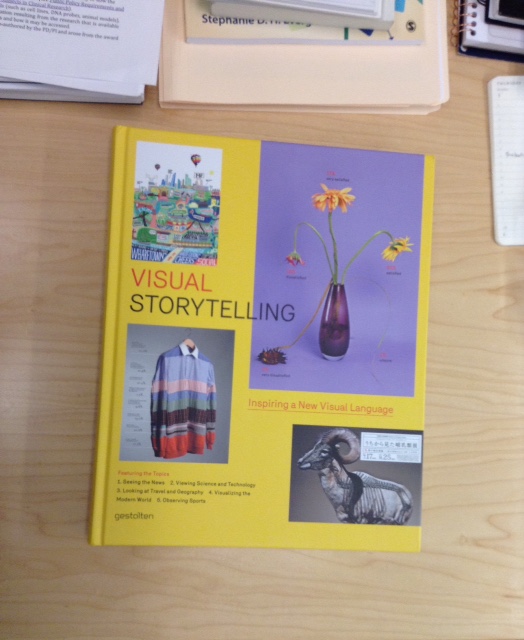
Finally, I think I’d like to add one consistent thing for each of these lists/posts. I’m going to call it, What’s On My Desk Right Now. Right now, it’s this:

Visual Storytelling

Visual Storytelling: Inspiring a New Visual Language, edited by Klanten, Ehmann, & Schulze, and available through Gestalten. I learned about this book after stumbling upon an interview with Jonathan Corum, the graphics editor for science at the New York Times. He’s one of many featured in this book and I can’t wait to dive into it. Now. Lunchtime reading!

Summertime, and the Readin’ is Easy

30 Jun

I have a half-dozen more substantive and/or reflective, work-related blog posts partially written in my drafts box, but it’s summertime and the warm weather, the slower pace, the better parking at work… well it just seems I can’t finish any one of those. So, as I looked at the pile of books on my coffee table this morning, I sent myself a note to make this week’s post another reading list – my summer reading. Here are some things I’m enjoying. Feel free to add yours in the comments section.

How Music Work_Byrne

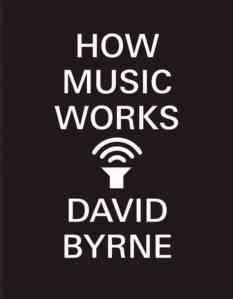
I was in high school in the 1970s and college in the 1980s, the perfect timing to become a HUGE fan of The Talking Heads. While they stopped making music together many years ago now <sniff>, I’ve remained a fan of each of the members as they’ve struck out on all sorts of other artistic endeavors. Former lead singer, David Byrne, has kept me well-entertained with music and writing since those band days. I picked up a copy of his book, How Music Works, back in the spring and absorbed myself in the first third of it, but then put it down for awhile – not because it isn’t a good book at all, but because it’s so interesting, well-written, and thought-provoking that I needed some time to mull over all that I’d read. Then, as things go in my reading life, I found something else and then something else and then… well, it’s on the top of the pile for completion this summer.

Creativity_Pettite

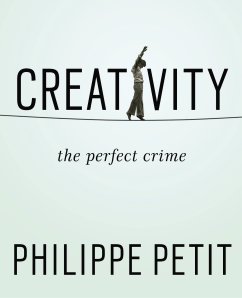
A few weeks ago, my family took a day trip to explore Concord, MA. We hiked the trails of Minuteman Park and enjoyed the quaint shops of the small, New England downtown. One of these shops happened to be The Concord Bookshop, a terrific independent bookstore. As we browsed the shelves, we noticed that the staff were setting up for an evening event. When we inquired who was speaking, we couldn’t believe the answer! Philippe Petit – THE Philippe Petit of “Man on Wire” fame – was in town. What luck! Both Lynn and I are fans of the documentary about his 1974 high-wire walk between the twin towers of  New York World Trade Center. Circus act, daredevil, pickpocket, magician, artist… we were thrilled to get the chance to see and hear him talk about his new book, Creativity, the Perfect Crime. Of course, I picked up an autographed copy. Part instruction book, part autobiography; this is a great book to help get your creative juices flowing. What could be a better summer activity?

W is for Wasted_Grafton     Ghosts of Belfest_Neville

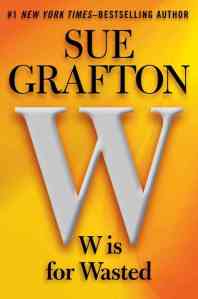
No summer reading list of mine is complete without a mystery! This summer, I have a couple in my pile. I have no idea what I’m going to do when Sue Grafton reaches “Z” and Kinsey Milhone rides off into the sunset of literary characters, but for now, I’ve still got 4 titles to look forward to, including W is for Wasted that came out this past winter. I’ve been waiting for the lazy months of summer to catch up on my favorite detective. Now’s the time.

Going from a very familiar author to the debut work of Stuart Neville, the very well-received, The Ghosts of Belfast. Guilt, redemption, political drama… I’m ready for it.

Kate_Becker


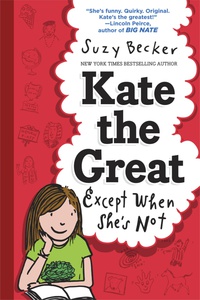
My friend, Suzy Becker, has a new book out for younger readers, Kate the Great. I am young at heart and Suzy is my hero, so I’ll be reading Kate. Best part… it’s the first in a series! I won’t have to say goodbye to Kate as soon as I meet her. Hey! Maybe I can convince Suzy to turn Kate into a detective so that she can fill the Kinsey Milhone hole when it inevitably appears.

HSL_Wood

And okay, okay… I do have a couple of work-related titles on my list.

Hot off the presses, this updated, revamped, wholly new edition of Health Sciences Librarianship will become required reading for those studying to become medical librarians and/or work in the information world of the health sciences. I have several friends and/or colleagues who authored chapters in this book, so that’s reason alone to read it. If you’re looking for the staff copy, I have it.

Rosalind_Franklin


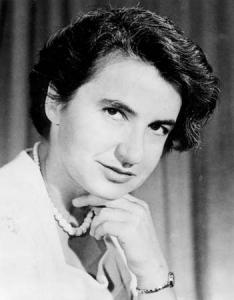
Finally, the Friends of the Worcester Public Library always have a cart of freebies at the entrance to the WPL. I’m forever finding real gems there, the latest being, Rosalind Frankin & DNA by Anne Sayre. Here’s the blurb from Amazon:

Rosalind Franklin’s research was central to the discovery of the double-helix structure of DNA. She never received the credit she was due during her lifetime. In this classic work Anne Sayre, a journalist and close friend of Franklin, puts the record straight. 

I look forward to learning the whole story.

Enjoy your summer, everyone.

I sure hope you’ve got a good book!