The Missing Variable

12 Sep

My second full day of on-the-job informationist-ing leaves me reflecting upon two things:

  1. Language is one big, messy, pot of mess and,
  2. Everything I needed to know about data I learned in statistics.

Let’s look at these a little closer. Those who also know me on Facebook can tell you that my status update yesterday afternoon read, “When you really stop and think about communication, you realize that it’s a MIRACLE that we understand one another even half the time.” I can’t share the conversation verbatim, but it’s close enough to say that part of the process evaluation meeting yesterday morning went something like:

So X represents those eligible. Okay. Now Y should be the number of eligible less those eligible for study. And then Z, those eligible and approved, represents a subgroup that should add up to those eligible for the intervention plus those approved, less X. Aha! So now I see that our final N is correct!

Confused? How could you not be? At first I thought it was only me, being new to the process and all, but I admit that I felt a lot better when I noticed others around the table also had that crinkly look on their foreheads. When Dr. Costanza asked, “Would you like me to draw that out for you?” I said with a little too much enthusiasm, “YES, PLEASE!”

The good thing about working with this group is that everyone is in agreement that the biggest obstacle in their study right now is related to communication. In fact, it’s THE reason they were so excited to have me be on their team. I shared last week about the inherent complexities of multiple data sources, many people on the team, several sites/locations involved, tens of thousands of subjects, etc. Trouble communicating between and within all of these is expected. So where do we begin in fixing the problem?

Words.

Specifically, definitions of words.

And a mandate to quit using the same word to describe multiple things.

Controlled vocabulary is a librarian’s forte. We cringe when we hear it, but Dewey Decimal did indeed go a long way in helping us make our mark as a profession. Organizing, indexing, cataloging… these things work when we create and/or implement some rules that everyone can follow. God knows I hate the Barnes and Noble method of “cataloging.” You need more than “Philosophy” and “Business” and an alphabet, for heaven’s sake. What my research team wants – and desperately needs – is a data dictionary. They need a way to know what “eligible” means and, if there are multiple levels of eligibility, then we need to give each of these a different name and a definition. Either that, or I’m going to re-introduce cave drawings. I think they might work better.

So, tasked with creating said data dictionary, I began (last week and most of yesterday) identifying and collecting any existing code books and/or dictionaries. Once I have them all, I can then merge them together, look for commonalities, create unique identifiers where needed, clear up the fuzzy language, and then, ultimately, implement the use of the dictionary in future communications. Goal: When someone fills out a data request form for a specific set of data elements, the analysts will know just what the researcher wants.

Which brings me to Reflection #2: Everything I needed to know about data, I learned in statistics. While one might think that the foundation for building a data dictionary, i.e. a code book, is learned in information science, my experience is different. I learned about how to create a code book when I learned about how to do statistics. Before you can collect the first bit of data, you have to have a code book in place, defining each element and/or variable that you’re collecting. You need to be clear that this field in this form is answering this question and in this way. The “this” is really important. I learned a lot about how to organize information in library school, but I learned about collecting information in … statistics.

And I didn’t take statistics in library school.

I admit that I entered into my informationist role with a bias. I’m convinced that library schools need – must – start requiring those students who wish to become academic or research librarians of any sort to do original research. Along with research methods, statistics is the foundation for working with data. We’re simply ill-prepared to embed ourselves into a research team and work with data effectively, to help solve issues related to data, if we don’t know much about it. Yes, you can do it otherwise, but I fear the learning-curve is awfully steep and given all of the other stressors that come simply from trying to get everything done at work nowadays, the fewer hills you have to climb, the better.

Librarians have a head start in that we understand information, but I worry that we too often use the words “data” and “information” interchangeably. That’s a mistake. They have different definitions. They mean different things. And they require different skills when dealing with them.

You could look it up.

Thinking with Pictures

8 Sep

I wrote the other day that I drew a picture to help me figure out the methodology of the study and where the different sources of data fit in. Drawing pictures helps me a lot. And I’m not alone. In fact, if you do the slightest bit of reading into the literature on how we think and perceive and remember, you’ll quickly find that our brains are arranged to take in information visually almost 3 times more than our other 4 senses combined. We are visual thinkers. Sadly, though, we live in a society based much more on verbal and written communication. That might explain why we’re so confused, but I’ll resist the urge to digress onto that thought.

I’m fascinated with the topics of visual communication and visual literacy and visual note taking. I’m also really lucky to be married to someone who teaches in this field (as a subset of graphic design) and so I’m privy to a lot of great books and journals and magazines. Between Lynn’s teaching and my interest, we’ve developed quite the library.

I’ve also been lucky in that I was recently asked to speak on a panel at the upcoming “Emerging Roles Symposium” being hosted by the Pacific Northwest Chapter of the Medical Library Association. During the panel, I’ll be talking about my role supporting eScience. There are several panels and a whole bunch of great speakers and topics. It’s going to be a terrific program and I couldn’t be more pleased to take part.

The invitation also came with another to teach a continuing education class. If you’re flying all the way across the country for a meeting, you might as well make the most of it. Of course, I said, “Sure!” Note that I said “Sure!” before ever agreeing on what I’d teach. In the back of my mind though, for a long while, had been the thought to develop a class around my interest and knowledge of visual communication, and so I proposed this to the CE Committee. The result –  Bullet Point 1, Bullet Point 2, Bullet Point 3… the Audience Flees: Visual Communication Skills for Effective Teaching and Presentations – a class that, up until I got distracted by writing this blog post, I was working on this morning.

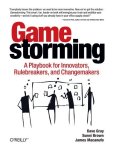
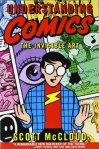
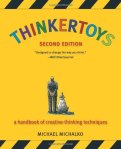
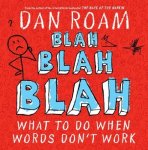
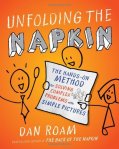
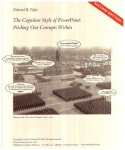
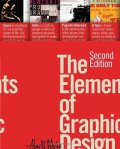
I thought I’d merge my class prep into this post by sharing the bibliography that I’m putting together. These are just some of the books that I’m using, but it’s a great collection to get you started on getting to know this topic. When I think about the skill set needed to be an embedded librarian, I think that two of the most important skills one must have for success are creativity and  problem solving (critical thinking, analytical thought, however you might describe it). Or better put, maybe the one skill needed most by an embedded librarian is creative problem solving and one of the best ways to hone our creative problem solving skills is to practice visual thinking. So without further ado, here’s a small library to get you going (presented visually, of course):

First Day of School

5 Sep

September 4, 2012

This isn’t my first day meeting with the team. We met to collaborate on the grant proposal, of course, and I’ve met with several team members here and there over the past month, but today marked the official beginning of my time on the project. You can probably guess what it started with… as with most anything at work, it started with a meeting. Two of them, in fact.

First, was the monthly meeting where many of the people involved (there are approximately 25 people across 4-5 campuses and/or institutions working on this study!) either attend in person or call in. It’s an update call, a time to document the progress on everything from the number of participants recruited and/or interviewed, to the number of glitches in the various computer programs fixed.

Mostly, it is a time for Process Evaluation. This is an important term, I quickly learn. A large research study is continually evaluated to insure that each step, each part, is producing the data required to ultimately answer the research question. In this case, the National Cancer Institute is giving the researchers a substantial amount of money over several years to investigate what type of intervention works best and is the most cost-effective to insure that women get mammograms, a proven measure in the early discovery and treatment of breast cancer. Without the correct data, the question will go unanswered – or worse, answered incorrectly.

For me, the interesting aspect of the emphasis on process evaluation is that it is the reason the PIs were most excited about adding an informationist to their team. With multiple people and multiple sources of data involved in the study, communication – or better put, troubles with it – are a big concern. My first, and perhaps primary, role on the team is to discover, create and implement the tools necessary to decrease these miscommunications. People are using different terms to describe the same thing. Variables lack clear definitions. We need some controlled vocabulary. Now there’s a good librarian word! And with it, I can see my value pretty quickly.

Meeting #2 involves talking about this role more specifically. My first task is spelled out, “Create for us a Data Dictionary.” Fortunately, I have about 10 months to do this, but by next week, I’m to present my ideas on how I’m going to do this. What am I going to create? What software might I need? What will work best?

I spend the rest of my day thinking about this. I read the grant proposal again. I read a published paper on the study. I sketch out a picture of the methodology, trying to figure out when and where each data source comes into play. It’s no easy task. We have 4-6 (depending on who’s describing it to me) sources of data; 4-6 codebooks; countless variables in total. And of course, they are interconnected in countless ways.

In the end, I determine that I need to make something interactive, something that will allow the users to see not only the definitions of the variables, but also where and how they relate to others. A static document won’t do. I wish I had the programming chops to use ThinkMap (the software behind the Visual Thesaurus), but lacking that, I take time reviewing some other mind mapping and/or visualizing tools. I download a free trial of MindJet and play around with it for awhile. This might work, but I’m not ready to recommend it yet. There are other things out there, I know. I need to look at them, too.

Bottom line: This first day of class was WAY more than a “just hand out the syllabus and leave” day. I think I deserve a new pencil!