Summertime, and the Readin’ is Easy

30 Jun

I have a half-dozen more substantive and/or reflective, work-related blog posts partially written in my drafts box, but it’s summertime and the warm weather, the slower pace, the better parking at work… well it just seems I can’t finish any one of those. So, as I looked at the pile of books on my coffee table this morning, I sent myself a note to make this week’s post another reading list – my summer reading. Here are some things I’m enjoying. Feel free to add yours in the comments section.
How Music Work_Byrne

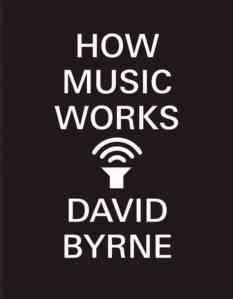
I was in high school in the 1970s and college in the 1980s, the perfect timing to become a HUGE fan of The Talking Heads. While they stopped making music together many years ago now <sniff>, I’ve remained a fan of each of the members as they’ve struck out on all sorts of other artistic endeavors. Former lead singer, David Byrne, has kept me well-entertained with music and writing since those band days. I picked up a copy of his book, How Music Works, back in the spring and absorbed myself in the first third of it, but then put it down for awhile – not because it isn’t a good book at all, but because it’s so interesting, well-written, and thought-provoking that I needed some time to mull over all that I’d read. Then, as things go in my reading life, I found something else and then something else and then… well, it’s on the top of the pile for completion this summer.
Creativity_Pettite

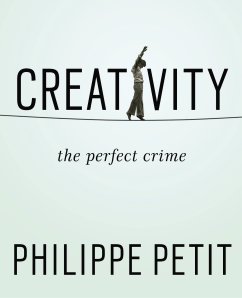
A few weeks ago, my family took a day trip to explore Concord, MA. We hiked the trails of Minuteman Park and enjoyed the quaint shops of the small, New England downtown. One of these shops happened to be The Concord Bookshop, a terrific independent bookstore. As we browsed the shelves, we noticed that the staff were setting up for an evening event. When we inquired who was speaking, we couldn’t believe the answer! Philippe Petit – THE Philippe Petit of “Man on Wire” fame – was in town. What luck! Both Lynn and I are fans of the documentary about his 1974 high-wire walk between the twin towers of  New York World Trade Center. Circus act, daredevil, pickpocket, magician, artist… we were thrilled to get the chance to see and hear him talk about his new book, Creativity, the Perfect Crime. Of course, I picked up an autographed copy. Part instruction book, part autobiography; this is a great book to help get your creative juices flowing. What could be a better summer activity?
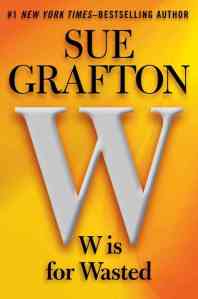
W is for Wasted_Grafton     Ghosts of Belfest_Neville

No summer reading list of mine is complete without a mystery! This summer, I have a couple in my pile. I have no idea what I’m going to do when Sue Grafton reaches “Z” and Kinsey Milhone rides off into the sunset of literary characters, but for now, I’ve still got 4 titles to look forward to, including W is for Wasted that came out this past winter. I’ve been waiting for the lazy months of summer to catch up on my favorite detective. Now’s the time.

Going from a very familiar author to the debut work of Stuart Neville, the very well-received, The Ghosts of Belfast. Guilt, redemption, political drama… I’m ready for it.
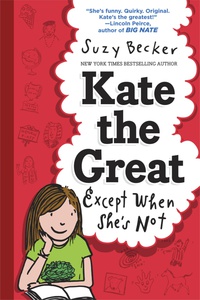
Kate_Becker


My friend, Suzy Becker, has a new book out for younger readers, Kate the Great. I am young at heart and Suzy is my hero, so I’ll be reading Kate. Best part… it’s the first in a series! I won’t have to say goodbye to Kate as soon as I meet her. Hey! Maybe I can convince Suzy to turn Kate into a detective so that she can fill the Kinsey Milhone hole when it inevitably appears.

HSL_Wood

And okay, okay… I do have a couple of work-related titles on my list.

Hot off the presses, this updated, revamped, wholly new edition of Health Sciences Librarianship will become required reading for those studying to become medical librarians and/or work in the information world of the health sciences. I have several friends and/or colleagues who authored chapters in this book, so that’s reason alone to read it. If you’re looking for the staff copy, I have it.
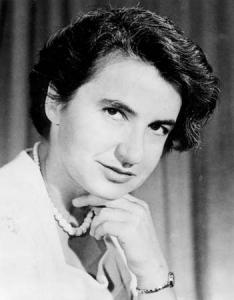
Rosalind_Franklin


Finally, the Friends of the Worcester Public Library always have a cart of freebies at the entrance to the WPL. I’m forever finding real gems there, the latest being, Rosalind Frankin & DNA by Anne Sayre. Here’s the blurb from Amazon:

Rosalind Franklin’s research was central to the discovery of the double-helix structure of DNA. She never received the credit she was due during her lifetime. In this classic work Anne Sayre, a journalist and close friend of Franklin, puts the record straight. 

I look forward to learning the whole story.

Enjoy your summer, everyone.

I sure hope you’ve got a good book!


Hello, Muddah. Hello, Fadduh.

16 Jun

Last week found me at the SIXTH Annual Science Boot Camp for Librarians here in New England. As an original member of the planning group for this yearly event, I’m proud that it’s an idea that’s continued to be of relevance to science librarians in the region, as well as to others from across the U.S.A. and Canada. I’m also really proud that over the past couple of years, we’ve seen the concept catch on with colleagues in other parts of the country so that now there are science boot camps for librarians in the West, the Southeast … the list keeps growing. And everywhere they pop up, the response from participants is a united, “This is GREAT!”

For those unfamiliar with the concept, these camps bring together science librarians and scientific researchers, providing a venue for librarians to learn more about different scientific disciplines and current research in the same. The goal is for librarians to gain a base level of knowledge that allows them to prompt discussions with researchers on their own campuses. Ideally, these discussions then lead to improvements and growth in library services offered to the research community. Over the years, I’ve learned about biochemistry, nanotechnology, geographic information systems, astronomy, robotics, remote sensing, evolutionary biology, epidemiology, public health, and so much more. Perhaps most interesting is that with every discipline I’ve learned, I have found at least one thing relevant to my own work as an embedded biomedical librarian. Even astronomy! What this says to me is that science crosses and involves so many disciplines today, learning about any one of them informs others.

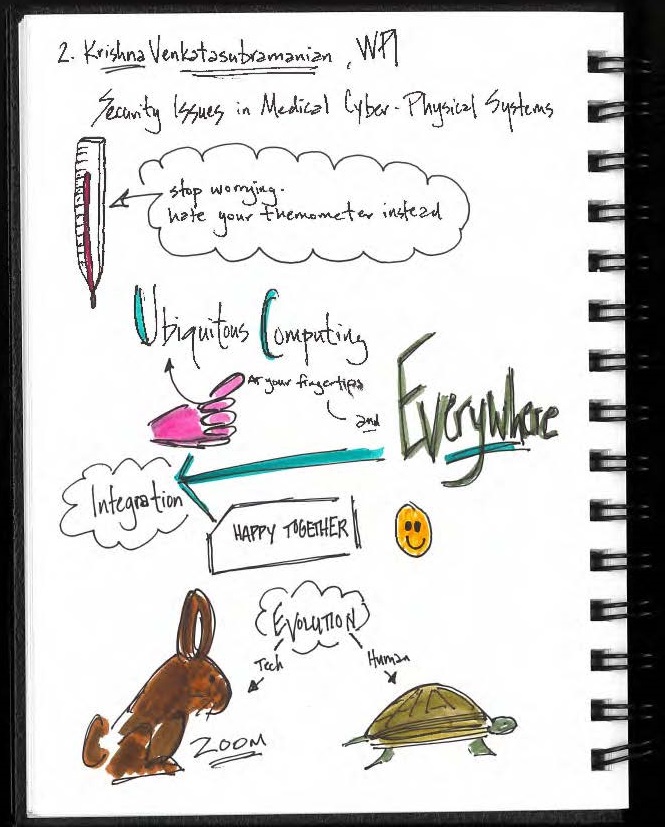
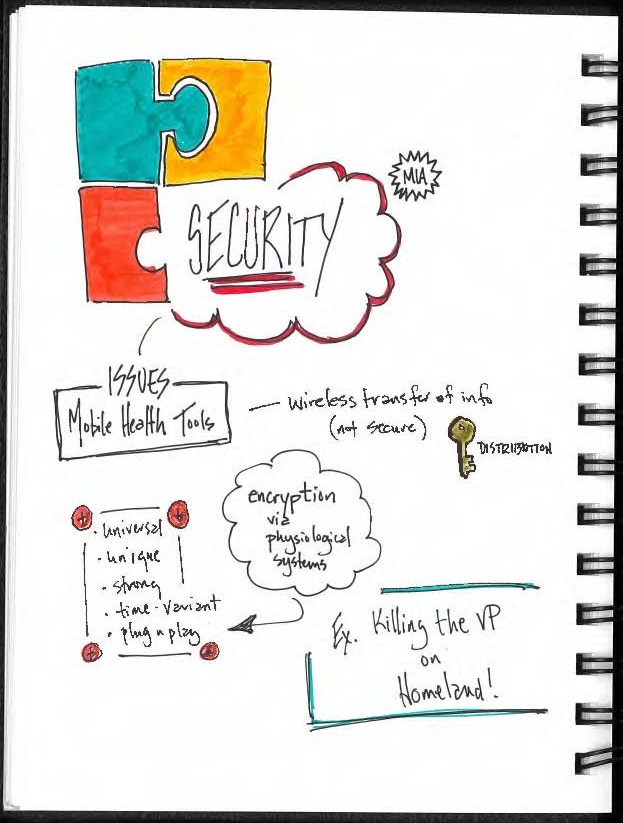
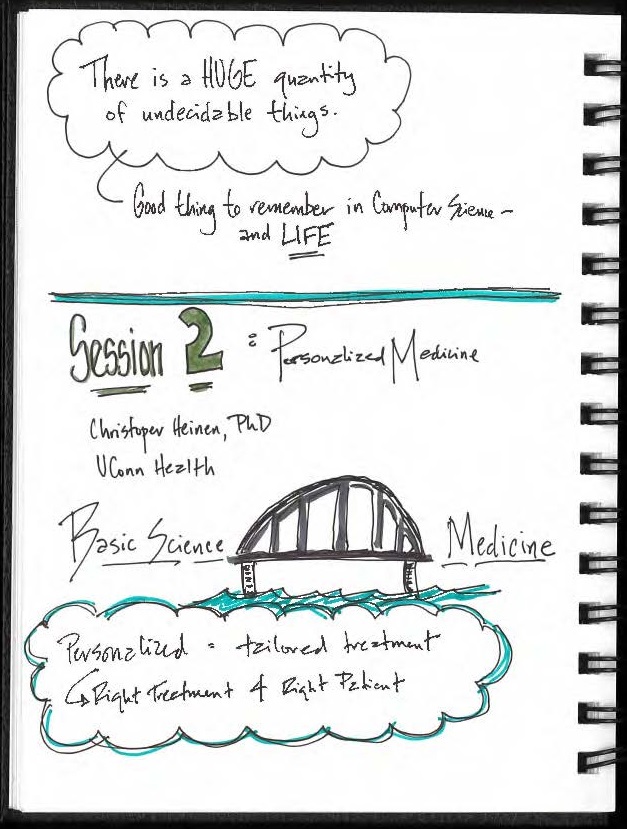
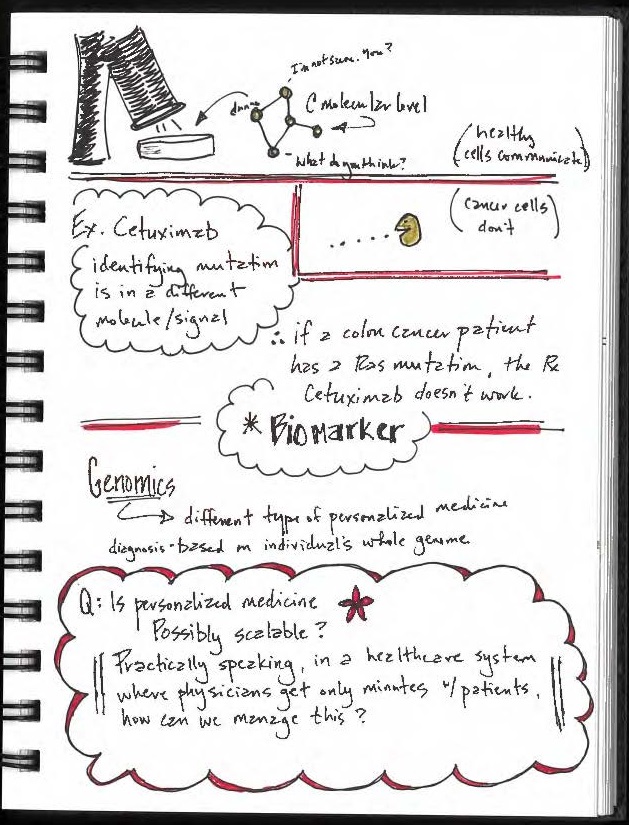
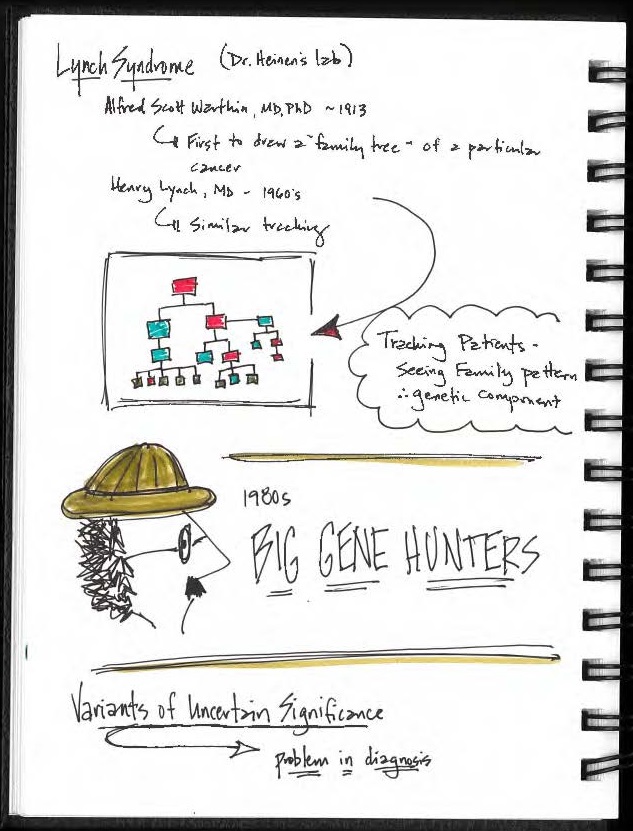
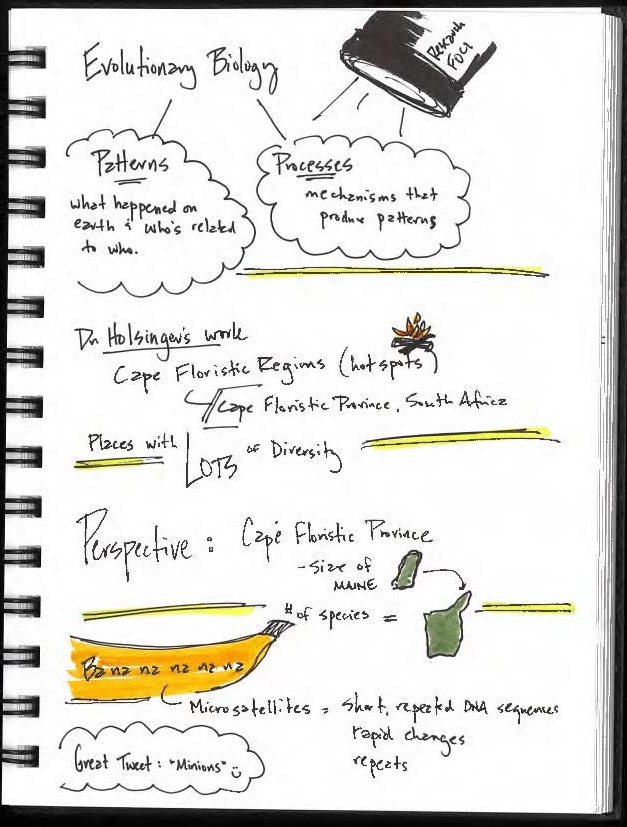
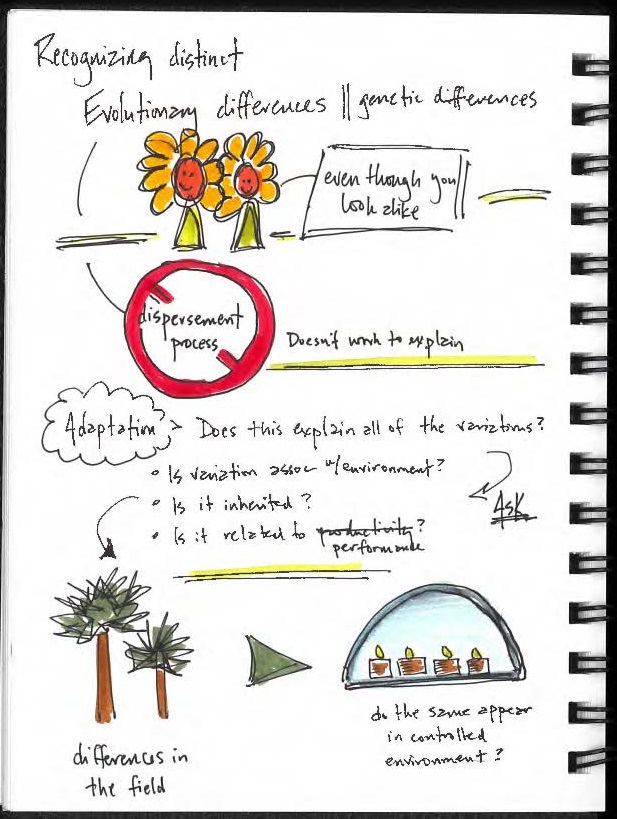
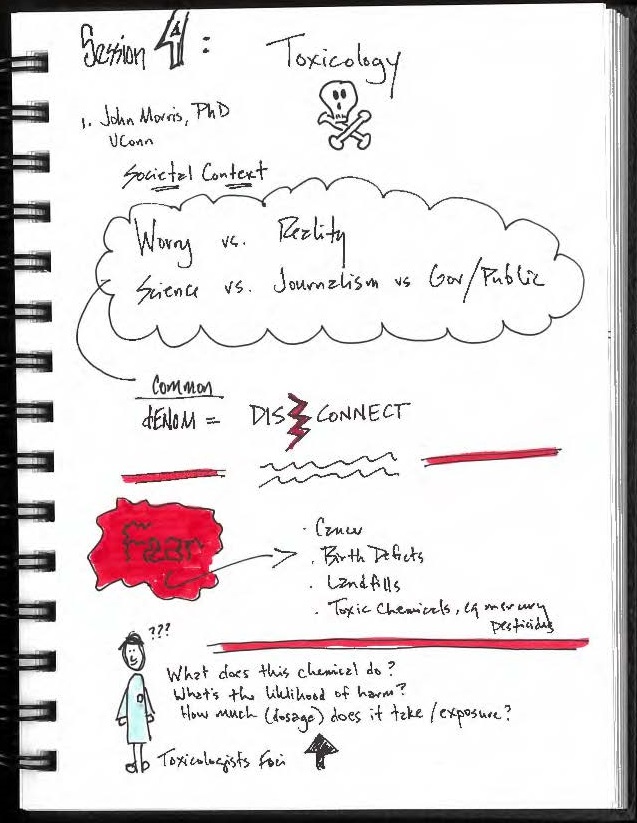
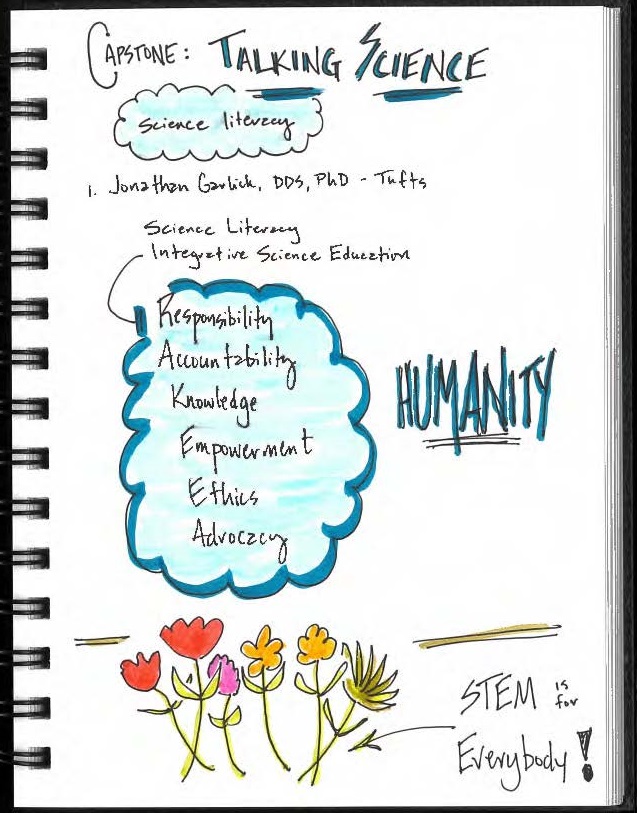
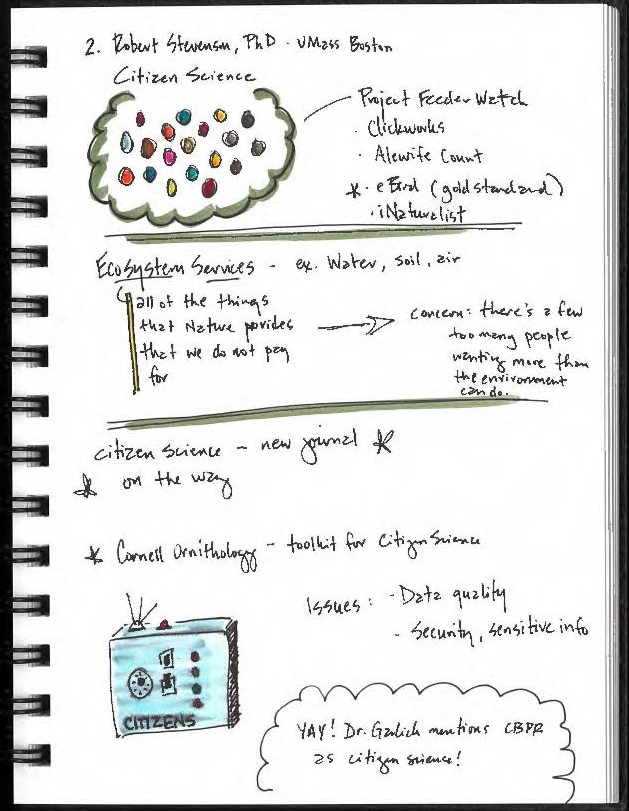
This year’s Camp was held at the University of Connecticut and we had sessions focusing on computer science, personalized medicine, evolutionary biology, toxicology (pharmaceutical sciences), and a capstone presentation that covered how to both talk about and engage the public in science, i.e. promoting science literacy and citizen science. I’ll not recap each session here, but I will share my sketchnotes for those who might want to get a peek at some of the terrific content shared. Enjoy!

SESSION ONE: COMPUTER SCIENCE

Speakers – Craig Wills, PhD; Krishna Venkatasubramanian, PhD; Dan Dougherty, PhD (all from Worcester Polytechnic Institute, Worcester, MA)

SciBoot Sketchnotes_Page_01       SciBoot Sketchnotes_Page_02     SciBoot Sketchnotes_Page_03     SciBoot Sketchnotes_Page_04     SciBoot Sketchnotes_Page_05     SciBoot Sketchnotes_Page_06     SciBoot Sketchnotes_Page_07     SciBoot Sketchnotes_Page_08     SciBoot Sketchnotes_Page_09

SESSION TWO: PERSONALIZED MEDICINE

Speaker – Christopher Heinen, PhD, UConn Health

SciBoot Sketchnotes_Page_10     SciBoot Sketchnotes_Page_11     SciBoot Sketchnotes_Page_12

SESSION THREE: EVOLUTIONARY BIOLOGY

Speakers – Kent Holsinger, PhD; Janine Caira, PhD (both from the University of Connecticut)

SciBoot Sketchnotes_Page_13     SciBoot Sketchnotes_Page_14     SciBoot Sketchnotes_Page_15     SciBoot Sketchnotes_Page_16     SciBoot Sketchnotes_Page_17     SciBoot Sketchnotes_Page_18     SciBoot Sketchnotes_Page_19     SciBoot Sketchnotes_Page_20

SESSION THREE: TOXICOLOGY (PHARMACEUTICAL SCIENCES)

Speakers – John Morris, PhD; Amy Bataille, PhD (both from the University of Connecticut)

SciBoot Sketchnotes_Page_21     SciBoot Sketchnotes_Page_22     SciBoot Sketchnotes_Page_23     SciBoot Sketchnotes_Page_24     SciBoot Sketchnotes_Page_25     SciBoot Sketchnotes_Page_26


SESSION FOUR – CAPSTONE: SCIENCE LITERACY & CITIZEN SCIENCE

Speakers – Jonathan Garlick, PhD (Tufts University); Robert Stevenson, PhD (University of Massachusetts, Boston)

SciBoot Sketchnotes_Page_27     SciBoot Sketchnotes_Page_28     SciBoot Sketchnotes_Page_29     SciBoot Sketchnotes_Page_30     SciBoot Sketchnotes_Page_31


Let’s Decide!

6 Jun

The title of this post can be found written in large, bold letters in the notes I took during a meeting on Tuesday. “LET’S DECIDE!” It followed the side comment (my notes from any meeting are filled with side comments and/or digressions), “Basically, we can facilitate this work and see that as our role or keep doing our own thing.” I realize that it’s not truly an “either/or” situation, but…

Maybe I should offer a little background, first.

Initially, Aim 2 in the proposal for my work as an informationist on the mammography study was this:

Aim 2: Assist investigators in identifying and reporting information technology issues that have arisen in the implementation of the study that may be of use to others.

After spending a great deal of time searching the literature in fields from information technology to medical informatics to team science (or simply teamwork), I realized that not much existed that fit the issues that they’d encountered. Further, I wasn’t convinced that writing an article and/or white paper on the topic was the place to start in terms of reporting their experience. I thought that perhaps bringing people together, i.e. the different stakeholders, to talk about the issues, problems, lessons learned, etc. that occur when IT folks and a research team come together to work on a project. I felt that such a discussion would yield a lot of valuable information that could then, somehow, be collected, organized, and disseminated in a useful manner. After a lot of talk and brainstorming within the team, we all agreed that this seemed a good path to take.

Making a long story short, this idea took hold, evolved, grew, and a couple of weeks ago, took the form of a mini-symposium that was part of the annual research retreat for our Center for Clinical and Translational Science. The program, entitled, “Data Acquisition, Data Management, and Subject Tracking in Clinical and Translational Research: Seeking Solutions to Persistent Challenges,” brought together the researchers from the mammography study, two faculty members from our Department of Quantitative Health Sciences, a biostatistician from the University of Massachusetts, Lowell, and a representative from our Information Services department. My role now is to pull all of the content from the symposium, along with other useful resources, and make it available online for the benefit of our research community.

This is all a really happy story for me in that I’ve been able to help facilitate and see something come together that we have been talking about in my library for a number of years now. Finally… FINALLY … people are starting to talk about issues around data. For too long, the only folks that I’ve heard talking about managing data are librarians. And frustratingly, we’ve mostly been talking among ourselves. But over the past months, I’ve been able to watch people that we’ve been wanting to reach addressing the issue. And best of all, the different players are talking to one another and not just among themselves.

So why the frustrating digression in my notes from Tuesday? Well, it’s because in my position, I can see several things happening. First, I can see several different camps, including the library, trying to stake their claim on one or another aspect in the data management services suite. And there’s a lot of overlap.

Secondly, there’s a lot of the feeling of “we’re the experts, so we should be the ones to do this.” Going along with this is also a lack of awareness and/or understanding of what each stakeholder really is expert in. For example, I might think that the people in Information Services ought to address issues around data storage and security. This is true, of course, but it leaves out the expertise that some in that department have around the proper ways to build databases and thus best practices in file structures and naming conventions and other things that might make me want to say, “Hey! That’s my area of expertise, not yours.” Similarly, many libraries developing data management services are focusing a great deal on providing data management planning in grant applications, but if you asked my colleagues in Quantitative Health Sciences, they’d say, “That’s what we do. Why are you saying it’s your role?”

talk talk talkLastly, despite the success of the mini-symposium, there’s still an awful lot of “talking amongst ourselves” going on. I see this more easily, and thus get a little frustrated at times, because I have my foot in several different areas where I’m hearing the same message. In other words, despite the success of bringing people together for the mini-symposium, there’s still a lot of room for improving how well we communicate and coordinate our efforts, not only campus-wide, but even within my library. So when I wrote “LET’S DECIDE!” it was my reaction to what I see as a really big need that we can fill. There is a huge need for someone to fix the broken communication system, help eliminate some of the duplication of efforts, and facilitate the development of services around data within my institution. And I believe that someone is me and my colleagues in the library. 

One of the characteristics of the library that was lost when we brought our resources to the researchers was our place as the hub of a lot of academic activity. People used to come to our physical library and here the different worlds of campus would collide. Researchers and faculty members and clinicians were forcibly less isolated in labs or offices. They literally ran into one another and likely had a bigger picture of things that were going on, simply through the interactions. At the same time, librarians were more easily able to know a lot of what was going on, too. We had a front row seat for all of the collisions. What I’ve found, as I got out of the library and started working on research teams, is that by going to the people that used to come to us, I’m bringing that lost quality back to life. While it can be incredibly frustrating to observe different groups addressing the same issues, each unaware of what the other is up to, the fact is that I can make them aware.

The mammography study team didn’t know that a team in the library has been working and working and working towards a goal of teaching good data management practices to the students, but as I’m a member of both teams, I did. So, when the study team made a suggestion that we recreate the symposium via a webinar series, archive it, and make it available to the students as part of their curriculum, I immediately chimed in, “Wait! Let me tell you what we’ve been working on.” A similar thing happened with the data management group in Quantitative Health Sciences. And now, we have a meeting scheduled for next month where we will bring these groups together – the research team, the QHS group, IS, and the library’s data services group.

To me, being able to facilitate these gatherings is one of the most rewarding parts of this informationist work. It’s a great role for librarians to take in the area of data management. As I wrote a few posts back, it’s the networking aspect of eScience and a place where we can put our skills to good use. The library itself used to bring people together. Today, librarians do.