Tag Archives: open access

The Irony of Open Access

14 Apr

In her song, “Everything is Free,” the singer-songwriter Gillian Welch sings:

Everything is free now
That’s what they say
Everything I ever done
Gonna give it away
Someone hit the big score
They figured it out
That we’re gonna do it anyway
Even if it doesn’t pay

She wrote the song in the days of Napster, when she felt her livelihood threatened by the unlawful sharing of artists’ work via the service. Napster, of course, faced legal challenges and eventually shut down as part of a settlement. But the horse was out of the barn, so to speak, and today Spotify and Apple Music (disclosure: I subscribe to the latter) continue to pay artists less-than-pennies on the dollar so that we can enjoy their talents.

I thought of this song as I was listening to the latest episode of the podcast, Radiolab, called The Library of Alexandra. The episode focuses on the shadow website, SciHub, and its creator, Alexandra Elbakyan. I’m not going to use this time and space to cover the details of SciHub (you can listen to the podcast), but for those who are unfamiliar, it’s a file sharing site, like Napster, but the files it shares are published journal articles. Also like Napster, it’s illegal.

Elbakyan, as well as SciHub’s champions, claim that the site provides an essential service. The scholarly publishing enterprise is broken. It charges obscene amounts of money to access articles, either via subscriptions (thank your library) or through individual payments for individual articles. Researchers – or rather researchers’ libraries/institutions – end up paying to access the work that they created themselves. The availability of research is also enormously skewed towards those with money, creating significant inequity in research across the globe (yet one more example).

You get no argument from me on these points. A handful of large publishing houses overwhelmingly control the vast majority of academic journals. For years they have had the upper hand, increasing subscription prices at a pace that broke library budgets, resulting in cuts to all kinds of resources and services. Yes, it’s a broken system. But as I listened to Lulu Miller and Latif Nasser, the co-hosts of the show, as well as Eli Cohen, the reporter for this episode, giggle and gush and breathlessly sing the praises of SciHub and Elbakyan, I cringed. I honestly kept thinking that a punchline had to be coming. Surely they were joking.

How could respected journalists condone this behavior? How could Lulu Miller (LULU MILLER?!), who gave one of THE best keynote lectures I have ever heard when she spoke at the annual meeting of the Special Libraries Association several years ago, be guffawing over a website and a practice that seriously damages libraries and librarians? They all laughed when Elbakyan said, “We will break copyright.” Hah, hah. So funny. I about blew a gasket when Cohen declared that he discovered SciHub while trying to learn how to use the library in college. It was just so much easier. Laziness and theft. Like Pandora’s Box opened up. What the… ?!?!

And so I took to Twitter and I shared some comments. I wondered how journalists would feel if someone busted through the paywalls of the world’s newspapers. I wondered if they’d just give their work away for free. I wondered if they worked for free. Nasser tweeted back:

Well, that’s true. They are a public radio show. Kind of like a public library. Everything is free.

What a ridiculously shallow reply. Nothing is free. Public radio, like public libraries, depends upon taxpayers, subscribers, donors, foundations, so many generous sources, in order to stay afloat. NPR recently experienced its largest layoff in its history due to a lack of advertisers and drops in other financial support. So hey! Stuff costs money. And when people righteously steal, pretending to be some kind of Robin Hood, other people suffer.

Thankfully, at the very end of the episode, the story FINALLY got to modern day (SciHub was started 12 years ago) when it discussed open access and the recent moves by the Biden administration towards immediate open access of all government-sponsored work (the Nelson Memo), beginning in 2025. Since 2008 (longer than SciHub), federal law has required that all research funded by the National Institutes of Health be made publicly available within 12 months of publication. The Nelson Memo is the next step in this progress towards an arena of open science. (And I beg to differ with the conclusions of the Radiolab folks, i.e., we don’t owe all thanks to Alexandra for pushing the world to open science. I think there are a good many others who have worked in legal ways over these years to see this come to fruition. And oh yeah… we had a global pandemic that forced paywalls to come down for the sake of developing a vaccine.)

On Wednesday, I attended a truly enlightening panel discussion hosted by the Society of Scholarly Publishing entitled, The Nelson Memo…Now What?. (Sorry folks, you can’t watch for free.) The panel featured a university librarian (Yale) and three individuals representing three different levels of publisher – large (Springer Nature), decent sized society publisher (American Physiological Society), and a small, niche, clinical publisher (American Society of Clinical Oncology). It was fascinating to hear the different perspectives, the genuine questions and fears, doubts for the future, the positives and negatives. In the end, there were no answers because there are no answers. The only thing anyone knows for sure is that scholarly publishing is facing a foundational shift in how they operate. And so are academic libraries.

And as I listened and took notes, all I kept thinking was, “How ironic.” For years this is what we’ve wanted, what we’ve worked for. Research should be available to everyone to read and build upon. Data should be available to reuse and expand. This is open science. It’s all great.

But again, NOTHING is free. Who is going to pick up the tab? It remains to be seen.

(Aside: I also saw this week that the New York City restaurant, Serendipity3, is bringing back its $214 grilled cheese sandwich, and that the misogynistic creep of a human being, Daniel Snyder, who is under federal investigation for his horrid reign over the Washington Commanders football team now has an offer from a group to buy the team for $6 billion dollars. He paid less than a billion for it. So somebody has the money to foot the bill.)

Public radio is not free. Public libraries do not operate without costs. Academic libraries provide so much to their faculty, students, and staff that quite frankly ought to be appreciated, not usurped or stolen. SciHub may be free, but it comes with a cost to those of us who seek to change the law, not break it.

I like Radiolab. Just not today. And I abhor obscene wealth. Every day.
Doctors and Dog Walks and Opening Day!

31 Mar

Happy (belated) Doctor’s Day to all of those who give the years to learn and train, all to care for us. There are LOTS of things broken in America’s healthcare system, but the individual physicians usually aren’t part of that mess.

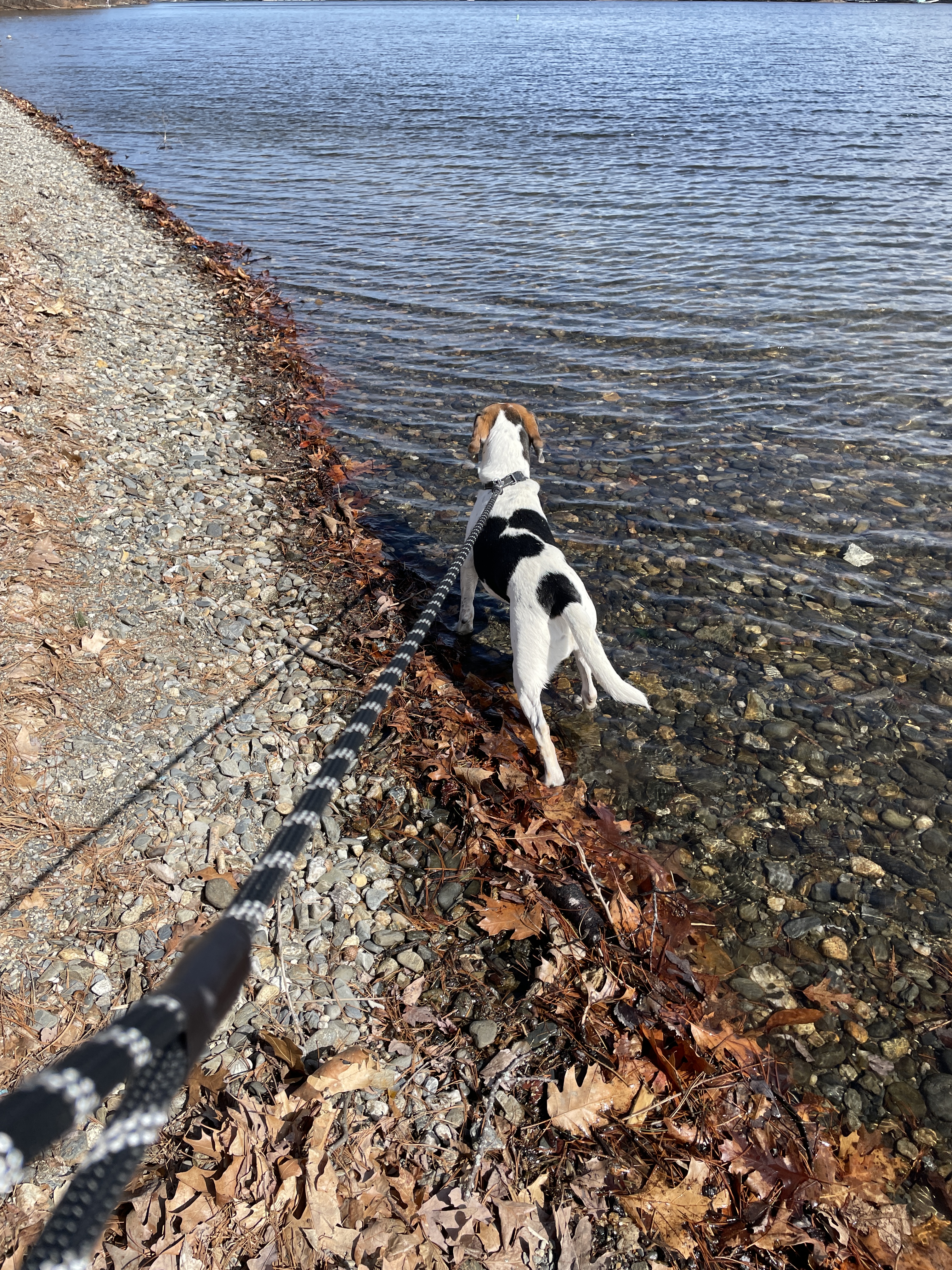
I had an appointment with my cardiologist this week. I just love her. She’s such a kind and caring physician. The first time I saw her, several years ago now, she told me that she remembered me as one of her librarians during med school. During our visit this week, we talked about book clubs and work and families and my health. We were both very happy with my blood pressure (the reason that I see her). I told her that after a really difficult year that included losing my beloved dog, Eliza, I got a new pup in December. Now I’m back to walking with a four-legged friend twice daily. I know that our morning walk through the park is such a welcomed treat for my physical, mental, and emotional health. And I didn’t do it during those months alone. I’m grateful for Bayer, for Eliza, and for Dr. Carlson. Here’s to good health!

And for more being outdoors, it’s Opening Day for the Worcester Red Sox! I’ve got my ticket and am looking forward to cheering on the hometown team. I’ve never been to an opening day before. Being New England, you’re taking a chance on a baseball game in March, but it looks like we may luck out and have a little sun and temps near 50. Play Ball!!

A few good resources that I came across this week include the IMLS-funded project, Data Quality Evaluation, a national forum to build and promote competencies in academic librarians around quantitative data, data quality problems, and evaluating data quality. I’ve just begun to scratch the surface of the resources available. It also reminded me of the IMLS-funded project, Visualizing the Future, that my colleague Tess and I were a part of. More great resources can be found there on the topic of data visualization.

The Librarian Parlor is a project aimed at building a community to strengthen original research among librarians. My colleague, Regina, shared it with us this week after learning about it at ACRL’s recent annual meeting. You can find recommended readings, online learning, and classifieds – calls and opportunities to engage in research projects.

And lastly for fun finds, I read an interesting paper, Publish, Don’t Perish: Recommendations for Mitigating Impacts of the New Federal Open Access Policy” in The Journal of Science Policy and Government. It offers lots to think about regarding the recently released Nelson Memo and how the benefits of open access weigh against some of the burdens it brings to authors, publishers (particularly smaller ones), universities, and libraries.

Speaking of sharing freely, do people in your workplace have their own personal libraries of work-related books in their offices – ones that they’d gladly lend in-house to colleagues, if asked? Well, we do here and I want to give a shout-out to Kayla, our library school intern from the University of Rhode Island who’s helping us solve this problem. One project that she’s tackled is cataloging these personal collections to create a means where staff can now find the items in our regular catalog to borrow between one another. This is such a useful project and one that’s provided the opportunity for Kayla to learn several new skills. I know the staff will be really appreciative of her work.

Other stuff:

I finished “Daisy Jones and the Six” this week. Based on the novel by Taylor Jenkins Reid, it’s a 10-part limited series on Amazon Prime that follows the rapid rise and fall of a rock band in the 1970s. I liked it a lot, particularly in part because all of the actors are singing and playing their own instruments. I appreciate that a lot. I’m also very ready for the new season of “Ted Lasso”. I’ll start that soon. Can’t wait!

Nickel Creek’s long-awaited new album, Celebrants, dropped this week. It’s super! Here’s a review from the good peeps at Folk Alley.

And finally, I read a great piece in The New Yorker on Audie Cornish, the former NPR host, now on CNN. She has a new podcast for the latter called, “The Assignment.” I’ve listened to a couple of episodes and find it thoughtful and refreshing; a highly effective way to bring important stories in the news to listeners. I recommend it.

That’s a wrap for this week. Until next time, be well and be kind.

The Privilege to be a Crusader

15 Jan

I went to bed last in a fitful state, my mind racing with thoughts of several online discussions I’d taken part in during the day. I also thought that if there was ever a time for me to heed Clay Johnson’s words from The Information Diet, it was then. I felt sick, as if I’d eaten one too many pieces of chocolate cake. Aaron Swartz, Lance Armstrong, and the flu shot were the sources of my calories.

The death of Aaron Swartz is a tragedy, there is no dispute. As Kevin Poulson of Wired Magazine said to Margaret Warner during an interview on PBS NewsHour, “If he had done nothing but co-invent RSS when he was a teenager, that alone would be an achievement to assure some sort of place in Internet history. But then he went on to do one thing after another.” It was, sadly, one of those other things that led to repercussions that many now claim caused him to take his own life. As most know by now, Swartz was pursued vehemently (many will conclude, unfairly) and ultimately charged with breaking a number of federal laws for hacking into MIT’s network and downloading thousands of full-text articles provided to MIT via their paid subscription to JSTOR.

There is a lot to this story, more than I am qualified or prepared to go into on this post. However, the one point I do want to make relates to the notion expressed by numerous sources as they praise Swartz for his activism:

  • “You know, it’s not accurate to say that he hacked into it. This was a database that was available on MIT’s campus for free to any students there, because MIT paid the subscription cost. So what he did is he went onto the campus and he used their network there, their public network initially, to automatically access the database, the same way you could do manually legally, and download one article right after another in rapid succession.” – Kevin Poulson
  • Comparing Swartz’s actions to those of HSBC, and most importantly the Governments actions towards both as they addressed the crimes, James Allworth writes, “Lay those two cases down beside that of a 26-year old kid who did the online equivalent of checking out too many books out of the library. “
  • “MIT deliberately operates an ‘extraordinarily open network’ with few controls to prevent abuse. Any visitor can register, and it’s easy to bypass the controls that do exist by assigning yourself an IP address. There are no terms of use or definition of abusive practices. And when Swartz downloaded the JSTOR articles, ‘the JSTOR website allowed an unlimited number of downloads by anybody’ on MIT’s network.” – Alex Stamos, expert witness for Swartz, in recent blog post

The issue I take with each of these statements is the notion behind them that the end justifies the means. He didn’t really “hack” into the network because (a) his methods weren’t all that complicated and (b) because the network was public. MIT promotes an open atmosphere of sharing. And downloading a bunch of articles is just like borrowing too many books and not returning them on time. In other words, none of it was a big deal.

Swartz didn’t believe that information should be trapped behind walls. He lobbied for a free and open Internet. He was an extremely important person in this movement. He brought to the public a wealth of information, particularly information that was in the public domain and should have been easily accessible, through his work in several ventures. It was good work and it will be missed by us all, whether we realize it or not.

However, the glossing over of a few aspects of the allegations (and they remain allegations) troubles me. Swartz was not a student at MIT. Universities, and more importantly libraries, pay substantial subscription prices to make the full content of scholarly journals available to their students, faculty, staff, researchers, etc. One can argue that anyone who believes scholarly articles are worth much monetarily are nuts (as Larry Lessig does well here), but just because Swartz could have never made any money off of the articles he downloaded, something the prosecution errantly believed, this doesn’t mean that they weren’t worth anything. They were, in fact, worth a great deal. The MIT library paid no small price for that subscription. It is a line item in their budget. It costs them money that, if they really didn’t have to pay for JSTOR or any other database or online journal, could be used for something else like, say, research support or instruction. Materials that are made available to patrons of a library are not free.

Was the punishment that the prosecutors wanted disproportional to the crime? Absolutely. Without a doubt. But if the charges against Swartz could have been proven in court, if he really did set up his laptop in that network closet and download thousands of articles, then he did break the law and he deserved some sort of punishment. He did not deserve to be bullied, singled-out, or made to be an example to others who might seek to do similar acts. I agree with Lessig, who states in the above-referenced post,

“I am a big supporter of changing the law. As my repeated injunctions against illegal file sharing attest, however, I am not a believer in breaking bad laws. I am not even convinced that laws that protect entities like JSTOR are bad. And even if sometimes civil disobedience is appropriate, even then the disobedient disobeys the law and accepts the punishment.”

Which brings me to the second helping of chocolate cake that kept me tossing and turning, Lance Armstrong. One might wonder (as I do) why the federal government dropped its case against Armstrong last year. “The government always has a tremendous amount of prosecutorial discretion regarding whether or not to bring an indictment. In this case it appears that they have acted judiciously and likely considered all of the good works of Lance Armstrong and his foundation” (Mathew Rosengart, a former federal prosecutor). Yes, Armstrong has now had his time on Oprah’s couch and supposedly confessed to the years of doping that he engaged in while riding professionally. I don’t care. I am an avid cycling fan. I absolutely LOVE the Tour de France. I am in awe of the feats that cyclists can accomplish, blood doped or not. I couldn’t even walk up Alpe d’Huez, let alone ride a bicycle to the top of it. As I listened to Tyler Hamilton and Daniel Coyle’s book, “The Secret Race“, over the weekend, I felt sorry for everyone involved. For the most part, Armstrong EXcluded, the individuals in the story seemed like nice guys who got caught up in something bigger than themselves. They wanted to win and the only way to do that was to cheat.

But there you have it. Another means to an end. Justification, perhaps, but not an excuse. There were rules in place and the cyclists chose to break them. Some got caught and others didn’t. That’s not fair. None of it is fair. Exorbitant journal prices are not fair. Allowing some people an advantage, whether it be through wealthy schools that can afford large subscription fees or wealthy cyclists who can afford to stay one step ahead of the testers, is unfair. Armstrong claims, via Hamilton (and perhaps even admits it to Oprah), that he didn’t cheat because everyone was cheating. If everyone is breaking the rules, then the rules no longer apply. That’s the logic. Personally, I think it’s anarchy.

What bothers me most about both Armstrong and Swartz, is that neither of them ever appeared to accept the consequences of their actions. Armstrong lied ad nauseum over the years and it is only now, when he is retired, when his charity is facing huge losses, when his image is tarnished, when his millions in sponsorships are drying up, when he can no longer win over (or bully) his former teammates into saying what he wants them to say… only then does he go to the Queen of Confessions herself to share his sad story and ask our forgiveness. Maybe. But when one is forced into the place of admission and apology, what’s the point? Can it even possibly be sincere?

Aaron Swartz hung himself. This is sad beyond sad. Anyone who has lived with depression or knows someone suffering from it, you know that the depths of despair that must come at the moment of suicide are unbearable. It is the unbearableness that leads to the choice of ending one’s life. It is a horrible, horrible thought – a horrible thing. The federal government, MIT, and others involved in the case, bear some responsibility for Swartz’s death, but so does he.

The ends justify the means only when one takes responsibility for those means in the first place. Rules and laws can need changing, but we need to be accountable for the means by which we bring about the change. The fact that no one in either of these cases (I am referencing all sides) seems to want to take any responsibility for his or her or their actions – that’s what bothers me the most.

And finally, the flu shot. I did not get one. I talked with my doctor about whether or not I needed a shot during my last check-up, in November. I am healthy and I don’t live or work with a vulnerable population. My chances of getting the flu may be higher this year, if there really is an epidemic happening, but if I do get it, I can sequester myself, stay in bed, ride it out, and in a couple of weeks, be fine. It isn’t that I want to get sick. Who wants to get sick? But sickness – germs and viruses and bacteria – is a part of life. I’ve had influenza twice in my lifetime. Twice in 50 years. I’ve had more cavities than that, despite fluoride in my water, regular dental visits, and pretty good oral hygiene practices.

I posed the question, “Who do you listen to more for health advice, your health insurance company or your doctor?” on my Facebook page yesterday. I posed it in the context of the flu shot – I received an email from my insurer telling me to get a shot, despite the fact that I’d had an intelligent, thoughtful discussion with my doctor and, based upon it, made a decision. In a nutshell, I was hung out to dry. Horror stories of individuals’ experiences with the flu were shared, layers of guilt over how I was going to make others sick were applied, pleas were made for me to use my good sense. So I shared an abstract  from the Cochrane Systematic Review on the effectiveness of flu shots for preventing the flu in healthy adults (modest), thinking that by at least providing some evidence for my beliefs and actions, my many colleagues who teach (and preach) the importance of evidence-based decision-making would pause. Nope. Didn’t matter. The episode marked the trifecta of things not making any sense to me for the day. I called it quits and turned out the lights.

What do any of these stories have to do with my role as an informationist? Specifically, nothing, but generally, I think each one is a clear indication of the ways in which the distribution and management of information effect us all. We try to control it, manipulate it, commodify it, and use it to prove or disprove our beliefs. We can twist it or ignore it or accept only the parts of it that we agree with. It is, in many ways, a free-for-all.

The discussion at the end of this morning’s team meeting centered around the question(s) of what kind, if any, conclusions the research to date might be giving. It is a multi-year study and the final results won’t be available for several years, but is there anything there now that’s of value to a larger audience? Is there anything new? Depending upon how the question is framed and the data presented, there may be. It’s something to look into (and off I went with a couple more lit searches to do). But the point is that with so much information available to us, integrity becomes so much more important. Taking responsibility for the actions that we take, the questions that we ask, and the conclusions that we draw around information may be more important now than they have ever been. Those of us working in the field not excepted.