Tag Archives: librarianship

Stay Put!

6 Mar
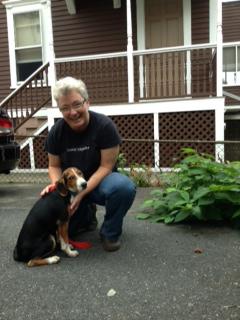
Sit, Eliza. Stay.  Our puppy on her first day home, Aug 2013.

Sit, Eliza. Stay.
Our puppy on her first day home, Aug 2013.

I read a couple of good blog posts this morning, over on the Medical Library Association’s blog, “Full Speed Ahead.” The first was by MLA President, Linda Walton, called, “The Time for Change is Now.” It offers a nice summary of the organization’s new strategic goals, each of which contains some level of a call for action. Like many professional organizations, MLA is challenged to find its purpose and goals in the ever-changing world of libraries, health care, and information. The second post is by MLA’s new Executive Director, Kevin Baliozian. “Words I Can Do Without” lays the foundation for what became the very strategic plan outlined in Linda’s post. Wondering what Kevin’s “no say” words are? SPOILER ALERT: They are “try” and “continue.” Again, you can see that MLA and it’s leadership are focused on moving forward, shedding the “same old, same old,” and making the organization as relevant and important to health sciences librarians and information professionals as its storied history shows it to be in the past. 

I serve on the Executive Board of my regional chapter of MLA and we are engaged in much the same type of work. What do we continue doing? What do we cast aside? Who do we reach out to? What defines us and makes us different, unique, worthy of a colleague’s membership dues and energy? Important questions, all.

I’ve got nothing against change. I think it’s important to take stock on a regular basis and adjust accordingly. In my new job as an evaluator, that’s one of the main focuses (foci?) of my work. More, it’s one of the main reasons for my work. I evaluate the research cores and programs of the UMCCTS to track their progress and to make corrections; to identify where changes need to happen. 

But all of this said, I do have one cautionary note about change: Change for the sake of change is no change at all.

I once counted the number of times that I moved between the ages of 20 and 30. I don’t remember the exact number today, but it was around 18. Eighteen moves in 10 years. I also had a number of jobs during that time. I changed all of the time, BUT I went nowhere. I never stayed in any one place long enough for it to feel like home and I never stayed in any job long enough to become very good at it. And it’s the latter that I sometimes fear when it comes to the bigger picture of organizational and/or professional change.

The other day, someone called me to ask for some “librarian expertise.” I told him that I no longer worked in the library, but I could still certainly help him because I still have librarian expertise. I have it because I stayed in a job for 10 years. My job in the library did not stay the same for 10 years, but I stayed true to a certain core ideal – to help the students, clinicians, and researchers of the Medical School with their information needs, whatever those needs might be. Whether I was building consumer health websites, answering reference questions, teaching how to better search PubMed, or building data dictionaries for research teams, in each I was staying true to that ideal. 

As we search and investigate and try on new roles as librarians – at the individual, institutional, and professional organization level – I hope that we stay true to our ideals. It’s a big challenge, but not impossible. It doesn’t mean we don’t change, but that we purposefully change. Change is expensive. It costs time to learn new things and time to become an expert. It costs time to raise the awarenesses of the people we serve regarding the things we now do. It costs people jobs, when roles and tasks disappear. It costs people their identity, when they’re tied closely to one in particular. 

In the past 2 months, I have changed jobs, moved offices twice, watched my mother-in-law pass away, and (just about – almost ready to sign the papers) bought a house. I seem to be forgetting another big thing, but that’s probably an innate defense mechanism, because let me tell you … all of this change has been exhausting. It takes a toll on a person physically, mentally, and emotionally. We all know this. So it’s all the more important to make sure that we undertake change that’s worth the expense.

I’m enjoying my new job, though it’s stressful to not be an expert anymore and I’d be lying if I said that I don’t miss the library. I’m going to love our new house, something that I’ve never had before in my life. And I do so love having an office for the first time, even if it’s across the campus from all of my old colleagues. All good changes. All worth it.

In the same way, I think that many of the changes that we’re talking about and making in the world of health sciences libraries and beyond are great – necessary and worth the cost. But I do wonder about some and I question their true connection to our ideals. Are we scrambling to change because we don’t know what else to do? Are we forced to change for reasons that have nothing to do with our work, e.g. budgets, space, etc. All very real forces of change, but I worry that sometimes the changes that they force aren’t necessarily in our best interest.

Change is difficult. Change is inevitable. And perhaps most importantly, change requires good leadership – whether you’re leading an organization or just trying to lead yourself in the right direction. In that respect, I feel pretty good about my professional organization. I paid my dues for another year. 🙂

 

Why Not Us?

21 Nov
Credit: NIH/NLM

Dr. Donald Lindberg, Credit: NIH/NLM

A couple of weeks ago, Francis Collins, Director of the National Institutes of Health, issued a gracious and thoughtful statement on the announcement of Donald Lindberg’s retirement as Director of the National Library of Medicine. Dr. Lindberg has held this post for more than 30 years and as any and everyone knows, the past 30 years in libraries and/or information science has seen monumental change. Dr. Collins lauded Dr. Lindberg’s leadership throughout this time. He also said this:

Trained as a pathologist, Don re-invented himself as an expert and groundbreaking innovator in the world of information technology, artificial intelligence, computer-aided medical diagnosis, and electronic health records.

Doctors seem to do this all of the time or at least they seem to be able to be many things at one time. We celebrate doctors who are also writers, doctors who are also artists, and doctors who are excellent teachers. We think little of showcasing their ability to be multi-talented. In this statement, Dr. Collins praises Dr. Lindberg for being able to be something else besides a doctor, or better put, to be an expert in medicine AND an expert in informatics. 

I share this because I was recently speaking with a doctor about how I was an expert in library science and something else. More specifically, I was explaining how my expertise in library and information science lent itself to being an expert in something else. And when I said this, the doctor looked at me somewhat quizzically. “Really?” she asked, the implication being, “I can’t even imagine.” 

I was hardly resentful about the encounter because to tell you the truth, it happens all of the time. While we don’t bat an eye at the fact that doctors can be multi-talented, the challenge is always there for us to convince them that they’re really not the only ones on whom this characteristic falls. And that’s part of our job. There’s no use grousing about it or getting all bent out of shape. Instead, we need to simply get out there and demonstrate that librarians can be experts in lots of things, too. Sometimes, we can even re-invent ourselves as experts in completely different areas without forsaking our expertise in librarianship. 

As we celebrate the many skills and talents of our patrons, let’s celebrate them in ourselves, too.

This, That, and a Bit of The Other Thing

8 Aug

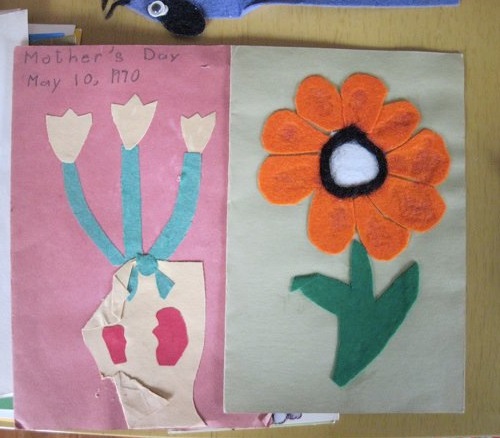
I like to make the cards that I give to people. Yes, I too often give in and buy the prefabricated ones, but even then, I try very hard to pick ones out that are blank inside, not substituting anyone else’s words for my own. I like the handmade touch. I have a small box with several cards that I made for my mom when I was a child. They are special. My mom treasured them enough to keep for herself and now, I keep them myself. Crayon-scribbled, “You are the best mom” accompanied by a cut-out, construction paper flower is worth saving.


A couple of cards that I made for my mom.

A couple of cards that I made for my mom.

Besides the sentimentality of handmade items, they also share the message that the sender took a bit more time to make something just for you. I’m not knocking the time one can spend searching the shelves at the Hallmark store for just the right message, but you must admit that taking the time to make that right message says just a little something more. 

I thought about making cards earlier this week when I followed along with a listserv discussion about the practice of sending weekly articles, messages, and updates to patrons. A number of participants shared some very helpful resources – aggregators, if you will – for delivering timely pieces. It’s both easy and resourceful to subscribe to them. They scour the internet for stories about the latest medical procedure, disease outbreak, trend in healthcare, etc., and send them right to your email inbox for quick reading. Some even annotate them for you, so that you don’t have to be bogged down reading more than seven paragraphs. The suggestion offered in the discussion was to share these feeds with administrators or doctors or researchers or whoever your target audience is. It’s a great idea, but as I thought about it, the practice reminded me of buying a greeting card instead of making one yourself.

Libraries and librarians have given up a great deal of their identity (their brand) over the past years. The full-text of articles are often accessed through third-party vendors or the websites of journals, despite the fact that it’s one’s library that’s often providing the resource. We buy catalogs developed by other companies, rather than developing homegrown management systems. We embed RSS feeds from other sources into our own websites.

And each and every one of these practices saves both time and money, but at what cost?

I got to wondering how much time it would really take to subscribe to a relevant aggegator or journal table of contents, or to set up a few alerts from custom-saved searches, or to put together several Twitter lists that follow sources specific to a group or department I serve. Then I could use these tools to create my own, customized delivery of an article or an interesting piece of news to the same. Think of the return on the investment I’d get by sending a personal note directly to someone with the resource attached, as compared to the same coming from an automated – and branded by someone else – source. Now, I can already hear some naysayers saying, “I don’t have time to keep up with that.” Maybe not, but I think it might be worth a try.

A full shelf of writing and reading, plus Finz. And an autographed baseball. And a holiday ornament. Librarians don't need to be organized at home.

A full shelf of writing and reading, plus Finz. And an autographed baseball. And a holiday ornament. Librarians don’t need to be organized at home.

Related, another thing that I often hear people say is that we don’t have time to read ____ (insert whatever it is that you don’t have time to read – blog posts, journal articles, interesting pieces from the news). Similarly, many say that we don’t have time to write _____ (insert whatever it is that you don’t have time to write – blog posts, journal articles, etc.). This a dilemma. To paraphrase Stephen King (the writer), if you want to be in the information business, you need to do two things above all others; read a lot of information and write a lot of information. How else can you stay on top of it? How else can you provide good information resources to those you serve? How do we call ourselves information professionals if we ignore the very thing that we’re supposedly experts in? We work in a fast-paced and rapidly changing profession. All the more reason to do those two things above all others. Read and write.

I write a post for this blog each week. Thanks to the kind words of many colleagues, not to mention usage statistics, I know that people read it. But I also read the writings of colleagues and other people who provide so much insight, interest, and entertainment to my work, that I can’t imagine how lousy I’d be at my job without them. With this stated, I’m sharing several really good things that crossed my radar over the past week. If you can find a moment or two to read them, you may find it worth your while:

  • Data Dictionaries, a blog post by Kristin Briney. If you’re charged with the task of managing data, at any level, Kristin’s blog is worth following and this particular piece is a great one to bookmark, because it’s really hard to find good posts and good examples on the topic.  
  • Your Two Kinds of Memory: Electronic and Organic, by Annie Murphy Paul. Medical librarians are forever grousing about a certain resource that’s ever-so-popular with doctors and medical students alike. Annie’s post offers an entirely different reason for concern.
  •  There’s a new series debuting on Cinemax soon about the early days of surgery in the United States. Period medical drama. “The Knick” is the creation of Steven Soderbergh and stars Clive Owen, so it surely has potential to be good. After ‘The Knick’: 7 Fascinating Books on the History of Medicine offers critique and … well, suggestions for further reading. (From the blog for the site, Word & Film.)
  • The Trouble with Medicine’s Metaphors is an article by Dhruv Khullar for the Atlantic. Khullar is currently doing a residency at the Massachusetts General Hospital and Harvard Medical School. Maybe it’s because I majored in philosophy, maybe because I love linguistics, maybe because I was in the hospital last week… for many reasons, I found this a great read.

Finally, I always read Amy Dickinson’s advice column. I need all of the everyday, practical advice that I can get. And my friend, Suzy Becker, wrote a most wonderful blog post to go along with the release of her latest book from Random House Kids this week. Author-Daughter Book Club just about made me cry in my cubicle. In a good way. Moms of sons and daughters, both, will enjoy it. I give shout outs to these two writers who, many days, make my day.