For years, I lived on Lower Flying Point in Freeport, Maine, one of those fingers of land that stretches out into Casco Bay. You can get to Lower Flying Point one of two ways; Flying Point Road off of Bow Street, which is off of Main Street in Freeport (turn right at L.L. Bean) or Flying Point Road by way of Pleasant Hill Road by way of Highland Road by way of Maine Street in Brunswick, ME. You can probably tell, just by the description, that the former is the fastest, straightest route.
One summer, Mill Stream, which ultimately flows into and becomes the Harraseeket River, flooded. REALLY flooded. Over the banks and over the surrounding fields and over Bow Street/Flying Point Road. In its flooding, it took with it the very large culvert that ran underneath the road and, with the culvert also went the road itself. For weeks after, the only way to get to and from home was the very round-about and out-of-the way route through Brunswick. People were good sports about it, even though it was a major inconvenience and added as much as a half-hour to one’s commute, and when the road was finally re-opened, we hung balloons and had a party. Access restored.
In her book, Access to Medical Knowledge: Libraries, Digitization, and the Public Good, Frances Groen identifies three values that lie at the foundation of professional librarianship:
- Providing access to information
- Preserving the accumulated knowledge of the past
- Helping the public understand how to use information
(Read a review of the book by Janice Kaplan in the July 2007 issue of JMLA.)
I’ve required the students in my Health Sciences Librarianship course at the University of Rhode Island to take part in one of the Thursday night #medlibs Twitter chats. Last night was an option and several were there, asking great questions and sharing in the discussion. The topic centered on the role of librarians in the clinical setting and was led by Julia Esparza, a Clinical Medical Librarian from LSU Health in Shreveport, LA. Julie asked some really pertinent questions around what it takes to have confidence in this role, what people most enjoy about it, and what some of the unique challenges to it are. My students expressed real surprise at how much clinical medical librarians can be involved in the hospital setting, particularly when it came to thinking about them being part of rounds, i.e. being at the patient’s bedside with the rest of the clinical team. To paraphrase… “What do patients think about that?” “How would I feel about it, if I was a patient?” “How does that make a patient feel, that a doctor has to look to a librarian for help finding information?”
Great questions, every last one of them!
The medical profession is layered (and layered and layered) with levels of myth and entitlement and very entrenched beliefs about the respective roles of doctors and patients. Given our incredibly complex healthcare environment and the limitations of physicians in terms of how much time they have to spend with patients, there’s been a push for patients to become educated about their health, diseases, care, etc. Patients need advocates, be they a family member, friend, or stranger. It’s simply unwise to step into a situation involving yours or a loved one’s health, knowing little to nothing of what’s going on. But it happens all the time. Medical librarians, particularly those focused on consumer health resources, are tasked with providing access to the information that the public needs to be better prepared here. From the admonishment, “Don’t Google for Health Information!” to showcasing sites likes MedlinePlus to attending health fairs… medical librarians (and public librarians) are busy here, staying true to the values “Providing access to information” and “Helping the public understand how to use information.”
So how does this fit with librarians being a part of teams in the clinical setting? I argue that it’s merely an extension of the same. They are there to make sure that the doctors AND the patients have access to the information that they need, and they are there to make sure that everyone knows how to use it. But what does that mean? Providing access is one thing, but what does it mean to help someone understand how to use information? Doctors are there to diagnose, we all agree with this, but for the patient who doesn’t understand the information presented to them, does the librarian, perhaps, have a role in helping them understand it? After all, doesn’t understanding how to use information depend upon understanding what the information means in the first place?
Not being a clinical librarian, I really only have opinions here – not much actual experience or evidence to fall back upon. However, if I translate this setting to my own, i.e. the research team, and think of my role as a librarian there, are there any parallels? I think so.
There’s a debate among those who take part in systematic reviews and in-depth searches regarding how much a librarian should do. Do we simply develop and execute the search strategy, and then pass off the results to the rest of the team for review? Are we breaking some rule if we review the articles, too? Is it taboo for us to write synopses of papers, evaluations of them, or give our own thoughts upon whether or not they are worthy of inclusion in the study? Can we take the lead in writing more than the methodology of a systematic review? Can we make suggestions, share informed opinions, and discuss the topics at hand that extend beyond the subject of librarianship?
For me, the answer to these questions lies at the heart of what it means to truly be embedded in the setting, be it research or clinical. It’s about being an equal part of the team and while each member has his/her level and/or area of expertise, to be more than an accessory, you need to step up and be equal – equally responsible, equally accountable, and equally invested. If I can explain some information to someone, to me that is part of helping someone understand how to use it. It’s a core value. To stop short of this because I believe that it’s not my role or not my responsibility, that’s falling short of what I believe is my professional place.
I was in the hospital last month and while there, I overheard my medical team (just docs, no librarian) in the hallway talking about my EKG. The resident and attending doc were explaining to the medical student about the length of my QT segment and what my R wave progression might be telling them. I wanted to yell out into the hallway and tell them that I’d had a couple of semesters of cardiac electrophysiology as an undergrad and grad student, and ask if they might wish to come in the room and talk to me about it. But I didn’t. I listened to what they said about me in the hallway and then listened to what they said to me when they came to my bedside. And they were, as you can imagine, quite different.
After last night’s chat and then thinking about the questions and observations of my students, I wondered how this experience might have gone differently if a medical librarian was there. And then I realized that a medical librarian WAS there. Granted, I was the patient and really in no mood to make it a teachable moment, but that’s what it was. I could have talked to the doctors and let them know that I knew how to use the information they weren’t sharing with me. I could have said that as a medical librarian, it’s my job to make sure people know how to use the information they have. It’s not just my job to provide access to it. If this means explaining something – or making sure the clinician explains something – in a way that the patient understands it, then that’s what I do. I like to think that our role is a heckuva lot more than simply being a culvert.
 I recently had a very odd health scare that landed me in the hospital for a couple of days. That was a first. Lots of tests later, I’m pronounced A-OK. Hooray! One of the tests I had was an MRI of my brain. In his notes back to me via my health record, my doc told me that I have a very young brain for my age and ever since, my mantra has been, “I’m young at brain.”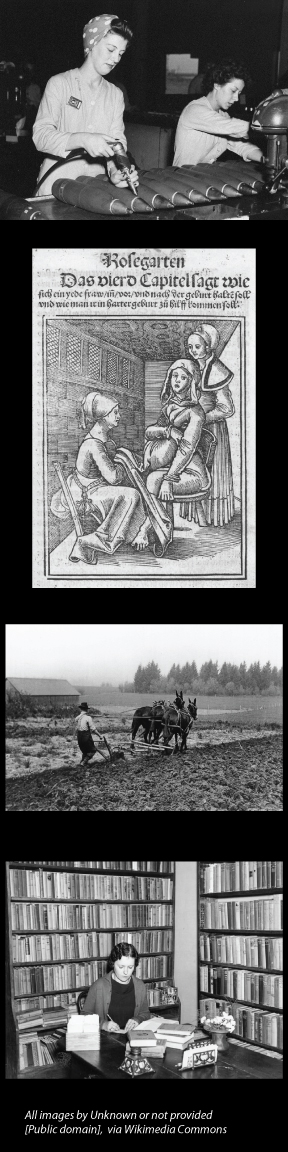
 A Librarian by Any Other Name