 Yesterday marked my six month anniversary working for the UMass Center for Clinical and Translational Science. It’s been six months of challenges and opportunities, lots of learning and adjustments, and many experiences that I both expected and didn’t. All in all, a good, positive change.
Since moving from the UMass Med School’s library to the UMCCTS, lots of people have asked me, “What are you doing now?” Truth be told, many of these same people had no idea what I was doing before, but at least they think that they know what librarians do and I let it go at that. But since becoming an evaluator for the UMCCTS, I find I have to explain two concepts; (1) the role of an evaluator and (2) translational science.
Last night, I attended Science Cafe Woo, a monthly gathering of folks in Worcester where local scientists can talk to the public about what they research. I’ve written about Science Cafe Woo here a couple of times before (An Infectious Dialogue; Sustainability: It Mean’s More than “Tit for Tat”) because it’s always a highlight of my month in terms of learning interesting science, plus I’m a strong advocate for science communication and the promotion of scientific literacy. As noted in an excellent article by Boston Globe reporter, Sacha Pfeiffer, over the past decades, government funding for scientific research and development has steadily fallen from 9.1% in the late 1960s to a paltry 3.6% today. Efforts like Science Cafe Woo, the Science Cafe movement overall, and programs like the one at my own institution that help scientists deliver a comprehensible message to different stakeholders, from corporate donors to the public tax payer, are essential if we are to be successful in our efforts to advance science, eradicate diseases, and reach our fullest potential as human beings.
And thus, there I was at last night’s Science Cafe Woo, ready to learn about the work of Glenn Gaudette, PhD, from Worcester Polytechnic Institute. Dr. Gaudette’s talk entitled, How Science Can Mend a Broken Heart, was a fascinating mini-lecture on the anatomy of the heart, cardiology, pluripotent stem cells, and … TRANSLATIONAL SCIENCE. It’s the latter that made me say to my spouse when I got home, “I wish everyone who wonders what that term, translational science, means had been at Science Cafe tonight.”
Dr. Gaudette talked about his research in the Myocardial Regeneration Lab at WPI. There, he and his students discover ways to get stem cells to become myocardial (heart) cells and then how to implant these cells into damaged heart muscle, encouraging new growth and healing that without such a treatment, is impossible. In other words, when a person suffers a heart attack, some portion of their heart muscle is damaged. It eventually scars over and the heart as a whole is less efficient in its business of pumping blood throughout the body. Myocardial muscle cells don’t regenerate on their own, thus the damage remains. The theory behind Dr. Gaudette’s work, then, is if we can learn how to induce the growth of new cells in the heart, we can help a damaged heart heal, not just scar.
The exercise physiologist in me LOVED this talk. I’ve studied the heart and cardiac rehabilitation enough to understand how monumental such a new treatment could be for the millions of Americans who suffer from heart disease. It’s such a cool idea and if/when it reaches its fullest potential, becoming a clinical procedure, it will be truly amazing.
And this, in a nutshell, is translational science:
- Dr. Gaudette and his colleagues have an idea; if we can get stem cells to become myocardial cells and deliver them into damaged heart muscle, they’ll grow into new, healthy heart muscle.
- They work in their respective labs to figure out the problems; growing the cells, delivering the cells to the tissue, seeing if the delivered cells actually grow into new cells.
- They come up with a novel concept to more effectively get the cells to the heart muscle; the VitaSuture.
- They go out and talk about their ideas and findings to investors, funding agencies, and the like, trying to secure the money needed to manufacture and test this product. (There is no money in academia.)
- They talk to regulatory agencies like the FDA about their idea, about their product, and about how to actually test it in human beings.
- They get squashed. Stem cells are SUCH a red flag, they’re told, especially when you’re talking about putting them on a person’s heart.
- They get back up. They think of ways to lower the risk. They make other proposals. How about regenerating ligaments?
- They test this idea out on animals and find some success.
- They go back to the regulatory agency with their new proposal.
- Squashed again.
- They get back up again. Other ideas. Even less risky.
- And on it goes… (Read a TERRIFIC piece on this process in WPI’s spring issue of Research.)
That, my readers, is translational science. It’s getting from an idea, to success in non-human models, to successful testing in humans, to what ultimately becomes clinical practice. Translational science centers, like UMCCTS, exist to help identify and remove the barriers in this lengthy, winding, often inefficient process.
And my job … it’s to evaluate the different programs and core research centers we sponsor, so that we can determine how well we’re doing towards bringing down some of those barriers and hurdles. It’s also to disseminate the findings and the work of translational scientists at UMMS, so that our stakeholders better know and understand what we’re doing.
This morning when I came into work and told my boss all about last night’s talk, he immediately asked, “Is he working with anyone here?” and we began to talk about clinical researchers doing science here that might collaborate really well with Dr. Gaudette and his colleagues across town. Surely, there’s some follow-up to be done.
To me, these are the most interesting, exciting, and fulfilling aspects about working in a scientific research environment. There are just so many fascinating stories and I get to hear them, share them, and sometimes be part of them. Translating translation. Everyone should be so fortunate in his or her work.
Thanks to Science Cafe Woo for continuing to encourage scientists to talk to the public about their work, to Dr. Gaudette and his colleagues and students at WPI for the work they’re doing, and to the UMCCTS and all of our members who keep striving to bring the breakthroughs of science and medicine to the world.
Tags: cardiology, cardiovascular disease, Clinical and Translational Science, Science Cafe Woo, science communication, scientific literacy, stem cells, translational science, UMass Center for Clinical and Translational Science, UMCCTS, University of Massachusetts Medical School, Worcester Polytechnic Institute
 I need to offer up a HUGE thanks to my friend and colleague, Kate Thornhill, Research and Instruction Librarian for Digital Scholarship at Lesley University’s Moriarty Library in Cambridge, MA, for recently turning me onto the terrific podcast, Lost in the Stacks. From WREK, the student-run radio station at Georgia Tech University in Atlanta, the show is hosted by Charlie Bennett and Ameet Doshi, along with Anthony Nguyen, Fred Rascoe, Lizzy Rolando, and Wendy Hagenmaier. All librarians at Georgia Tech University in Atlanta, they bring an hour-long program offering really interesting interviews with librarians focusing on all sorts of cool themes. But it doesn’t end there. In between the interviews and/or segments, they play some pretty groovy tunes, an eclectic mix of great songs. I just LOVE it!
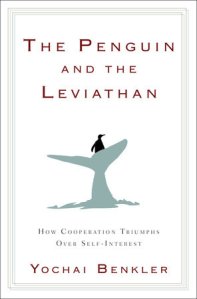 Along with a good murder mystery, I’ve also been reading Yochai Benkler’s,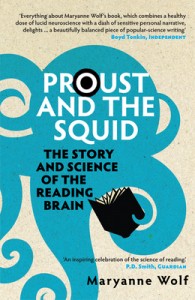
 I began James Rebanks’ memoir,

 A Librarian by Any Other Name