Archive | Bits and Pieces RSS feed for this section

Summertime … and lazing about

21 Jul

The summer months at work are often filled with projects; nothing that needs to be done yesterday (too often, the pace of the rest of the year), but things that allow one to plan and process and maybe implement a newly-learned thing along the way. It’s the last part that often leads me to stumble across lots of interesting – even if unrelated – things. Looking for one thing, I find another and another and another. Serendipity. The best. So here are a few of late. Maybe you’ll enjoy them, too.
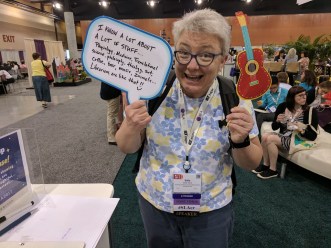
Showing off at the SLA NE booth in Phoenix.

A couple weeks back, I wrote a piece for SLA New England’s blog on different perspectives gained from stretching one’s self in different situations. You can read it here

*****

Being on a journey, stretching, growing – be it in one’s career or one’s life – anyone who reads my blog and/or knows me knows that this is the subject that intrigues me the most. I’m fascinated by the idea that life is a journey. I’m inspired by anyone who lives his/her life in such a way. I love the ideas of life-long learning, of following new interests, of seeking new paths. Ann Telnaes, the Pulitzer Prize winning editorial cartoonist for The Washington Post is a favorite of mine. In an interview with CTNexpo she says, “Have a plan, but be open because sometimes that’s not your destiny. Sometimes it’s something else.”  Yup! That’s it in a nutshell.

***** 

As an evaluator and a sports fan, I absolutely loved the article “Analyze This” by Sue Bird, a future Hall of Famer for the Seattle Storm of the WNBA. It’s just a perfect piece on the importance of data collection, data storytelling, and … the never-ending gender gap in everything sports-related.

Data helps drive conversations, strategy, decision making. But data on its own isn’t terribly interesting. It needs context. It needs a storyteller. Data helps tell the story of a player, a team, an entire career.

There’s a need to value data in the WNBA because there’s a need to value the stories of our league. Think about baseball, for example, or men’s basketball. Fans, players, executives and media value stats and information because it helps to tell a story that many are already invested in. And if they’re not already invested, then it gives them a reason to be. It helps GMs make decisions. It informs contract negotiations. It enables player development.

*****

Just for fun, here’s the Definitive Guide to Typography and Fonts – in one, handy infographic! Who doesn’t need this?

*****
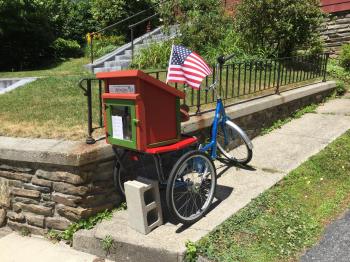
LFL

My Little Free Library

Finally, let’s do a quick summer reading list. We’ll call it, Sally’s Summer Reading List, since that’s what it is. Here are the books I’ve read and/or am reading of late:
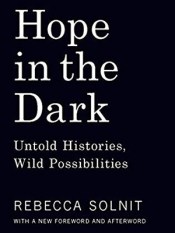
Hope-in-the-Dark-solnit-300-400
Early in the summer, I read both Hope in the Dark and Men Explain Things to Me by Rebecca Solnit. I came across her via an article she penned for The Guardian and am now a devoted fan. Both are examples of brilliant, thought-provoking, and sometimes humorous writing. 

Hornaday-Talking Pictures

Last month, Washington Post film critic, Ann Hornaday, published a wonderful guide to watching movies entitled, Talking Pictures. Not only does Ann provide a rich understanding of the different aspects of movie-making, but she teaches the reader how to enjoy movies with a critical eye. What makes a scene work? Why do you remember some movies forever and others are forgotten before you’ve left the theater parking lot? How do all of the pieces fit together – or not? It’s a terrific guide complete with suggestions, at the end of each chapter, of films to watch to accompany the lessons learned. It’s perfect preparation for the chilly months that will be here soon enough, those that find us in front of the fireplace, seeking a good movie for a Saturday evening.
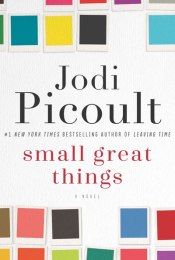
 small-great-things-hc-400wIf you’re looking for a page-turner with a point, you might want to read Jodi Picoult’s latest, Small Great Things. An unexpected death and the story that follows examine the issues of race relations, prejudice, and justice from the differing perspectives of the characters involved. I picked it as the book for an Action Book Club that I’m trying to get started in my community. It’s a good choice for that, as well as an excellent read.
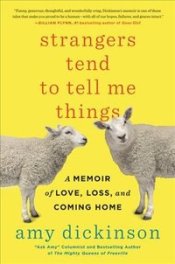
 strangeresFinally, I’m sure it’s no surprise to any of my regular readers that I pre-ordered Amy Dickinson’s latest memoir, Strangers Tend to Tell Me Things, about a year before it came out. It arrived in my mailbox on publishing day and I read it cover-to-cover in one sitting. True enough, that was in the spring and thus not a summer read, BUT I did purchase the Audible version this summer, just so that Amy could read it to me again. It’s Amy as good as ever (true, despite any bias I may have). Read it and enjoy.
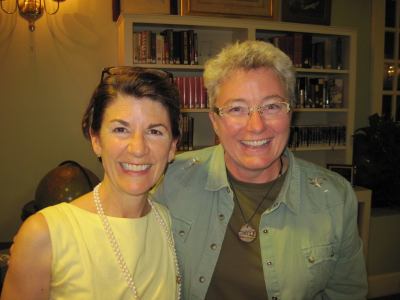
 

Sally and Amy

We need a new photo.

SaveSave

Miller’s Crossing (SLA 2017)

27 Jun

I SURVIVED

Hot on the heels (pun intended) of my post about the annual meeting of the Medical Library Association yesterday, I offer up some thoughts and sketchnotes on my time at the annual meeting of the Special Libraries Association that took place last week in Phoenix. Did you see the news from Phoenix last week? If not, well, it was hot. Really hot. But the conference was fantastic! Here’s why…

This was my very first time attending SLA and I have to say that I was impressed beyond impressed! The keynote speakers were inspiring, the sessions chocked full of useful takeaways, the colleagues that I met interesting and nice, the schedule (and the program, overall) was really creative, and my own presentation … it went pretty darned well, if I do say so myself. Kudos to the conference planning committee, the SLA staff, and the organization’s leadership for putting together a stellar event.

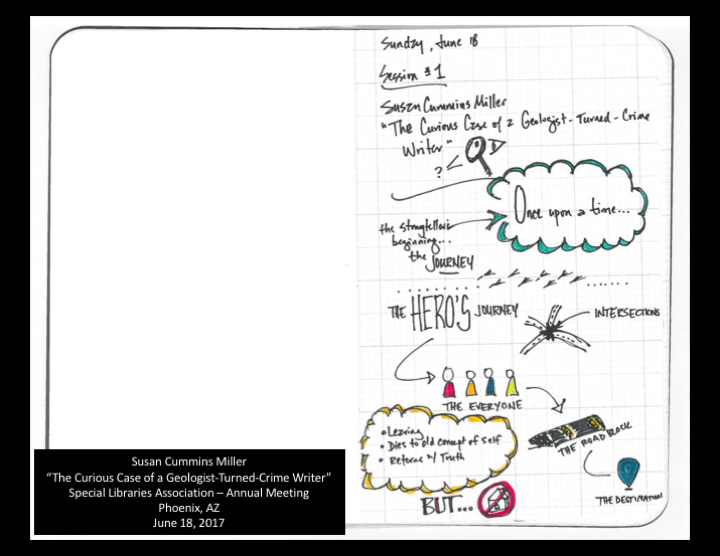
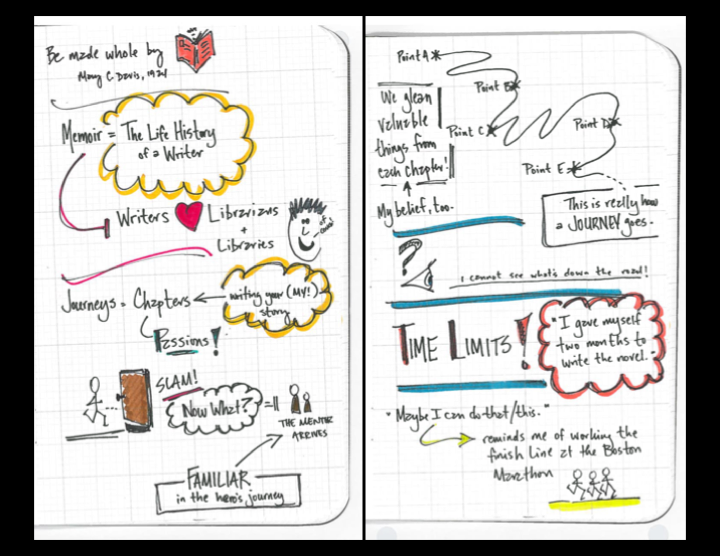
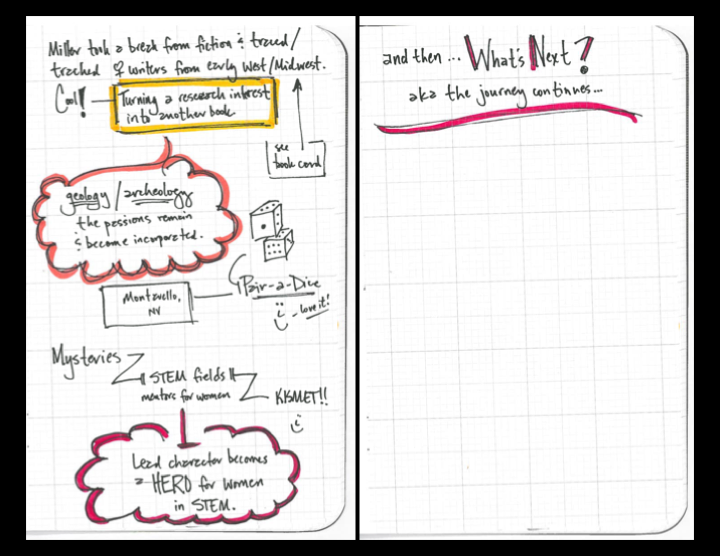
I took more notes than I’m going to share here, but I want to highlight a couple of sessions that kicked off the event for me and really set the tone for what I could and would expect over the few days. The very first session that I attended was a talk by the local author, Susan Cummins Miller, titled “The Curious Case of a Geologist-Turned-Crime Writer.” It was Sunday morning and my internal clock was still several hours off after traveling cross-country the day before, so honestly, it was that title that drew me to the lecture. It was just too interesting to pass up. What I received from attending was an incredibly personable – and to me, incredibly relatable – story about a person with many interests and the winding career path that often accompanies such. “The Life History of a Writer,” is the framework Miller used to tell her story, offering up a lot of tips and inspiration along the way. It was the perfect start to the morning.

Slide1

Slide2

Slide3

Following Susan Cummins Miller’s talk, I made my way to the first general session and the keynote presentation by Lulu Miller, a journalist and writer and the co-host of the NPR podcast, Invisibilia. [Tangent: I titled this post, “Miller’s Crossing” because of the shared surname of the two speakers and because that reminded me of the title of an excellent movie. An early Coen brothers’ film. Seek it out.] I will share at the get-go that I have attended LOTS of professional conferences in my years as a librarian and I have heard a number of great speakers over this time, but Lulu Miller’s talk may well be the BEST that I’ve heard to date. It also serves as the perfect model for anyone outside of the library profession who gets invited to deliver one of these talks. Why? Because she prepared it entirely for us, the audience. It was obvious from the very beginning. It wasn’t a talk that she had tucked away to be tailored to any audience. Nope. It was, start-to-finish, a message put together with no other group but a group of special librarians in mind.

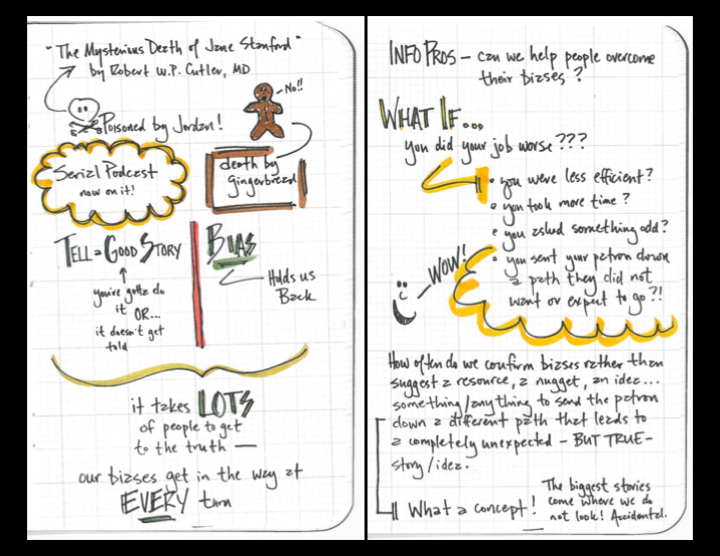
For me, the key to the talk hinged upon the question, “What if you (meaning a bunch of research librarians) did your job worse?” Put another way, in our rush to answer a patron’s request, is it possible that what we end up doing is confirm their biases? We point them to what they are looking for, not necessarily what they need to find. What would happen if we perhaps sent them down a path that they didn’t expect to go? What might they find then? What unexpected discoveries might be uncovered?

To illustrate the point of these questions, Miller told an engaging story of how just such an experience led her to some discoveries, some history, and an amazing mystery that she’d never have encountered had she not been led astray from her own biases. She talked about how many people and how many sources and how much dumb luck (the latter being a bit of me editorializing) it generally takes to get to the truth and how at every turn in the process of truth-seeking, our biases can get in the way. Our task, then, as information professionals, is to help people overcome their biases and we do so, first, by changing some of our own behaviors. (You can see her instructions in my notes below.)

“Disobey!” was her commandment to the crowd. Disobey those “tried and true” information professional rules of searching and seeking and delivering, and see what happens.  You never know where it may lead and the discoveries perhaps uncovered.

I’ve not stopped thinking about this talk since I heard it – a sure sign that it was worth hearing the first time!

Slide4

Slide5

Slide6


Be Ye Kind …

26 Jun

[The following post was written originally to appear on the blog of the North Atlantic Health Sciences Libraries chapter of the Medical Library Association.]

… and other lessons from the annual meeting of the Medical Library Association.

MLA17_LOGO_500X500I want to thank the members of NAHSL’s Professional Development Committee, as well as all of the membership of NAHSL, for the award that I received to cover the cost of registration to attend the annual meeting of the Medical Library Association that took place in Seattle, WA last month. As always, it was a wonderful opportunity to reconnect with old friends and colleagues, meet lots of new people, network with those who do similar work, learn some nuggets of gold to put into practice back home, and of course, to see and to share the work that we all do as medical and health sciences librarians – or in my case, a Research Evaluation Analyst, aka a “Librarian by Any Other Name.”

I experienced a few highlights of the meeting including participating on a panel discussion with colleagues from several other institutions to talk about our work measuring and tracking the impact of research. I also really enjoyed Julie Sollenberger’s Janet Doe lecture. I have the honor of knowing Julie a little bit, so her choice of topic – kindness and how practicing it shapes not only our work, but our very beings – was spot on. She is a wonderfully kind person – one who lives what she preaches. It was a special plenary.

For this post, though, I want to reflect on another plenary session, i.e. the McGovern Lecture, given this year by Julie Angus, a scientist, bestselling author, and winner of the National Geographic Adventurer of the Year Award for her accomplishment as the first woman to row across the Atlantic Ocean, mainland to mainland. When I first saw that she was one of the keynote speakers this year and I saw the title of her talk, “Rowing Across the Atlantic: Strategies to Reach Your Goals,” I admit that I said to myself, “What in the world does this have to do with medical librarians and/or libraries?” And in truth, much of her talk came across as canned, meaning it struck me as likely the same talk that she gives to any audience. Yes, she threw in a few library references, but it was pretty general in nature – your typical motivational talk by a motivating person. Don’t read this as negative criticism. I enjoyed the talk and I’ll likely borrow a copy of her book from my local library and read it. It’s a great story – and she told it well. And I did take away two important things from it – two points that made it into my notes:

First, was the importance Angus placed on baby steps. In her talk she said, “When people ask, ‘What’s the most important thing that you’ve brought out of this journey?’, undoubtedly, it’s the importance of baby steps. Eventually all of those baby steps added up and as a result, we achieved our dream.” This point reminded me of the words of another adventurer, the climber, Joe Simpson. (If you like adventure and you’ve never seen the dramatized documentary, “Touching the Void,” seek it out!) Stuck in a life-or-death situation during a climb, he says, “You have to make decisions. You have to keep making decisions, even if they’re wrong decisions. If you don’t make decisions, you’re stuffed.” (He’s British, in case you wonder the “stuffed” reference.) Baby steps and continuous decision-making are crucial not only in big adventures, but in day-to-day life. It’s how we get from Point A to Point B, how we continue to be relevant in a changing work environment, how we continue to find fulfilment in our work. Complacency, apathy, dullness in the daily work is a career killer – not only for an individual, but for an entire organization. THAT is a message I found quite relevant – a great take-away from the talk.

The second thing I noted was the discussion that I followed during the Lecture; the back-channel, if you will. Following the #MLANET17 Twitter stream, I discovered that while I was thinking Angus’ talk was a bit predictable, LOTS of my colleagues did not. She would say something and someone would immediately apply the thought or the message to something in his/her career or workplace. It was wonderful to see all of the connections people were making between the Lecture and their lives. I love following the Twitter stream throughout the conference, generally to see what others are learning in concurrent sessions that I’m not attending, but it was also a real treat to see a motivational speaker truly motivating an awful lot of the audience with her talk. It’s hard to argue that this isn’t just what the planning committee wanted when they signed her up and I credit them for the good pick.

I’m off to the Special Library Association’s annual meeting in Phoenix this coming week. I had a paper selected for presentation. It’s going to be interesting as I don’t know many people in SLA. It will be like going to my first MLA meeting many years ago now. I’m a little nervous, but the one thing that that eases my nerves is that I do know that it’s pretty hard to find a librarian conference that doesn’t leave me wanting for good stuff. I look forward to that – and again thank NAHSL for helping me get to Seattle. It’s a terrific benefit of belonging to and serving the organization.